Home ECG Devices: Best Practices for Recording Irregular Beats
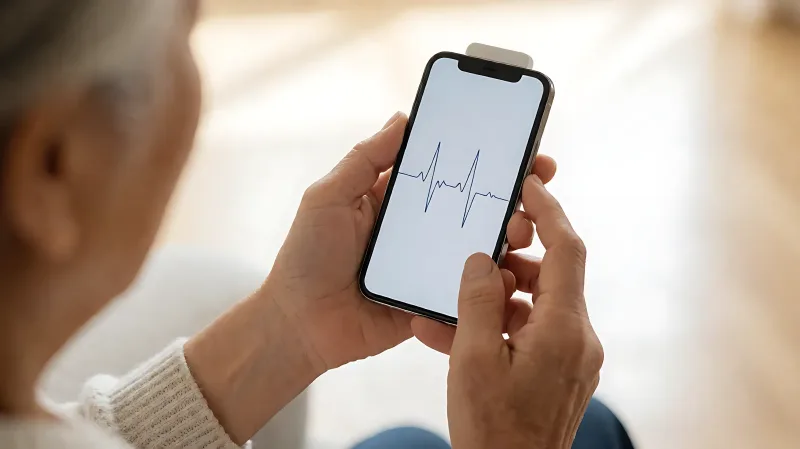
Struggling to capture a fleeting heart flutter? Here is a step-by-step guide to using personal ECG devices like KardiaMobile to document irregular heart rhythms effectively.
Recording an irregular heartbeat at home starts with a personal electrocardiogram (ECG) device and a steady hand. To get a valid reading when you feel palpitations, hold the device against your bare chest or place it on your fingertips for about thirty seconds. This creates a diagnostic trace of your heart's electrical activity that you can immediately share with your physician, helping them detect conditions like atrial fibrillation that standard wearables might miss.
For more information, see Medicare remote monitoring coverage from Medicare.gov.
Why Is Recording a Home ECG Important?
Heart disease remains the leading cause of death in the United States, according to the Centers for Disease Control and Prevention (CDC). While wearable smartwatches are popular, they often struggle to distinguish between an exercise-related heart rate spike and a true arrhythmia. Personal ECG devices offer a clinical-grade solution. These tools allow users to capture a snapshot of their heart rhythm in real-time. When you feel a flutter, skip, or rapid beat, capturing that moment provides medical professionals with crucial data. Unlike resting heart rate monitors, these devices record the electrical pattern of the heartbeat, allowing for the detection of atrial fibrillation (AFib), a common type of arrhythmia that significantly increases the risk of stroke.
Which Device Is Best for Home Monitoring?
For most consumers, the AliveCor KardiaMobile is a leading choice due to its strong clinical validation. It is the first and only personal ECG device recommended by NICE (National Institute for Health and Care Excellence) in the UK for detecting atrial fibrillation in an ambulatory setting. In the US, it is FDA-cleared for this purpose. The newer KardiaMobile 6L model offers even greater diagnostic depth by capturing six leads instead of one. While a standard one-lead ECG is sufficient for detecting AFib, the six-lead version can help identify other issues like heart block or ventricular premature contractions (PVCs). The choice often comes down to cost and the specific advice of your cardiologist, but for general screening and symptom capture, the KardiaMobile line is widely trusted in both consumer and clinical settings.
How Do You Prepare to Record Your Heartbeat?
Preparation is key to avoiding motion artifacts, which are fake signals caused by moving the device during the recording. Here is how to set up for success:
- Ensure Dry Hands: If using the device by touching the electrodes with your fingers, your hands must be completely dry and clean. Moisture or lotion can interfere with the electrical contact.
- Stay Still: Sit or lie down in a comfortable position. Avoid crossing your arms or shifting your weight during the thirty-second recording window.
- Sync Your App: Make sure your phone is connected to the device's app and that Bluetooth is on. You want the recording to upload immediately so you can view the graph.
What Is the Correct Technique for Fingers and Chest?
There are two primary ways to use these devices. For the KardiaMobile 6L, you can hold it in one hand with the back against your fingertips, or place it on your chest. If using the finger method, ensure your index and middle fingers are in contact with the metal tabs on the back of the device. Hold it gently but firmly. The app will guide you through the process, typically asking you to start the recording before you position your fingers or chest against the sensor. For the chest method, hold the device flat against your bare skin, ensuring it does not slide. Consistency is critical; if you move, the data may be rejected or flagged as low quality. The goal is to keep the electrode connection stable for the entire duration of the scan.
When Should You Take a Recording?
The most valuable recordings happen when you are symptomatic. If you feel a sudden pounding, a skipping sensation, or unusual fatigue, start the recording immediately. Do not wait until the sensation passes. It is also wise to establish a baseline. Take a recording when you are feeling completely normal. This gives your doctor a reference point to compare against your symptomatic episodes. However, chasing a symptom can be frustrating if it is rare. For those with frequent episodes, the KardiaMobile can be paired with the KardiaPro service, which allows for continuous monitoring and alerts your provider when irregularities are detected.
What Data Does the App Provide?
After thirty seconds, the app analyzes the trace. It will usually display an interpretation such as "Normal Sinus Rhythm" (a healthy heart beat), "Atrial Fibrillation," or "Undecipherable" (often due to movement or poor contact). The KardiaMobile 6L provides more nuanced data, including heart rate and intervals like the QT interval, which is important for monitoring certain medications. You can share these reports directly via email or secure patient portals. Remember, the app is a screening tool, not a diagnostic one. Only a licensed healthcare provider can diagnose a heart condition.
How Do You Share Results With Your Doctor?
Sharing the data is the final, most important step. Most personal ECG apps have a built-in "Share" button that exports the waveform and metadata. You can send this to your primary care physician or cardiologist. When you share the file, include a brief note about how you were feeling at the time. For example, write: "Recorded at 2 PM while sitting at desk. Felt fluttering in my chest for two minutes prior to starting the scan." This context helps the doctor interpret the trace. If the recording is undecipherable, ask your doctor for guidance on technique rather than assuming the heart is healthy. In many cases, a quick follow-up with a clearer recording or a 24-hour Holter monitor may be the next step.
Are There Limitations to Home ECGs?
Yes. Home devices are excellent for capturing infrequent events, but they are not a replacement for comprehensive cardiac testing. They cannot measure the force of your heart's pump (ejection fraction) or look at the structure of the heart via imaging. If you have chest pain, shortness of breath, or dizziness, go to the emergency room rather than waiting for an app result. Additionally, keep in mind that some medications, like certain beta-blockers, can affect how the heart rhythm looks on an ECG, so always keep your doctor informed about any medication changes when reviewing your home data.
Frequently Asked Questions
Can I use a smartwatch to record an ECG?
Yes, models like the Apple Watch and Samsung Galaxy Watch offer single-lead ECG capabilities. However, dedicated devices like the KardiaMobile 6L are generally preferred by cardiologists for longer, more detailed captures and for continuous monitoring options like KardiaPro. Smartwatch ECGs are good for quick checks, but dedicated handhelds often provide a more stable recording environment for home use.
How much does a personal ECG device cost?
Prices vary, but a standard KardiaMobile typically ranges from $99 to $159 USD. The 6-lead model is more expensive, often costing around $199 to $250 USD. Continuous monitoring services, such as KardiaPro, operate on a subscription basis, usually ranging from $30 to $100 per month depending on the care plan and provider.
Do I need a prescription to buy a KardiaMobile?
No, KardiaMobile devices are sold over-the-counter to consumers in many regions. However, the advanced KardiaPro monitoring service requires a prescription from a healthcare provider because it includes clinical review of your data. You can purchase the hardware independently, but the full professional monitoring service is prescriptive.
What if my recording always says 'Undecipherable'?
This usually means there was too much movement or poor contact between the sensor and your body. Try sitting still in a quiet room, ensure your hands are dry, and hold the device firmly against your fingers or chest. If the problem persists, contact the manufacturer's support or speak with your doctor to see if you need a 12-lead in-office test instead.