Fridge Organization & Leftover Safety for Seniors
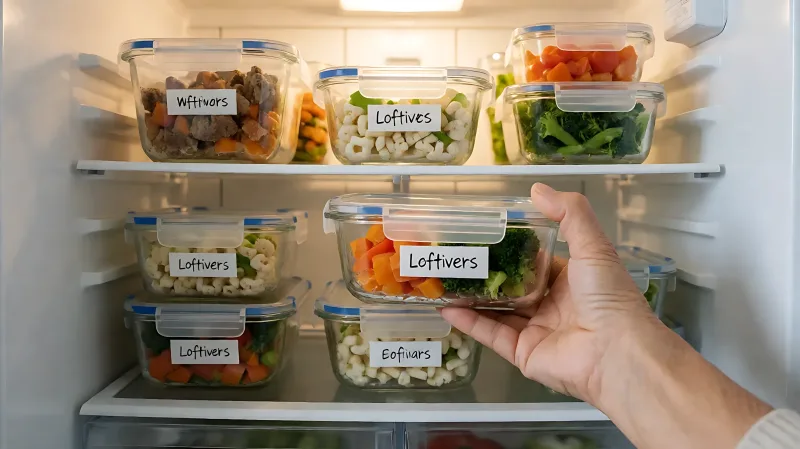
Discover practical strategies for seniors to safely store leftovers, organize their fridges, and batch cook meals. Reduce food waste and health risks with these expert tips.
For older adults, managing leftovers safely requires balancing convenience with strict food safety protocols. The USDA recommends storing refrigerated leftovers for no more than three to four days to prevent bacterial growth. By organizing your fridge with date labels and using airtight containers, you can significantly reduce the risk of foodborne illness while making batch cooking more manageable and less chaotic.
For more information, see CDC food safety guidance from the CDC.
How Should You Organize Your Fridge for Safety?
Proper fridge organization is the first line of defense against cross-contamination. Many seniors struggle with crowded fridges that obscure food items, leading to forgotten leftovers spoiling. The Food and Drug Administration advises maintaining a refrigerator temperature of 40 degrees Fahrenheit or lower. To achieve this, avoid overpacking; air needs to circulate around items to cool efficiently. Designate specific shelves for raw meat, placing them at the very bottom to prevent drips from contaminating ready-to-eat foods above.
Consider color-coding your containers or using a dedicated system for labels. A simple approach is using masking tape and a marker to write the cooking date on every container. Place newer items in the back and older items in the front to follow the first-in, first-out rule. This method prevents the slow degradation of food quality and ensures you use items before they reach the safety threshold.
What Are the Core Food Safety Rules for Leftovers?
Time and temperature are the two most critical factors in preventing illness. The USDA Food Safety and Inspection Service emphasizes the "Two-Hour Rule," which states that perishable foods should not be left at room temperature for more than two hours. If the ambient temperature exceeds 90 degrees Fahrenheit, this window shrinks to just one hour. For seniors with slower immune responses, adhering strictly to this rule is vital.
When reheating, do not just warm the food up; heat it until it steams throughout. The internal temperature should reach 165 degrees Fahrenheit. You can verify this with a digital instant-read thermometer, a tool that is essential for home food safety. Never reheat leftovers more than once, as repeated heating and cooling cycles increase bacterial risk. If a meal is not consumed within three to four days of cooking, it should be discarded regardless of how it smells.
How Can Batch Cooking Improve Meal Safety for Seniors?
Batch cooking is a cost-effective way for older adults to prepare multiple meals at once, reducing the frequency of grocery runs and meal prep stress. However, it requires careful handling. Divide cooked meals into individual portions before they cool down. Larger containers take too long to reheat evenly, creating a danger zone where bacteria can thrive. Smaller portions heat more uniformly and faster.
When freezing batch-cooked meals, allow them to cool to room temperature first, but do not leave them out for extended periods. Label frozen containers with the contents and the date prepared. The USDA notes that while most cooked foods remain safe indefinitely in the freezer, quality declines after three to four months. Prioritize using frozen items within this window for the best taste and texture.
Which Leftovers Are Unsafe to Refrigerate?
Not all foods last well in the fridge. Certain items have low acidity and are prone to rapid bacterial growth. Cooked rice and pasta, for example, should not sit in the fridge for more than one day if you have concerns about Bacillus cereus, a bacteria that produces toxins. It is safer to portion out rice immediately after cooking and freeze individual servings. Similarly, cut melons like watermelon should be stored at 40 degrees Fahrenheit or below and consumed within three to four days, as they are susceptible to Listeria.
Seafood is another category requiring caution. Leftover fish and shellfish should be eaten within one to two days of cooking. If in doubt, throw it out. The National Association of State Public Health Directors suggests that visual cues, such as slimy textures or off-putting odors, are reliable indicators that food is no longer safe to consume.
How Can You Extend Freshness With Airtight Storage?
The type of container you use impacts food longevity. Glass or BPA-free plastic containers with tight-fitting lids are ideal. They keep out air and moisture, which slows down oxidation and spoilage. For leafy greens or fruits, store them in the crisper drawers with specific humidity settings. Most fridges have a "high humidity" drawer for vegetables and a "low humidity" drawer for fruits. Using the wrong drawer can cause produce to wilt or mold prematurely.
For liquids like soups or stews, let them cool down slightly before sealing the container. However, do not let them sit out to cool completely to room temperature, as this prolongs time in the danger zone. You can speed up the cooling process by placing the pot in an ice bath or separating the liquid into smaller, shallower pans.
What Are the Signs That Leftovers Have Gone Bad?
While the three-to-four-day rule is a standard, always trust your senses. If a smell is strong, sour, or unusual, discard the item immediately. Look for changes in texture; mushy vegetables or slimy meats are clear signs of bacterial activity. Mold on bread or soft fruits should be removed by cutting away at least one inch around and below the visible mold, but if the food is soft and moist, throw the entire item away, as mold roots can spread unseen. According to the CDC, foodborne illnesses are particularly dangerous for adults over 65, making vigilance critical.
FAQ
How long can you keep soup in the fridge?
Homemade soups and stews last three to four days in the refrigerator. For longer storage, freeze individual portions in freezer-safe containers, leaving room for expansion, and use them within three to four months for best quality.
Is it safe to reheat leftover rice more than once?
It is generally safer to reheat rice only once. Repeated heating and cooling increases the risk of food poisoning. If you batch cook rice, portion it into individual servings immediately so each serving is only reheated once.
What temperature should my fridge be set to?
The FDA recommends keeping your refrigerator at 40 degrees Fahrenheit or lower. Using a standalone fridge thermometer helps ensure the compressor is working correctly and the setting is accurate.
Can I freeze cooked pasta?
Yes, cooked pasta freezes well for up to two months. To prevent it from sticking together, toss the cooked pasta with a small amount of olive oil before freezing. Thaw it in the refrigerator overnight before reheating.