Kitchen Remodel Cost for Aging in Place
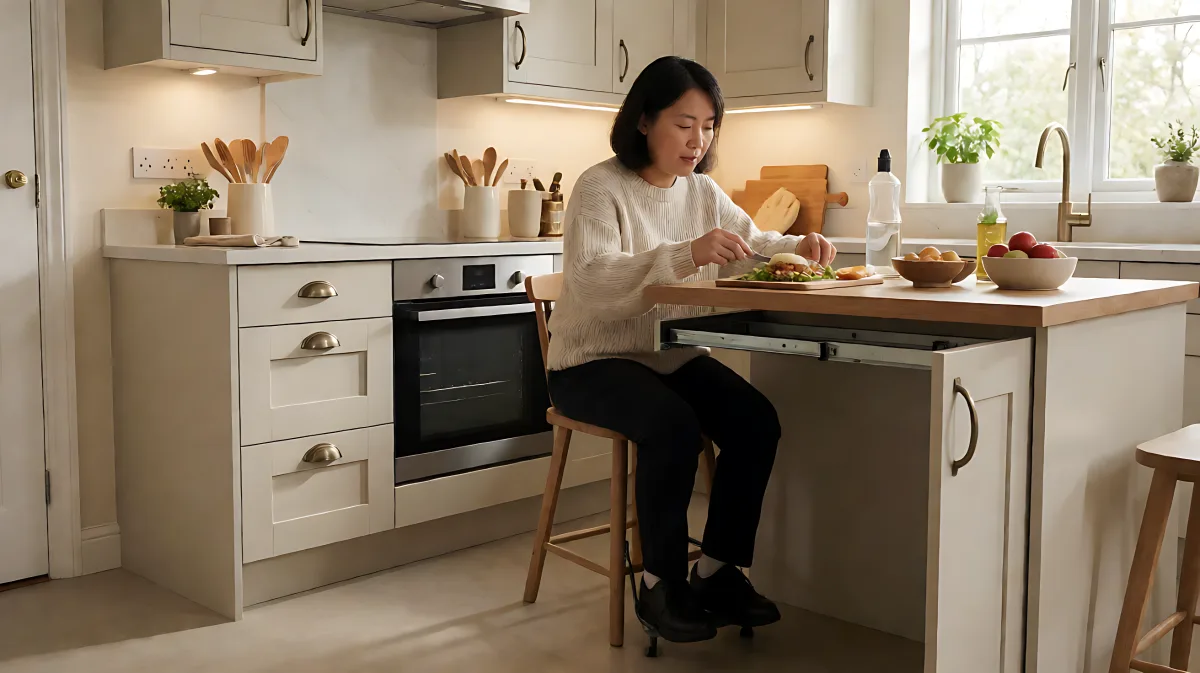
Learn how to budget for an accessible kitchen. This 2026 guide breaks down costs for lowered counters, pull-out shelving, and safety features to help you age in place safely and affordably.
Modifying your kitchen for limited mobility typically costs between $1,500 and $60,000, depending on the scope of changes. Basic updates like hardware swaps and lighting cost under $1,000, while full reconfigurations with lowered counters and induction cooktops range from $15,000 to $90,000. Prioritizing reach zones and slip resistance offers the highest safety return on investment for 2026 homeowners.
Why kitchen accessibility costs vary so much
Unlike bathrooms, where falls are the primary concern, kitchen risks are subtler. They include burns from reaching over hot elements, strains from high shelves, and trips over steps. The American Consumer Product Safety Commission highlights that kitchens remain a top location for home injuries among adults over 65. Consequently, pricing is not just about adding bars; it is about structural changes to cabinetry, plumbing, and electrical systems to accommodate wheelchair users or those with arthritic hands.
What are the three main budget tiers for accessible kitchens?
Professionals classify upgrades into three distinct financial brackets. Understanding where you fit helps prevent overspending on structural changes when simple reorganization suffices.
- Tier 1: Low-Cost Safety Updates ($100 to $1,000). This level involves zero structural changes. It includes swapping cabinet knobs for D-pulls, adding non-slip mats, installing under-cabinet task lighting, and moving frequently used items to shoulder height. This tier addresses daily friction without moving walls.
- Tier 2: Targeted Accessibility Upgrades ($1,500 to $8,000). Here, you retrofit existing cabinets with pull-out shelves ($200 to $600 per cabinet) and install lever-style faucets with scald protection. You may also add a single lowered counter section ($3,000 to $8,000) for seated preparation.
- Tier 3: Full Accessible Remodel ($15,000 to $90,000+). This comprehensive approach reconfigures the entire layout for 60-inch turning radii, installs variable-height counters, and replaces appliances with accessible models like side-opening refrigerators and wall ovens.
Which specific modifications offer the highest value?
Not every dollar spent yields the same safety return. Certain upgrades consistently outperform others in preventing injury and improving daily independence.
How much do pull-out shelves and hardware cost?
Replacing standard knobs with bar pulls is a high-ROI move costing $300 to $900 installed. Standard knobs require a pinch grip, which is difficult for users with reduced hand strength. Bar pulls only require hooking a finger. Additionally, installing full-extension pull-out drawers in base cabinets eliminates the need to kneel or crouch to reach the back of the storage area. A ten-cabinet installation typically runs $2,000 to $5,500 in 2026.
What is the cost of lowering countertops?
Standard counters are 36 inches high. For wheelchair users, the Americans with Disabilities Act recommends a maximum of 34 inches for seated use. Creating a single "roll-under" or lowered section costs $3,000 to $8,000. This includes modifying the cabinet box, fabricating the new countertop, and ensuring 27 inches of knee clearance height.
How much does an induction cooktop save in safety risk?
Induction cooktops are the preferred choice for aging-in-place kitchens because they heat the pan rather than the surface, eliminating open flame and hot coil burn risks. While the range replacement itself may cost $2,000 to $5,000, the safety benefit justifies the expense. Ensure your electrical panel supports the circuit, as induction requires dedicated power, a detail that can add $300 to $600 to the electrical bill.
How to phase your kitchen spending sensibly
Most families assume they need to do the whole kitchen at once to make it safe, but in fact, a phased approach allows you to spend only on what is currently needed. Start with the free reorganization before hiring contractors.
- Reorganize first: Move all daily-use items to the zone between knee and shoulder height. This costs $0 and instantly improves accessibility.
- Upgrade hardware: Swap knobs for D-pulls and install a lever faucet. This costs under $1,000 and reduces hand strain.
- Install task lighting: Aging eyes need three to four times more light than younger eyes. Add under-cabinet LEDs at 300 to 500 lumens per linear foot. Installed, this runs $800 to $2,500.
- Address flooring: Polished tile is a slip hazard. Apply an anti-slip coating ($300 to $800) or replace with matte ceramic having a coefficient of friction above 0.60.
Common mistakes to avoid during the remodel
Many homeowners ignore the aisle width, resulting in a kitchen that is still impassable for wheelchairs. The minimum aisle width for a single cook is 42 inches, but 48 inches is recommended for multi-cook environments. A 60-inch width is required for a full wheelchair turning radius. Failing to plan this clearance makes the kitchen unusable regardless of how nice the counters look.
Another error is choosing a top-freezer refrigerator. These require reaching above shoulder height for frozen goods. Side-by-side models or French door refrigerators keep all items at reachable heights, though they cost approximately $500 more upfront than standard models.
How to fund your accessible kitchen project
You do not have to pay the full amount out of pocket. Several 2026 funding sources can offset costs. The VA Specially Adapted Housing grant covers up to $109,986 for qualifying veterans. The USDA Section 504 program offers grants up to $10,000 for low-income rural homeowners aged 62 and older. Additionally, Medicaid Home and Community-Based Services waivers cover many safety modifications in most states. Always check with your local Area Agency on Aging before starting work, as many grants require pre-approval.
Frequently Asked Questions
Is a full kitchen remodel cheaper than assisted living?
Yes. Assisted living averages $54,000 to $60,000 per year. A mid-range kitchen modification costing $15,000 to $25,000, combined with part-time home care, typically costs $27,000 to $42,000 in the first year. Over five years, aging in place usually saves $160,000 to $225,000 compared to facility care.
Do I need a CAPS contractor for kitchen work?
While not legally required, hiring a Certified Aging-in-Place Specialist (CAPS) is highly recommended for structural changes. CAPS contractors, a designation from the National Association of Home Builders, are trained in universal design and ADA guidelines. They understand the specific plumbing and electrical complexities of lowered counters and roll-under clearances.
What is the most important kitchen modification?
For limited mobility, creating a single seated work surface is often the most impactful change. It allows independent food preparation without standing for long periods. For wheelchair users, ensuring 27 inches of knee clearance under that section is critical for physical access.
Can I just swap the faucet to make the kitchen accessible?
Swapping a standard twist-knob faucet for a single-lever or touchless model is a high-value, low-cost update ($150 to $400 for the fixture). However, it only addresses one part of the workflow. To be truly accessible, you must also address storage reach and aisle width. Faucets are a starting point, not a complete solution.