Senior Kitchen Safety: Fall Prevention & Cooking Hazards
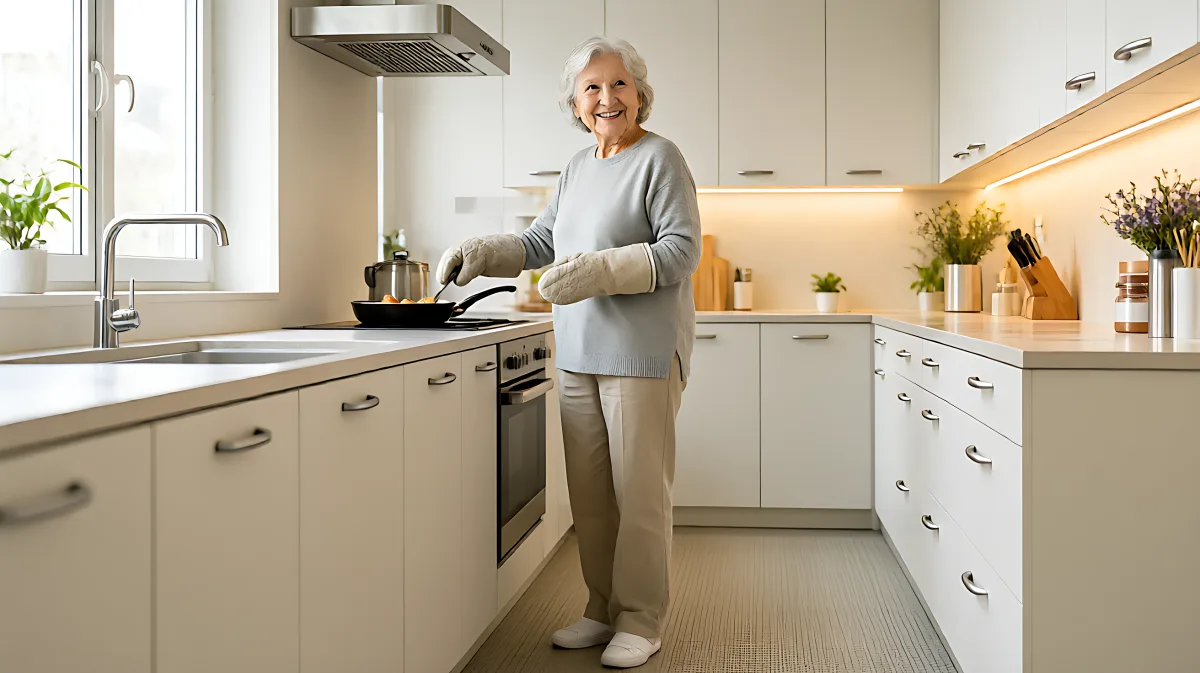
Learn how to transform a standard kitchen into a safe haven for older adults. This guide covers fire prevention, fall reduction, and practical accessibility upgrades to support independent living.
For older adults, the kitchen presents unique challenges that can turn routine cooking into a safety risk. To protect yourself or a loved one, focus on three core areas: eliminating fire hazards, preventing falls through layout changes, and using adaptive tools. By integrating automatic shut-off devices, non-slip flooring, and ergonomic utensils, you can drastically reduce the risk of injury while maintaining the independence that comes with cooking at home.
Why is the kitchen particularly dangerous for seniors?
The kitchen is often called the heart of the home, but for many people over 65, it is statistically one of the most hazardous rooms. According to the American Burn Association, cooking is the leading cause of home fires, accounting for approximately 47 percent of all residential fire incidents. The risk is even higher for older adults because thinner skin burns faster and deeper, and slower reaction times due to changes in vision or mobility make it harder to prevent or escape a fire. The National Fire Protection Association notes that three in ten home fires begin in the kitchen, making it a critical zone for safety audits.
What are the specific fire and burn risks?
Unattended food on the stove is the primary culprit for kitchen fires. Many families assume that setting a timer is enough, but in fact, senior adults may not hear the timer if they are in another room or have hearing impairments. The American Burn Association recommends staying in the kitchen at all times when frying, grilling, or broiling. If you must leave the area, the heat source must be turned off completely. Furthermore, adults over 65 have a significantly higher risk of dying in a kitchen fire compared to the general population, partly due to the difficulty of moving quickly to safety. Installing automatic stove shut-off devices can provide a vital layer of protection for those with memory concerns.
How can you prevent falls in the kitchen?
Falls are a major concern for seniors living at home. The Centers for Disease Control and Prevention reports that one in four adults over 65 falls every year, with the kitchen being a common site due to wet floors and clutter. To mitigate this risk, the goal is to reduce the need for reaching, bending, and stretching. One effective strategy is to reorganize your storage. Heavy pots and pans should be moved to waist height, while lighter items can be stored higher up. Installing pull-down shelves or lazy Susans in upper cabinets allows you to access items without using a step stool, which is inherently unstable. Flooring is equally critical; transitioning to non-slip materials like textured vinyl or cork can prevent slips from spills or condensation.
What specific layout changes improve accessibility?
Accessibility is not just about reaching; it is about moving through the space safely. If you use a walker or wheelchair, pathways need to be widened to allow for smooth turning without hitting appliances. Counter heights should be adjusted to prevent deep bending, and under-cabinet lighting should be added to illuminate work surfaces. Poor lighting is a hidden hazard that leads to both falls and knife injuries. Using rocker or touch switches, which require less grip strength than traditional knobs, can make controlling the lights easier for those with arthritis. Regularly clearing clutter from the floor and counters ensures that there are no tripping hazards, especially in areas where water might accumulate near the sink.
Which adaptive tools simplify cooking tasks?
As grip strength and coordination naturally change with age, standard kitchen tools can become difficult or even unsafe to use. Adaptive devices are not just for those with disabilities; they are helpful for anyone looking to reduce physical strain. Lightweight cookware makes it easier to handle soups and stews without fatigue. Ergonomic utensils with larger, non-slip handles provide better leverage and control. For those with limited hand strength, electric jar openers and can openers remove the need for manual twisting. Additionally, silicone pot holders that resist heat and are thicker than traditional cloth mitts offer better protection against burns. These tools support independence by allowing seniors to prepare meals without needing constant assistance from family or caregivers.
What is the checklist for upgrading your kitchen?
- Lighting: Install bright, glare-free LED bulbs under cabinets and use motion-activated lights in entryways.
- Flooring: Replace loose rugs with non-slip mats secured to the floor or install textured flooring that allows mobility aids to roll smoothly.
- Hardware: Swap round cabinet knobs for wide, D-shaped handles that are easier to grasp.
- Storage: Move heavy items to waist-to-shoulder height and use pull-out drawers for lower cabinets.
- Appliances: Consider an induction cooktop, which has a glass surface that cools down quickly and eliminates open flames, reducing the risk of accidental burns.
How do you maintain food safety and electrical hygiene?
Foodborne illness is a serious threat to older adults, whose immune systems may not fight off bacteria as effectively. The Centers for Disease Control and Prevention estimates that 76 million cases of foodborne illness occur annually in the US. To stay safe, you must check refrigerator temperatures regularly, keeping it at or below 40 degrees Fahrenheit. Use a food thermometer to ensure meats are cooked to the correct internal temperatures, such as 165 degrees Fahrenheit for chicken. Separating raw meat from ready-to-eat foods is essential to prevent cross-contamination. On the electrical side, inspect appliance cords for fraying or damage and keep small appliances away from water sources. Unplugging devices like blenders or coffee makers when not in use reduces the risk of electrical fires and shocks.
What are common misconceptions about kitchen safety?
Many seniors believe that using a step stool to reach high cabinets is a fine risk, but in fact, it is one of the leading causes of falls in the kitchen. Stepping on unstable furniture or stools significantly increases the chance of losing balance. Instead, use an installed grab bar or a sturdy step stool with a handle, or simply reorganize your storage so you do not need to reach high places at all. Another misconception is that water is a safe extinguishing agent for all kitchen fires. The American Burn Association explicitly warns that water should never be used on grease or electrical fires, as it can cause the flames to spread or create scalding steam. A lid or a fire extinguisher rated for Class B (grease) and Class C (electrical) fires is the correct tool for these emergencies.
FAQs
What is the safest stove type for seniors?
Induction cooktops are generally considered the safest for seniors because they use electromagnetism to heat the cookware rather than an open flame. The surface stays relatively cool to the touch, and if the pan is removed, the heating process stops immediately. This reduces the risk of igniting nearby fabrics and lowers the chance of severe burns if a pot is accidentally bumped.
How often should seniors test smoke and carbon monoxide detectors?
Detectors should be tested at least once a month to ensure they are functioning. Batteries should be replaced annually, ideally at the same time as changing clocks for daylight saving time. Since carbon monoxide is odorless and colorless, having a working detector is critical for anyone using gas stoves or heating systems, particularly if ventilation is not optimal.
Are there specific foods to avoid for seniors with weak immune systems?
While a balanced diet is important, seniors should avoid raw or undercooked seafood, sprouts, and unpasteurized dairy products, which carry higher risks of bacterial contamination. Leftovers should be discarded after three to four days, and all reheated food should be steaming hot throughout to kill potential bacteria.
What lighting is best for a senior's kitchen?
Task lighting is the most important element. Bright, cool-white LEDs should be installed directly under cabinets to eliminate shadows on countertops where food is being prepared. Recessed lighting in the main ceiling provides general illumination, but it is often not focused enough for detailed work. Glare-free fixtures are preferred to prevent eye strain and disorientation.