How to Safely Defrost Meat in a Microwave
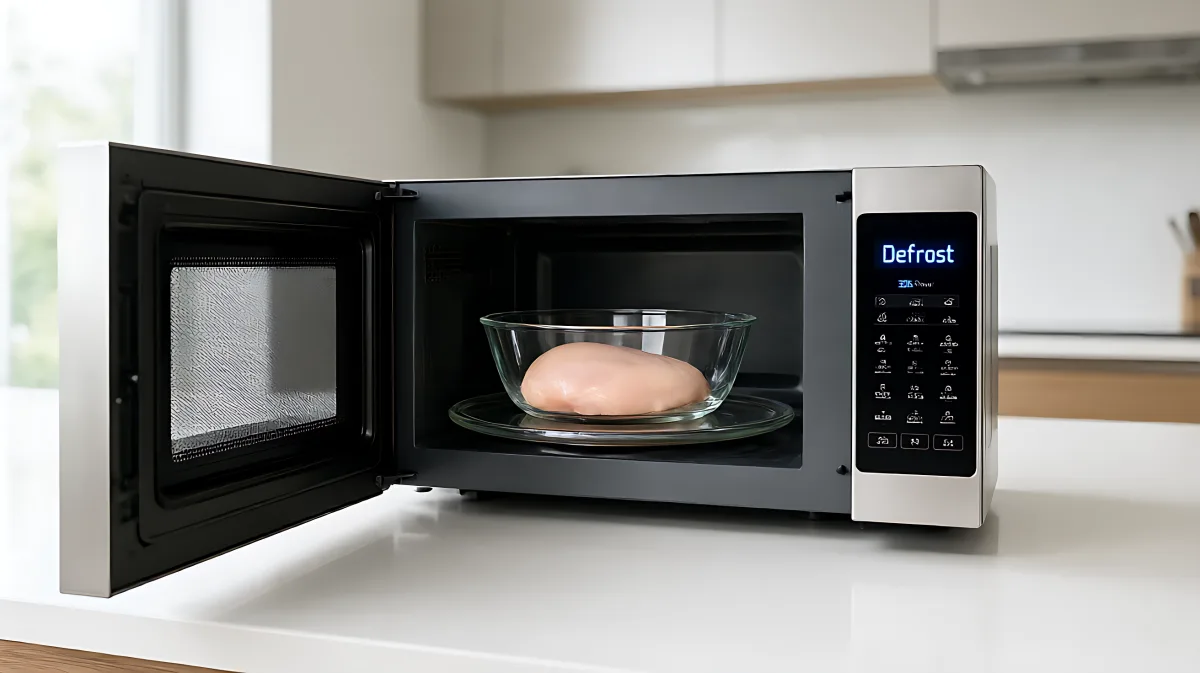
Microwave defrosting is fast, but safety requires precision. This guide explains how the low-power cycle works, why immediate cooking is critical, and how to handle packaging to ensure your meat is ready for the pan without risking foodborne illness.
Using the microwave defrost cycle is the fastest way to thaw frozen meat, but it requires strict adherence to safety protocols to prevent bacterial growth. The process works by cycling the microwave magnetron on and off to maintain a low power level, typically between 20 and 30 percent. According to Michigan State University Extension, this method thaws food quickly but creates a risk if the meat is not cooked immediately. To do it safely, remove original packaging, place the meat in a glass container, and rotate it every few minutes to ensure even thawing before cooking it right away.
What Is the Microwave Defrost Cycle?
The defrost setting on your microwave is not a distinct cooking mode; rather, it is a specific power modulation. Standard microwave operation runs the magnetron continuously at 100 percent power, generating high heat. The defrost cycle, however, turns the magnetron on for short bursts and off for longer intervals. Whirlpool notes that this modulation keeps the appliance running at roughly 20 to 30 percent power. This low energy level is sufficient to thaw frozen water crystals in the meat without generating enough heat to begin the actual cooking process. This distinction is crucial for food safety, as partial cooking can leave the interior of the meat in a temperature range that encourages bacterial proliferation.
How Long Does the Microwave Defrost Cycle Take?
Timing your defrost correctly prevents the meat from partially cooking, which compromises texture and safety. Maytag recommends a general guideline of 8 to 10 minutes per pound for most meats when using the manual defrost setting. However, Michigan State University Extension suggests that the actual time can vary between 7 to 8 minutes per pound depending on your specific microwave wattage and the thickness of the cut. Thinner items, like individual chicken breasts or slices of bacon, will thaw faster than a whole roasting chicken. Always check the weight on your kitchen scale or the original packaging to input the correct data if your microwave features an automatic defrost function.
Why Is Immediate Cooking Critical for Safety?
Many families assume that thawing meat in the microwave and then storing it in the refrigerator for later is a convenient hack. In fact, this is a significant food safety error. The USDA and Michigan State University Extension warn that microwave defrosting is the speediest method but also the riskiest if mishandled. As the microwave raises the temperature of the food, it inevitably creates spots where the meat reaches the 'danger zone' of 40 to 140 degrees Fahrenheit. In this range, bacteria that are dormant in frozen food become active and multiply rapidly. Therefore, you must cook the meat immediately after the defrost cycle finishes. Never put partially thawed or fully thawed meat back into the freezer or fridge to use later. The only safe path from the microwave is straight to the stove, oven, or grill.
How Do You Prepare Meat for the Defrost Cycle?
Preparation matters just as much as the settings. Before starting, you must remove all store packaging, including foam trays, plastic wrap, and cardboard. Michigan State University Extension emphasizes that these materials are not heat-resistant and can melt or warp, potentially leaching harmful chemicals into your food. Transfer the meat into a microwave-safe glass container or a bowl. Cover the container loosely with a microwave-safe lid or paper towel to absorb splatter while allowing steam to escape. If your meat comes in a single sealed package, transfer it immediately. If it is in loose pieces, place them in a single layer if possible to prevent uneven thawing.
What Steps Ensure Even Thawing?
Even thawing is the biggest challenge with microwave defrosting because the edges of the meat warm up faster than the center. To mitigate this, you need to intervene physically during the cycle.
- Rotate the container manually if your microwave does not have a turntable that spins automatically.
- Flip the meat over every few minutes to expose different sides to the microwaves.
- Break apart any pieces that are sticking together to allow heat to penetrate the center.
- Check the temperature and texture halfway through the recommended time; the edges should be cool to the touch, not warm.
This active management ensures that no part of the meat cooks while other parts remain frozen, which is a common cause of texture issues and foodborne illness risks.
Frequently Asked Questions
Can I defrost marinated meat in the microwave?
Yes, but you should remove the original packaging first. Place the marinated meat in a glass container. Be aware that the liquid may splash during the cycle, so covering the container is essential. Marination does not change the defrost time significantly, so stick to the standard 8 to 10 minutes per pound guideline.
Is it safe to defrost fish using the microwave cycle?
Yes, but fish is delicate. Use a shorter defrost time than for beef or pork to prevent the edges from cooking and becoming rubbery. Rotate the fillets frequently. Fish should be smelled for freshness after thawing; if it smells overly fishy or ammonia-like, do not cook it, as it may have been stored improperly before freezing.
What should I do if part of the meat is still frozen after the cycle?
If the meat is partially frozen, you can continue to cook it directly from that state. The oven or pan will finish the thawing and cooking process. However, if the meat is warm in spots but still icy in the center, let it rest at room temperature for a few minutes while you prepare your pan, ensuring it thaws uniformly before searing. Never freeze it again.