Kitchen Vocabulary Guide: Utensils, Appliances & Tableware
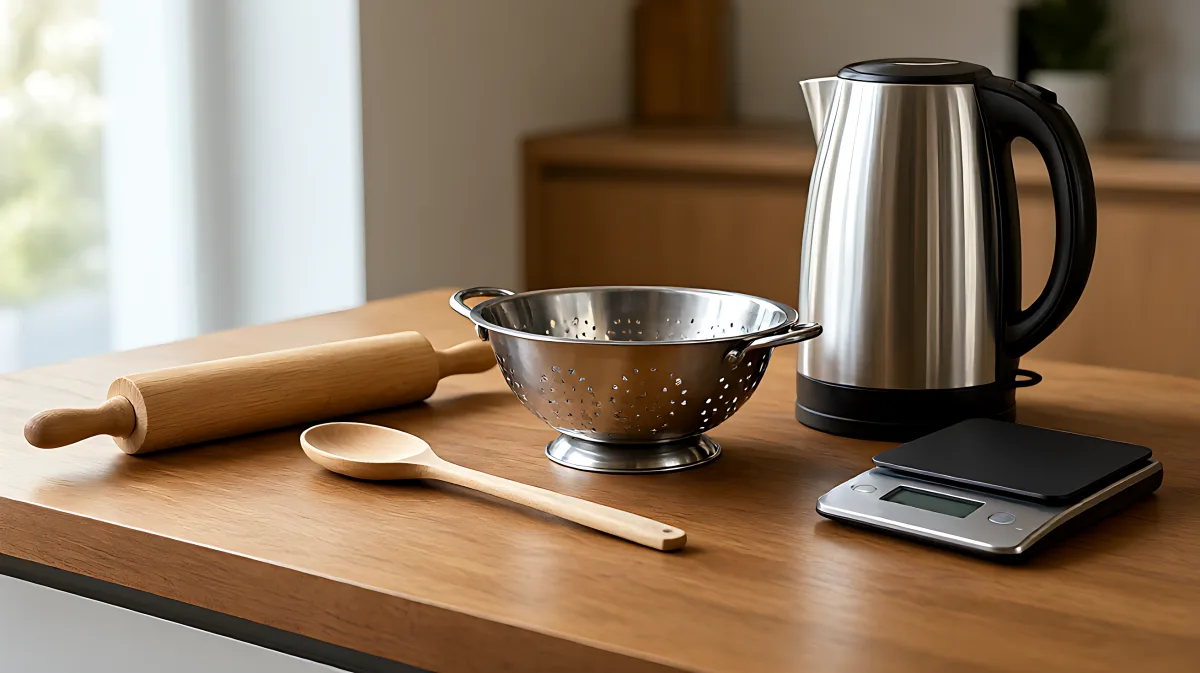
Discover the definitive list of kitchen vocabulary. From essential appliances like the kettle and blender to utensils such as the rolling pin and spatula, this guide helps you master kitchen terminology.
Knowing the specific names of kitchen items is vital for effective cooking and clear communication in food settings. This guide outlines the key terminology for appliances, utensils, glassware, and table settings, ensuring you can accurately describe equipment like the blender, rolling pin, and wine glass in any culinary context.
Why Precise Kitchen Terminology Matters
Many beginners assume that general terms like "cooking tool" are sufficient for describing kitchen equipment. In fact, specific vocabulary is required for accurate recipe instruction, professional kitchen communication, and language learning. For instance, confusing a "ladle" with a "spoon" can change the outcome of a soup dish, while distinguishing between a "teacup" and a "demita" clarifies serving sizes for coffee.
What Are the Core Kitchen Appliances?
Appliances form the backbone of any modern kitchen. These machines handle heating, cooling, and processing food. While names may vary slightly between US and UK standards, the function remains consistent.
- Toaster: Used for browning bread.
- Kettle: Boils water for tea and coffee.
- Refrigerator: Keeps food cold.
- Blender: Mixes and purées ingredients.
- Microwave: Heats food rapidly using radiation.
- Mixer: Automates stirring and kneading.
- Range Hood (US) / Cooker Hood (UK): Ventilation system to remove smoke and steam.
Which Utensils Are Essential for Daily Cooking?
Utensils are the hand-held tools that allow you to prepare food. Mastering these terms is the first step to becoming a proficient home cook.
- Rolling Pin: Cylindrical tool for flattening dough.
- Chopping Board: Surface for cutting vegetables and meat.
- Colander: Perforated bowl for draining pasta or rinsing produce.
- Whisk: Tool for beating eggs and cream.
- Spatula: Flat blade for scraping bowls and flipping food.
- Ladle: Deep spoon with a handle for serving soups and stews.
- Kitchen Shears: Scissors designed for food preparation.
How Do You Classify Kitchen Glassware?
Glassware vocabulary is specific to the liquid being served. Using the correct term ensures proper hospitality and dining etiquette.
Wine Glass: Typically stemmed, used for red or white wine.
Champagne Flute: Tall, narrow glass to preserve carbonation.
Mug: Cup with a handle, often for hot beverages.
Shot Glass: Small cup for spirits.
Collins Glass: Tall glass for mixed drinks with soda.
What Defines a Formal Table Setting?
Formal dining requires specific placement of cutlery and plates. The vocabulary for these items is standardized in culinary arts.
- Dinner Plate: The main large plate.
- Bread and Butter Plate: Smaller plate above the main cutlery.
- Salad Fork: The outermost fork on the left.
- Dessert Fork: Usually placed above the plates.
- Napkin: Cloth or paper used for hygiene.
Common Mistakes in Kitchen Vocabulary Usage
One frequent error is using "pot" to describe all cookware. In fact, a "saucepan" has straight sides and is for boiling or simmering, while a "frying pan" or "skillet" has sloped sides for searing. Additionally, a "casserole dish" is for oven baking, not stovetop cooking. Confusing these terms can lead to using the wrong equipment for a specific recipe technique.
How to Practice Kitchen Vocabulary Effectively
To retain these terms, active recall is more effective than passive reading. Use the following checklist to test your knowledge.
- Label your kitchen drawers with the English names of the utensils inside.
- Write down five new appliances and match them with their UK and US equivalents.
- Practice describing a meal preparation by naming every tool you touch.
- Take a visual quiz to test your recognition of glassware types.
What Is the Difference Between a Skimmer and a Colander?
A colander is a solid bowl with holes for draining water. A mesh skimmer is a flat, perforated metal mesh attached to a long handle, used to remove solid ingredients from hot liquids without draining the liquid itself.
Why Do US and UK Terms Differ for Hoods?
In the US, the ventilation system is commonly called a "range hood," while in the UK it is referred to as a "cooker hood." This reflects regional linguistic preferences for kitchen equipment names.
Is a Spatula the Same as a Turner?
Yes, in many contexts, a "turner" is a specific type of spatula used for flipping burgers or fish. A standard spatula is flexible for scraping bowls, while a turner is usually stiffer with a metal head.
How Important Are Formal Table Setting Terms for Home Cooks?
While casual home dining does not require strict adherence to formal settings, knowing terms like "saucepan" versus "frying pan" or "ladle" versus "scoop" ensures you select the right tool for the job, preventing cooking errors.