What Are Tools? Definition, History, and Usage
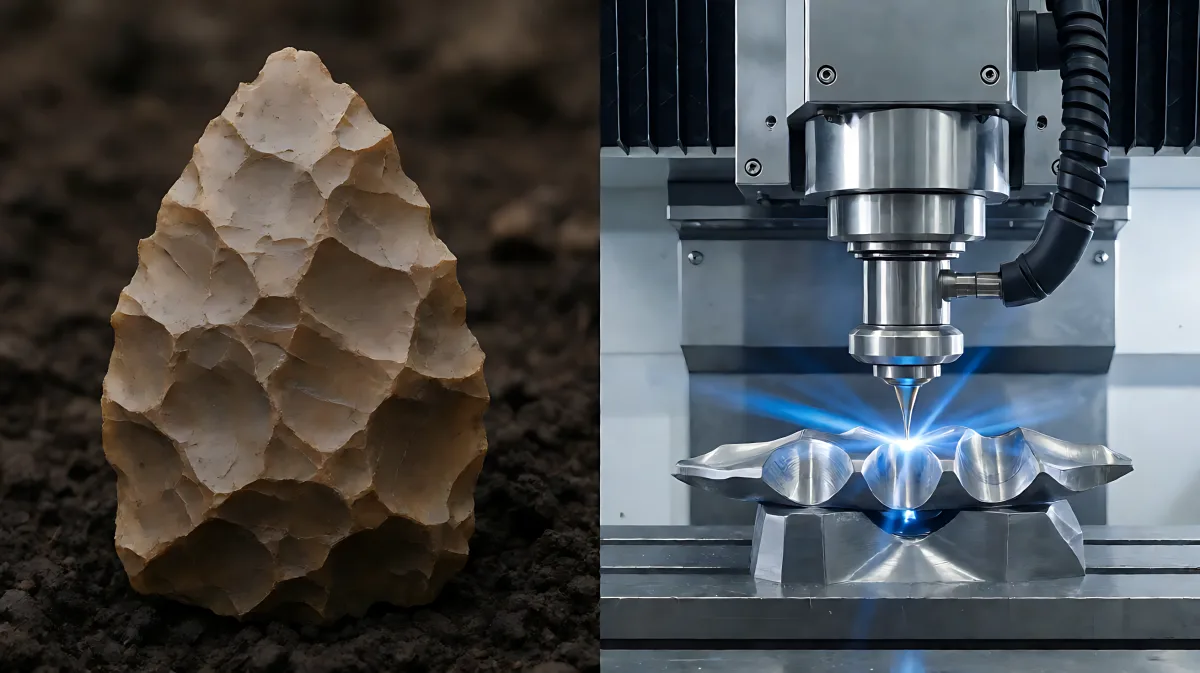
Explore the fundamental concept of tools, their evolutionary history, and how they have shaped human civilization from prehistoric times to the digital age.
A tool is any object used to extend an individual's ability to modify their environment or accomplish a specific task. These items range from simple hand-held implements to complex automated systems that drive industrial and digital workflows.
What Is the Formal Definition of a Tool?
While common sense offers a basic understanding, experts have proposed more precise definitions. A widely cited framework from 1981, later modified, describes tool use as the external employment of a manipulable environmental object to alter the form or condition of another object. The user must hold and directly manipulate the tool to ensure effective orientation. Other scholars define tools simply as objects carried or maintained for future use, or as inanimate objects modified to facilitate the achievement of a target goal.
How Has the History of Tools Shaped Human Evolution?
Anthropologists view the creation of tools as a critical step in human evolution. Early tools, likely made of perishable materials like wood or bone, were probably used before the divergence of humans and chimpanzees. Later, stone tools emerged, with examples dating back thousands of years. These early implements were used for food preparation, hunting, and weaving. The development of metalworking allowed for more durable and effective tools. The Industrial Revolution marked a significant turning point, where harnessing energy sources like steam enabled the creation of complex machinery. This shift allowed tools to operate with minimal human supervision, drastically increasing labor productivity.
What Are the Different Types of Tools?
Tools can be categorized by their function and the era in which they became prominent. Primitive tools include hammers, chisels, and saws, which rely on direct physical force. Mechanical tools use gears, levers, or fluids to amplify human input. Digital tools represent the modern extension of the concept, where software and algorithms act as "toolkits" for systematic thought and investigation. In many professional fields, the term "tool" is also applied metaphorically to concepts that support investigative processes.
How Do Animals Use Tools?
Although humans are the most prolific tool users in the animal kingdom, other species also demonstrate tool use. Wild chimpanzees, for instance, are known to use sticks to extract termites or pound nuts. This behavior suggests that the capacity for tool use has deep evolutionary roots. However, human tool use is distinguished by the ability to create tools to make other tools, a recursive process that has led to the vast array of technological devices available today.
How Does Tool Use Extend to Non-Material Concepts?
In modern contexts, the word "tool" extends beyond physical objects to include abstract concepts. "Toolkits" refer to sets of methodologies or frameworks used for problem-solving. In digital spaces, software applications serve as tools that extend cognitive abilities. This broadening of the definition reflects the increasing complexity of human tasks and the need for specialized aids in both physical and intellectual endeavors.
FAQ
What is the difference between a tool and a machine?
A tool is typically a solid, hand-operated object with a single primary purpose, while a machine is a complex system with multiple interacting parts designed to perform specific tasks with greater power or precision.
When did humans first start using tools?
Anthropologists believe the routine use of tools occurred prior to the divergence of humans and chimpanzees, potentially hundreds of thousands of years ago, with early materials likely including wood and bone.
Can non-human animals use tools?
Yes, many animals, including chimpanzees and corvids, have demonstrated the ability to use and even modify objects to achieve specific goals, such as obtaining food.
How did the Industrial Revolution change tool use?
The Industrial Revolution introduced power-driven machines that replaced manual labor, allowing for mass production and the development of complex tools that could operate with minimal human supervision.