Stroke Pencil Grips: How to Choose the Right Adaptive Tool
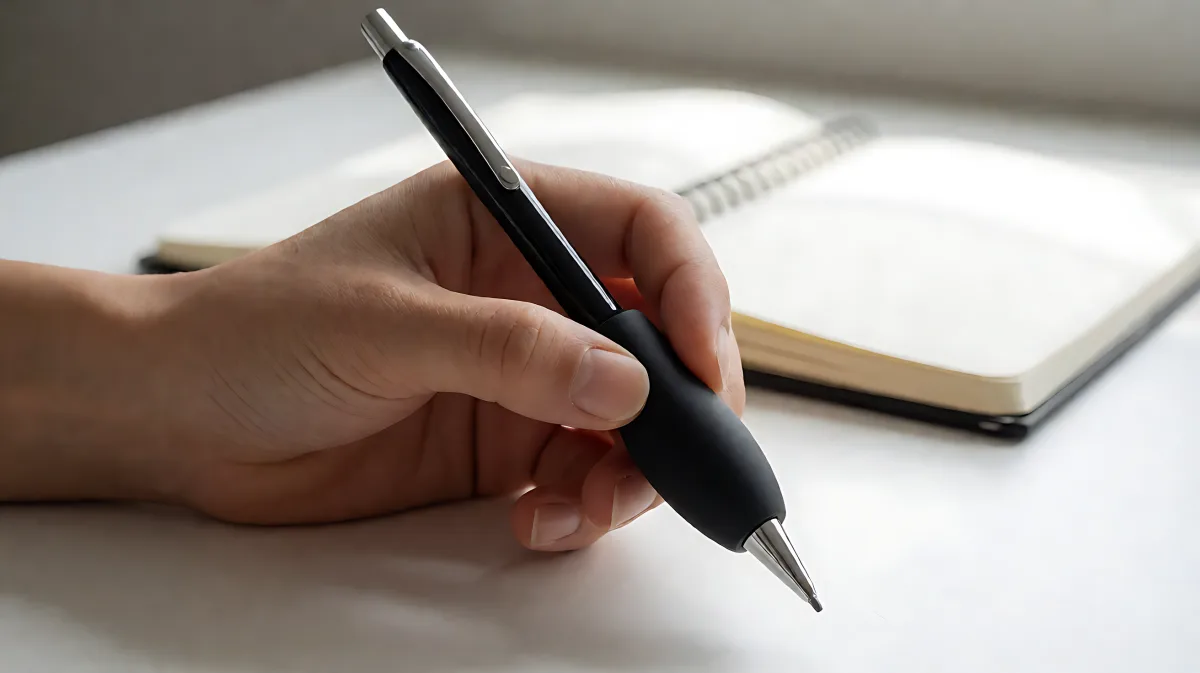
Reclaiming handwriting is a vital part of stroke recovery. This guide breaks down the specific types of pencil grips and adaptive pens that help restore fine motor control, reduce fatigue, and improve legibility.
Choosing the right pencil grip can significantly improve writing independence for stroke survivors. The most effective tools are not one-size-fits-all; instead, the correct selection depends on whether your primary challenge is hand tremors, low grip strength, or poor finger positioning. As of 2026, occupational therapy experts recommend prioritizing weighted instruments for tremors and cushioned barrels for fatigue, rather than focusing solely on aesthetic designs.
Why do pencil grips matter after a stroke?
A stroke disrupts the neural pathways between the brain and the hand, making the simple act of signing a document or writing a grocery list feel monumental. While some physical therapy focuses on gross movements like walking, fine motor control often requires specific external aids. A properly chosen adaptive grip acts as a bridge, helping to re-establish muscle memory and reducing the physical strain required to form letters. This is not just about legibility; it is about preserving your identity and daily confidence.
Many families assume that any soft, squishy grip sold in bulk will work for everyone. But in fact, a generic foam ring often provides no sensory feedback and can actually make the pen roll under the fingers, worsening dexterity issues for those with spasticity. You need a tool that matches your specific neurological deficit.
How can I identify my specific writing challenge?
Before buying, assess your primary difficulty. If you struggle to hold the pen down due to weakness, you need a wider, heavier tool. If your hand shakes, you need mass to stabilize the movement. If you cannot position your fingers correctly, you need a structured guide.
- Weak Grip Strength: Look for wide-barrel pens or cushioned grips that increase the diameter, reducing the pressure required from small muscles.
- Hand Tremors: Seek weighted instruments that provide sensory feedback and dampen involuntary movements.
- Poor Finger Positioning: Choose ergonomic grips with distinct finger slots or cradles that physically guide your hand into a neutral position.
What are the top adaptive tools available in 2026?
The market for adaptive writing tools has evolved, offering options that look like modern, stylish instruments rather than medical devices. Here are the three main categories recommended by specialists this year.
Are weighted pens effective for tremors?
For individuals with ataxia or essential tremors, a weighted pen is often the single most helpful tool. The UbiDuo weighted pen, for instance, weighs approximately 4 ounces. This specific weight is calculated to be heavy enough to stabilize motion but light enough to prevent fatigue. The extra mass makes it harder for trembling muscles to jerk the pen, resulting in smoother, more deliberate strokes. As noted by reviews on major retail platforms in 2026, users report that the stability provided by these 4-ounce tools turns a shaky scrawl into functional handwriting.
How do ergonomic cradles improve hand position?
The PenAgain ErgoSof represents a shift in design philosophy. Instead of forcing your hand to grip a traditional cylinder, it features a unique Y-shaped design. Your index finger rests in a U-shaped cradle, and you use the natural weight of your hand to apply pressure rather than clenching your fingers. This is particularly beneficial for those who also experience arthritis or carpal tunnel alongside their stroke. By removing the need for a tight pinch, it dramatically reduces strain on joints, allowing for longer practice sessions without pain.
Which cushioned grips reduce fatigue best?
The Pilot Dr. Grip remains a popular choice not just for its familiarity, but for its wide, soft barrel. Think of the difference between holding a thick garden hose and a thin wire; the larger diameter of the Dr. Grip requires less muscle tension to control. This is critical for stroke survivors who experience rapid fatigue. The cushioned section reduces stress points on the fingers, which is a significant source of discomfort during recovery. Because it is a mainstream brand, it does not look like a piece of medical equipment, helping the user feel confident using it in social settings like a bank or a cafe.
What is the step-by-step process for selecting your grip?
Do not guess. Follow this checklist to find the right tool for your recovery stage.
- Step 1: Consult Your Therapist. Ask your occupational therapist to assess whether your primary issue is tremor, weakness, or alignment. They can recommend specific features.
- Step 2: Test the Weight. If tremors are present, try a pen that feels like a small metal marker. A standard wooden pencil may be too light to provide stability.
- Step 3: Check the Ink Flow. Ensure the pen glides easily. A pen that requires significant downward pressure will only cause frustration. Look for smooth-flowing gel or rollerball ink.
- Step 4: Experiment with Variations. Needs change as you heal. Many of these tools cost between $10 and $15, making it affordable to try a few different styles to see what offers the most control.
Common mistakes to avoid when buying adaptive tools
One major misconception is that a larger grip is always better. In reality, an overly large or bulky grip can force the hand into an unnatural claw position, potentially creating new habits that are harder to correct later. The goal is a neutral, relaxed hand position.
Another error is neglecting the paper surface. A heavy pen on textured paper can feel sticky and resistant. Pair your new adaptive tool with smooth, lightweight paper to minimize friction. Remember, the objective is to make the physical act of writing as effortless as possible, allowing your mind to focus on the letters, not the mechanics.
Frequently Asked Questions
Can a pencil grip actually help stroke recovery?
Yes. While a grip does not repair damaged nerves, it provides external support that reduces the physical effort required to write. This allows for more frequent practice, which is essential for neuroplasticity and rebuilding muscle memory. It acts as a scaffold during the recovery process.
What is the difference between a pencil grip and a weighted pen?
A pencil grip is an attachment that modifies the shape of a standard pen or pencil, usually to guide finger placement. A weighted pen is a standalone instrument with added mass to counterbalance tremors. Many stroke survivors benefit from a combination: a weighted pen that also has a cushioned grip for comfort.
How much should I spend on an adaptive tool?
You do not need a high-budget item to start. Effective options range from $10 to $15. For example, bulk packs of ergonomic grips are often available for around $10, while specialty weighted pens with refills may cost slightly more. The key is to invest in the specific feature that addresses your primary deficit.