Portable Generator Safety & Carbon Monoxide Rules
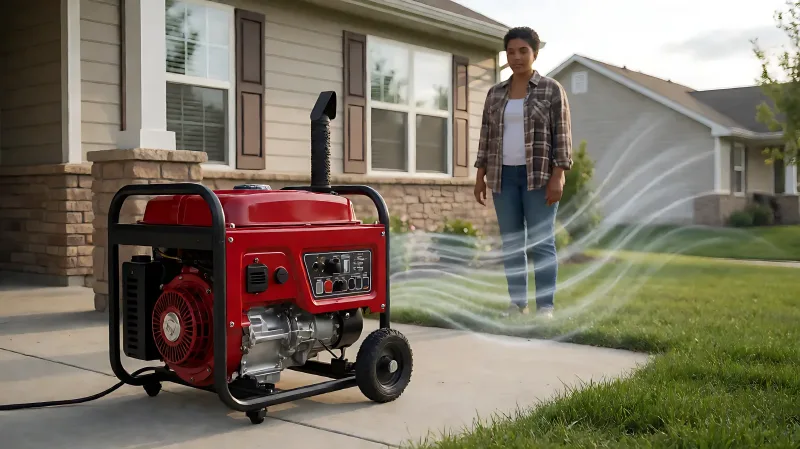
Protect your family during power outages by following strict positioning and fueling guidelines. Learn the critical 20-foot rule for carbon monoxide safety.
Run your portable generator at least 20 feet away from your home, with the exhaust pointing outward. This distance, recommended by the U.S. Centers for Disease Control and Prevention (CDC) and the National Fire Protection Association (NFPA), prevents invisible carbon monoxide from entering your living space. Never operate a generator indoors, in a garage, or in a basement, as the odorless gas can kill in minutes.
For more information, see NIA health information for older adults from the National Institute on Aging.
Why Carbon Monoxide Is a Silent Threat
Portable generators burn fuel to create electricity, releasing carbon monoxide as a byproduct. This gas is colorless, odorless, and tasteless, making it impossible to detect without specialized equipment. The CDC warns that symptoms of carbon monoxide poisoning include headache, dizziness, weakness, nausea, vomiting, chest pain, and confusion. Because these signs mimic the flu, many people mistake early poisoning for illness. High concentrations can lead to loss of consciousness and death. Since you cannot see or smell the gas, proper placement is the only reliable defense.
What Is the Safe Distance for a Generator?
Health and safety organizations, including the NFPA and CDC, advise placing generators at least 20 feet (about 6 meters) from any building. This rule accounts for wind direction and air circulation. The exhaust stack must face away from all windows, doors, and ventilation openings. If you have a small yard, move the generator to the farthest edge. Remember that 20 feet is a minimum; greater distance is safer. Do not place the unit near air intakes, crawl spaces, or fireplace flues.
Is a Garage Safe if the Door Is Open?
No. The CDC explicitly states that generators should never be run in a garage, even if the door is fully open. Carbon monoxide is slightly lighter than air at high concentrations but often pools near the ground in enclosed or semi-enclosed spaces. A garage, shed, or covered porch acts as a trap. The gas can accumulate faster than it can dissipate, creating a deadly pocket of air. Treat any roofed structure as an indoor space for generator purposes.
How Do I Power My Home Safely?
Never plug a generator directly into a wall outlet. This practice, known as backfeeding, energizes your home's wiring and sends electricity back into the local power grid. This creates two major dangers: it can electrocute utility workers trying to restore power, and it can cause fires when the mains power is restored without warning. Instead, use a properly installed transfer switch or interlock device. These devices are installed by a licensed electrician and physically isolate your home from the utility grid before the generator connects. Without this, only power individual appliances by plugging them directly into the generator's outlets using heavy-duty, outdoor-rated extension cords.
What Are the Rules for Fueling and Storage?
Fuel safety is as critical as placement. Always turn off the generator and allow the engine to cool completely before refueling. Hot exhaust manifolds can ignite spilled gasoline instantly. Use approved fuel containers, such as red plastic cans for gasoline. Store fuel outdoors, away from living spaces, in a well-ventilated area. Check local fire codes for specific limits on how much fuel you can store at home, as regulations vary by municipality. In the United Kingdom, for example, limits are stricter under the Petroleum Regulations. In the U.S., many local codes allow residential storage of up to 50 gallons of gasoline in approved containers, but you must check with your local fire department.
How Long Can You Store Gasoline?
Gasoline degrades over time. Modern fuels contain stabilizers, but they only last so long. To ensure your generator starts when you need it, use fresh fuel. If you must store fuel for more than 30 days, add a fuel stabilizer. Stale fuel can clog carburetors and damage the engine. Rotate your fuel supply regularly so that older cans are used first.
How Do I Choose the Right Carbon Monoxide Detector?
Install battery-powered or plug-in carbon monoxide detectors in every sleeping area and on each level of your home. The Federal Trade Commission (FTC) advises testing these alarms monthly. Choose detectors certified to UL standard 2075. While a detector will alert you to dangerous levels, it is not a substitute for proper generator placement. If the alarm sounds while the generator is running, move everyone outside immediately and shut the generator off. Do not re-enter the building until it is clear and the generator has been moved to a safe location.
Do Generators Need Their Own Detectors?
Newer models of portable generators often include built-in carbon monoxide sensors. These devices can automatically shut down the engine if ambient CO levels rise. This is a valuable safety feature, but you should still follow all positioning guidelines. Do not rely on the generator's internal sensor as your only line of defense. Maintain separate, independent household alarms for complete protection.
FAQ
Can I run a generator in the rain?
Yes, but you must use a waterproof cover or canopy that does not block the ventilation or exhaust. Never place the generator under a solid roof that traps heat or fumes. Ensure the generator is on level, dry ground to prevent slipping or electrical shorts.
How many appliances can one generator power?
It depends on the generator's wattage. A typical 3,500-watt portable generator can power a refrigerator, a few lights, and a fan simultaneously. To determine capacity, add the starting watts of all appliances you plan to use. Choose a generator with a surge capacity 20-30% higher than your total load to ensure reliable operation.
Where should I store my generator when not in use?
Store the generator in a dry, well-ventilated place, such as a detached garage or a secure shed. Do not store it in the basement or any space where fuel vapors could ignite. Drain the fuel system or add a stabilizer if you are storing the unit for an extended period.