Power Bank Fire Risks for Elderly: Safety Guide
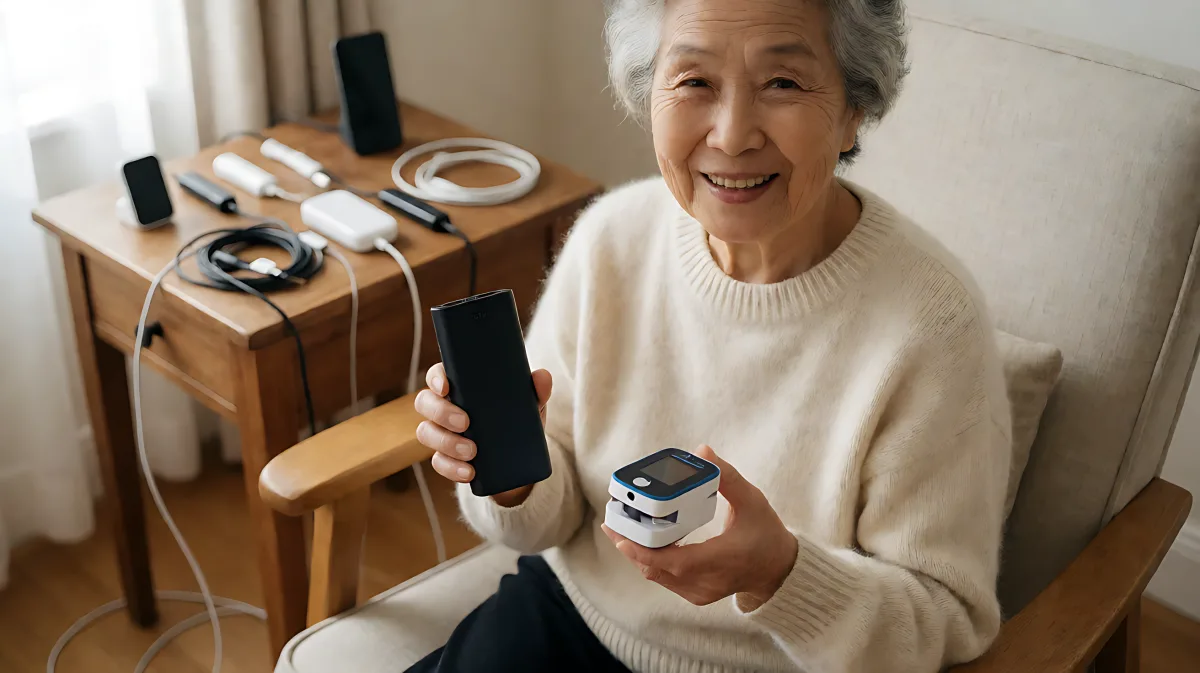
Power outages threaten seniors with medical devices. This guide details how to prevent lithium-ion fire hazards when using portable power banks, including a practical checklist for safe charging and storage in 2026.
Portable power banks pose significant fire risks for elderly residents, particularly when they power life-saving medical devices like oxygen concentrators or insulin pumps. The main hazard is thermal runaway, a chain reaction that releases heat and toxic gases. To keep your loved one safe in 2026, always use manufacturer-approved chargers, store batteries at 40% charge, and inspect for physical damage before every use. Implement a specific backup power plan to avoid the need for untested improvisation during outages.
What Makes Power Banks Dangerous for Seniors with Medical Equipment?
Modern lithium-ion batteries pack high energy into small spaces, which is beneficial for mobility but risky if the chemistry is compromised. For seniors, the risk is magnified because they may rely on these devices for respiration or heart rate management. When a battery fails, it does not just stop working; it can emit flammable gases and ignite without external oxygen. The US Fire Administration (USFA) highlights that thermal runaway involves uncontrolled heating that can lead to fire or explosion. For an older adult in a residential setting, the smoke and toxic fumes from a burning battery can be fatal before the fire spreads, especially if they have compromised lung capacity.
How Can Families Prevent Lithium-Ion Thermal Runaway at Home?
Most battery fires start with preventable user errors or defective components. The Federal Drug Administration (FDA) has issued warnings regarding battery fires in home-use medical devices. To mitigate this, families must adhere to strict purchasing and handling protocols. Buying from reputable manufacturers is the first line of defense; look for the Underwriter Laboratories (UL) mark to ensure the product meets national safety standards. Additionally, using a battery that was not designed for the specific medical device is a major cause of failure. The incompatibility can cause the device to draw power incorrectly, overheating the battery pack.
- Verify Authenticity: Only buy batteries and chargers from authorized suppliers. Avoid unvalidated online sellers who offer cheaper, unbranded alternatives.
- Check for Recalls: Before purchasing a power bank, check if the specific model has a safety recall from the manufacturer or regulatory bodies.
- Use Matching Components: Never mix chargers from different brands or devices. Use only the cord and adapter that came with the specific medical equipment or power station.
Which Warning Signs Indicate a Battery is About to Fail?
It is critical to learn the physical cues of a failing battery. Many families assume that a battery is safe as long as it is not on fire, but in fact, visible or audible warnings appear hours or days before a catastrophic event. Caregivers and residents should stop using and unplug the device immediately if they notice any of the following indicators. These signs suggest the internal electrolyte is decomposing, a precursor to thermal runaway.
What physical changes should you look for?
According to safety guidelines from California Institute of Technology (Caltech), the most common precursors are physical and acoustic. Keep your eye out for bulging or swelling of the casing, which indicates gas buildup. A strong acrid odor or color changes on the battery surface are also critical. If the battery is leaking or feels excessively hot to the touch even when not in use, it is compromised.
What should you do if you hear popping or hissing?
These sounds indicate internal venting of gases. Do not attempt to cool the battery with water, which can cause a chemical reaction. Instead, move the device to a non-flammable, well-ventilated area if it is safe to do so. If it is on fire, leave the area immediately and call emergency services.
How Should Power Banks Be Stored and Charged Safely?
Charging and storage practices have a direct impact on battery longevity and safety. The Caltech safety guidelines emphasize that charging should happen in a controlled environment. Never charge a battery in a bedroom or near flammable curtains and bedding. A battery fire in a sleeping area is highly dangerous because the occupant may be unaware of the smoke until it is too late. It is recommended to charge devices outside or in a garage, if possible, or in a hard-surface room away from combustibles.
| Best Practice | Risk to Avoid |
|---|---|
| Store at room temperature | Exposure to extreme heat or cold degrades the chemical structure. |
| Keep at 40% charge for long-term storage | Storing at 0% or 100% charge accelerates aging and swelling. | Plug directly into wall outlet | Extension cords can create resistance and overheating points. | Unplug when fully charged | Overcharging triggers safety mechanisms that stress the battery. |
What Is the Correct Emergency Response for a Battery Fire?
When a fire breaks out, standard firefighting instincts can be wrong. Lithium-ion fires can re-ignite even after they appear to be out. The USFA advises that these fires require intensive cooling to stop the thermal reaction. Do not use a standard dry chemical extinguisher on a large battery pack without professional guidance, as it may not stop the heat. Instead, secure the area and call the fire department. The responders will use copious amounts of water to cool the battery modules. In a home setting, your priority is to ensure the elderly resident is at a safe distance and that the fire does not spread to other household items.
What if the fire involves a vehicle or wheelchair?
For electric wheelchairs or scooters, the battery pack is often the source. These fires are challenging due to the large energy density. First responders need to understand the specific make and model to isolate the power source. Caregivers should keep the manufacturer’s emergency response guide or manual accessible for first responders.
What is a Practical Checklist for Medical Device Backup Power?
To prevent the need for using untested power banks during an outage, families should build a verified system. A 60-watt medical device used for 8 hours requires roughly 480 watt-hours of energy. A 500 watt-hour power bank might not deliver that full amount due to efficiency losses. You must calculate the runtime in real-world conditions. Always verify with the supplier that the portable power station is compatible with the medical device's power requirements, especially if it needs pure sine wave power.
- Inventory: List every device that relies on electricity, from insulin pumps to home dialysis.
- Verify Wattage: Confirm the specific power draw of each device with the manufacturer.
- Test Hardware: Run the power bank for at least 24 hours at 40% charge to ensure it holds a charge.
- Establish a Plan: Designate where the batteries will be charged and where the equipment will go if the battery dies.
How Often Should Medical Batteries Be Replaced?
Medical device batteries have a limited lifespan due to cycling. Most manufacturers recommend replacing the battery pack for major medical devices every 12 to 24 months, depending on usage. An aged battery is more likely to have unstable chemistry, increasing the risk of swelling. If you cannot access the device manual, contact the supplier to confirm the recommended replacement interval. Do not wait for the battery to fail; replace it proactively.
Frequently Asked Questions
Can I use a power bank to charge a medical device overnight?
You should only do this if the device manufacturer explicitly states that the power bank is compatible and certified for overnight charging. Improper charging cycles can damage the battery and create fire hazards. Always check the device manual for approved accessories.
What should I do if I find a swollen battery in a wheelchair?
Do not continue using the wheelchair. Stop charging it immediately. Place it on a non-flammable surface away from the home, such as a concrete driveway, and contact the manufacturer or a fire department for safe disposal. Never put a swollen lithium-ion battery in the trash.
Are all portable power stations safe for home use?
No. Some power stations have safety certifications that others lack. Look for UL listings or equivalent international certifications to ensure the inverter and battery management system are designed to protect against overheating and short circuits.
How does extreme weather affect battery safety?
Extreme heat and cold both damage lithium-ion cells. In hot weather, batteries can overheat and go into thermal runaway. In cold weather, the battery loses capacity and can short-circuit if the internal components shift. Store power banks in a climate-controlled environment, not in a hot car or unheated garage.