One-Handed Kitchen Utensils: 5 Innovative Designs
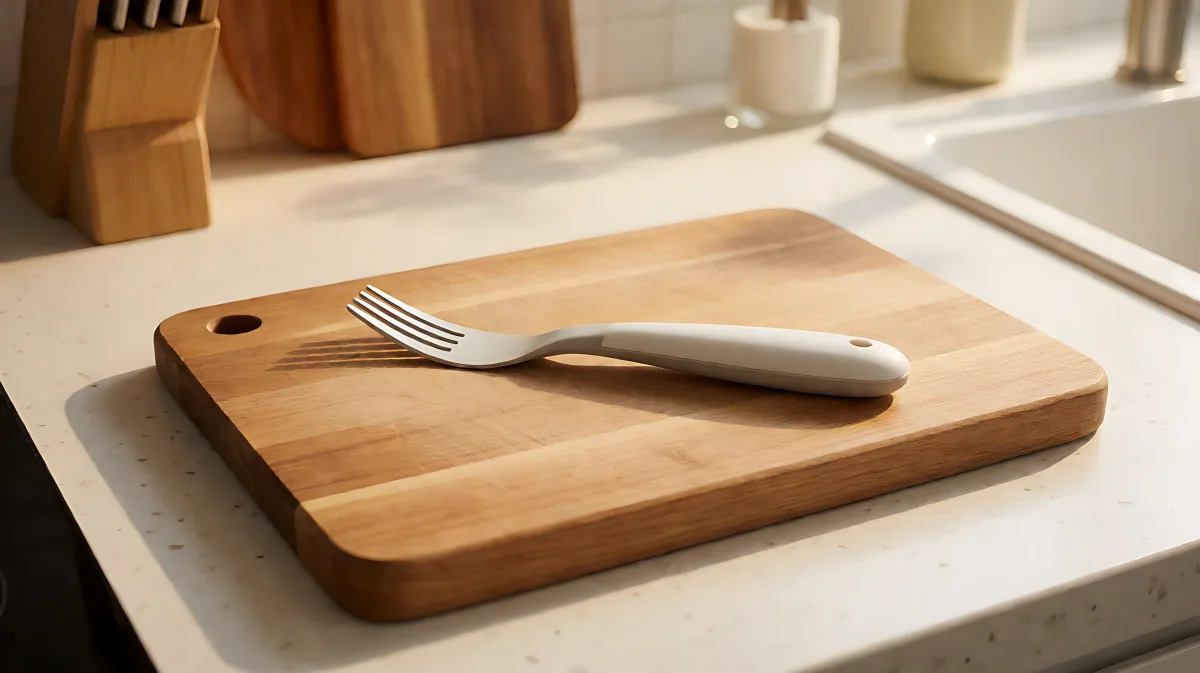
From the iconic Knork to spiked prep boards, these one-handed utensil designs unlock independence in the kitchen. See how simple engineering creates major daily benefits.
One-handed kitchen utensils are adaptive tools designed to allow individuals with limited hand function to prepare and eat meals independently. By integrating features like spiked surfaces, beveled cutting edges, and self-stabilizing bases, these gadgets eliminate the need for a second hand to hold food steady. This design philosophy benefits not only people with limb differences or injuries but also elderly users and anyone seeking a more efficient, no-fuss cooking experience.
Why Do We Need Specialized One-Handed Utensils?
Standard cutlery assumes two hands: one to hold the food and one to manipulate the tool. For a person with a single functioning hand, or a grip weakness affecting one side, this simple assumption breaks down. Traditional methods often involve clamping a plate between the knees or leaning a jar against a wall, both of which are awkward and prone to spills. Adaptive design intervenes by embedding the function of 'holding' directly into the tool or the surface it rests on. This shift transforms basic tasks, like spreading butter or opening a jar, from frustrating challenges into manageable routines. In 2026, the market for these accessories continues to grow, driven by an aging population and a broader cultural emphasis on inclusive design.
Who Benefits Most from These Adaptive Designs?
While these tools are essential for those with amputations, spinal cord injuries, or strokes, their utility extends further. Parents carrying a sleeping infant often appreciate the stability of a one-handed prep board. Right-handed individuals with left-hand strain or carpal tunnel syndrome may find the beveled edges of a hybrid fork-knife easier on their wrist. The common thread is the removal of the 'anchor' hand, freeing the user to focus entirely on the action hand. Organizations such as Active Hands have long advocated for this distinction, noting that having one limited hand is fundamentally different from having two limited hands.
What Are the Most Innovative One-Handed Cutlery Designs?
The most recognized innovation in this space is the Knork. Originally popularized by The Grommet, this utensil merges a fork and a knife into a single plastic or metal piece. The design is based on a specific biomechanical principle: a 'finger platform' that provides leverage. Instead of stabbing food, the user applies downward pressure on the platform, which forces the beveled tines into the food. This allows for cutting and spearing in one fluid motion. The bevelled edge creates targeted pressure, making it easy to slice through soft items like cheese or vegetables without sawing. A plastic version of the Knork has gained popularity for camping and buffet settings because it is lightweight, reusable, and hygienic.
How Do Spiked Preparation Boards Work?
Another critical category is the food preparation board. Standard wooden boards are slippery, causing food to roll away when a single hand is attempting to chop. Adaptive boards, such as those manufactured by specialized accessibility retailers, feature a section with raised spikes or grippers. When food is placed in this zone, the spikes hold it firmly in place against gravity. This allows the user to use a knife with their functional hand to slice or dice ingredients without needing to stabilize the food. Some boards also include integrated graters and collection bowls, enabling a user to shred cheese or slice fruit with one hand by sliding the item over the embedded surface. These boards are typically made from solid wood or high-density plastic to withstand the force of cutting.
How Can You Open Jars with Just One Hand?
Opening jars is a notorious barrier in the kitchen. The torque required to twist a lid is rarely achievable with a single hand unless the jar is secured. The Belliclamp is a common solution, often found in adaptive catalogs. It is a V-shaped clamp that hooks over the edge of a counter. You place the jar in the V, push down on the top with your body weight or your hand to secure it, and then twist the lid off. The clamp releases automatically when you move away. This eliminates the need to sit on the jar or lean it against a sink. Combining this holder with a specific jar-opening tool, such as a ratchet-style opener, ensures that the user can seal and unseal food containers with minimal effort.
What Role Do Dispensers Play in One-Handed Hygiene?
While not a utensil for eating, the toothpaste dispenser is a vital one-handed kitchen and bathroom aid. Many standard tube dispensers are too difficult to open and squeeze with one hand. Adaptive dispensers mount to the wall and use a push-down mechanism. You insert your toothbrush into a slot, and the mechanism dispenses a precise amount of paste. This prevents waste and keeps the sink clean, offering a level of independence that is often overlooked in meal-prep discussions. It represents the broader trend of integrating accessibility into daily hygiene routines.
What Should You Look for When Buying Adaptive Tools?
When selecting one-handed utensils, material and durability are key. Plastic tools like the Knork are ideal for travel and casual use, but metal versions offer a more traditional dining experience for everyday meals. For preparation, look for non-slip feet on your boards; without them, the board itself will slide during cutting. Check for the presence of 'lips' or diagonal holds that prevent bread from rolling off while spreading. Finally, consider the cleaning factor. Adaptive tools often have complex shapes with spikes or hinges. Ensure that the materials are dishwasher safe or easy to hand-wash to prevent bacterial growth. Many manufacturers now offer these as part of a 'grab-and-go' set, simplifying the shopping process.
Are These Tools Cost-Effective?
Investing in these tools is an investment in independence. While a single Knork may cost less than a standard set of cutlery, the time and frustration saved can be substantial. For households with members who have mobility limitations, the reduction in the need for assistance can significantly improve quality of life and reduce the burden on family members. The price point has dropped in recent years, making high-quality adaptive design more accessible to the average consumer. The focus is no longer just on medical necessity but on ergonomic superiority for everyone.
Frequently Asked Questions
Can right-handed people use one-handed utensils?
Yes. The Knork and other beveled tools are symmetric in their cutting ability, though they are designed to be held with a specific grip. Right-handed individuals with wrist strain or temporary injuries often find that the leverage provided by the finger platform reduces the effort required to cut food, making it a beneficial tool for a wider audience.
What is the best material for a one-handed cutting board?
High-density plastic and solid wood are the two best options. Plastic is non-porous and easy to sanitize, which is crucial for hygiene. Wood is durable and provides a natural 'give' when cutting, which can be easier on kitchen knives. Ensure whichever material you choose has anti-slip feet to keep the board stable during one-handed chopping.
Do I need special knives for adaptive boards?
No. Standard serrated or straight-edged knives work perfectly fine with spiked or gripper boards. The spikes hold the food, not the knife, so you can use your usual cutlery. However, having a lighter knife can be helpful if you are managing your arm strength or have limited grip power, as it requires less force to move through the food.