Low Dexterity Home Renovation Tips for Seniors
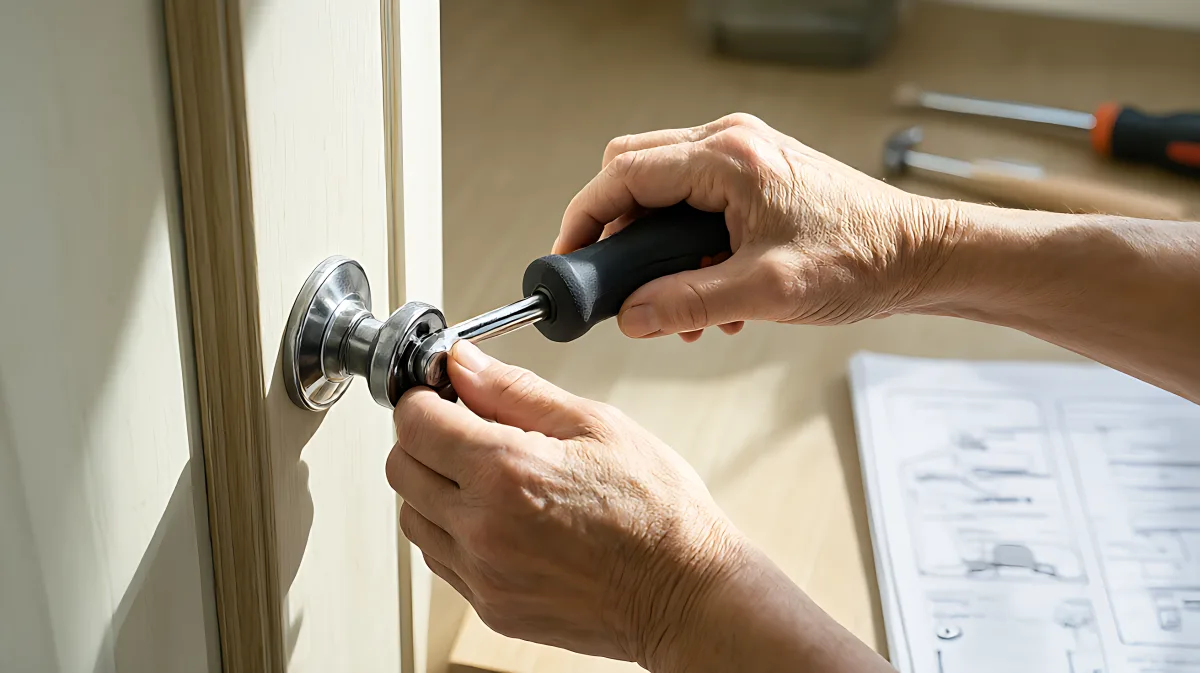
Home renovations do not require surgical precision or immense strength. By adapting standard assembly techniques for low dexterity, seniors can safely update their living spaces while maintaining independence and reducing fall risks.
Many seniors believe that home renovation requires strong grip strength and steady hands. In fact, low-dexterity assembly techniques focus on tool adaptation, pre-preparation, and mechanical leverage rather than raw power. You can safely install safety features and update your home by using modified tools, planning your workflow, and prioritizing non-slip surfaces. The National Institute on Aging recommends keeping frequently used items at waist height to minimize strain, a principle that also applies to where you store your tools during a project.
How do you adapt standard tools for limited grip strength?
The most common mistake in home repair is attempting to use standard-sized tools without modification. Many families assume that buying expensive specialty tools is necessary for safe renovation, but in fact, simple household items can dramatically increase control. You can turn a standard screwdriver into a high-torque tool by sliding a piece of foam pipe insulation over the handle. This increases the surface area your hand can grip, allowing you to generate more rotation with less wrist force. For items that require very little precision, such as turning a faucet handle or opening a cabinet, swapping round knobs for lever handles is a superior alternative. Lever handles can be operated with a push or pull motion, bypassing the twisting action that often causes pain or slippage for those with arthritis or reduced tendon strength.
What safety checks should you perform before starting a project?
Safety must override convenience when your physical abilities are changing. Before assembling any new furniture or installing fixtures, verify that the support structure is adequate. Homemade aids or temporary solutions are strictly for convenience, not for body support. If a slip, crack, or loose part could cause you to fall, the item should not be a DIY project. Always try each new tool or fixture while seated on a sturdy chair with a back. If the item wobbles, cracks, or requires you to stand on a chair to reach, stop and reassess. For anything that supports your weight, such as a grab bar or a stair rail, you must buy a tested product and consult an occupational therapist. The National Institute on Aging specifically advises against standing on chairs to reach high places; instead, use a lightweight pick-up hook or a reach stick to gather items, or reorganize your storage so that frequently used pots and utensils are at waist level.
Which home modifications offer the highest safety return on investment?
When considering where to spend your budget, focus on the areas with the highest fall risk. The Centers for Disease Control and Prevention reports that one in four Americans age 65 and older reports falling each year. To mitigate this, prioritize non-slip flooring. Materials such as rubber, non-slip vinyl, or cork offer superior traction and cushioning. As of 2026, these materials cost less than $3 per square foot, making them a cost-effective upgrade. In the bathroom, installing a non-slip bath mat with suction cups is a simple fix that costs approximately $10. Furthermore, lighting is a critical factor in preventing missteps. Installing motion-sensing lights in hallways and bathrooms allows for hands-free navigation at night. These fixtures can range from $15 for a simple switch to $200 for complex outdoor systems, but even inexpensive adhesive tap-on lights for under cabinets, costing around $20 per pack, can significantly improve visibility during food prep or late-night walks.
How can you streamline the assembly process to reduce fatigue?
Fatigue is a major enemy of precise assembly. To combat this, adopt a 'seated work' strategy. The National Institute on Aging suggests preparing food and performing assembly tasks while seated to prevent loss of balance. Create a dedicated work station by placing a tray on a sturdy table at a height that does not require you to hunch over. Pre-sort all screws, nuts, and hardware into labeled containers before you begin. This eliminates the need to rummage through bags or small boxes, which is difficult with low dexterity. Use large, loop-style drawer pulls or ribbon-tied loops for your hardware organizers to make retrieval easy. For tasks like hanging art or installing shelves, use a level that has a wide, flat back so you can rest it against your palm rather than pinching it between fingers. If you must hold a drill, secure it to the wall or use a drill stand if available, rather than trying to stabilize it with two hands. Remember that it is better to complete a small project perfectly than a large one poorly.
- Pre-sort all hardware into large-lidded containers to avoid fumbling.
- Use foam pipe insulation to increase the diameter of screwdriver and wrench handles.
- Swap round doorknobs for lever handles to allow push/pull operation instead of twisting.
- Install motion-sensing night lights in pathways to the bathroom.
- Replace loose rugs with non-slip, low-pile flooring or secured rugs under 1/2 inch thick.
When should you call a professional for installation?
Know the limits of your ability. While you can safely adjust lever handles or install non-slip mats, structural modifications require a professional. Widening doorways to accommodate wheelchairs or walkers involves removing existing door frames and installing new framing, a task that requires carpentry skills and structural knowledge. Similarly, installing permanent ramps requires adherence to building codes, specifically maintaining a slope of no more than 1:12 (12 inches of length for every 1 inch of rise) and including handrails. If a project involves cutting into walls, working with high-torque electrical systems, or installing anything that bears weight, hire a licensed contractor. The cost of a portable ramp can range from $60 to $800, but a permanent structure costs significantly more, so consult a professional to ensure safety and compliance.
Frequently Asked Questions
Can I use a standard tool if I wrap it in tape?
Yes, but foam pipe insulation is superior. Tape can become smooth and slippery over time, whereas foam maintains its texture and expands the handle diameter. Ensure the foam is secured tightly with a rubber band if necessary, and replace it immediately if it loosens or tears.
Is it safe to install grab bars by myself?
Only if you use a pre-drilled template and verify the anchor depth. However, because grab bars support body weight, it is highly recommended to have a professional verify the installation into studs or solid concrete. Do not install a grab bar into drywall alone without approved heavy-duty anchors.
What is the best lighting option for someone who cannot reach switches?
Motion-sensing lights are the best automated option. They turn on when you enter a room, eliminating the need to locate and flip a switch. For under-cabinet lighting, adhesive tap-on lights are ideal because they require no wiring or reaching.