Kitchen Workflow Optimization: A Practical Guide
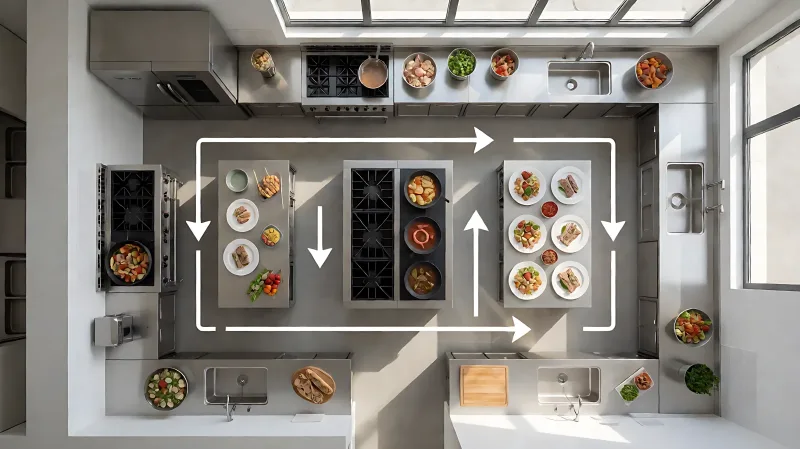
Discover how workflow-first design and data-driven metrics can transform your kitchen into a high-performing, safe, and efficient operation.
Optimizing your kitchen workflow involves mapping the physical movement of food and staff before purchasing equipment, using data to track performance, and regularly auditing the space to eliminate bottlenecks. By prioritizing logical flow over aesthetic appeal or specific appliances, you can significantly reduce labor costs, improve safety, and speed up service times without sacrificing quality.
Why Should Workflow Dictate Kitchen Layout?
Many operators fall into the trap of selecting expensive equipment first and trying to fit their operations around it. This approach often leads to structural inefficiencies that no amount of technology can fix. When a kitchen layout forces staff to backtrack, cross paths, or queue for shared stations, it creates bottlenecks that directly increase labor costs and slow down ticket times.
The National Restaurant Association notes that labor remains one of the largest operational expenses for foodservice businesses. Poor flow amplifies this cost because staff spend more time moving than working. Furthermore, the U.S. Bureau of Labor Statistics reported that thousands of nonfatal injuries occur in full-service restaurants annually, many linked to cramped layouts and poor workstation organization. A well-designed workflow reduces these safety risks by creating clear, one-directional traffic patterns that minimize collisions and confusion during peak service.
What Is a Workflow-First Design Approach?
A workflow-first approach means understanding how food, people, and dishes move through the operation before any floor plans are drawn. The Certified Food Service Professionals (CFSP) handbook identifies workflow as one of the six core elements of effective commercial kitchen design. Instead of treating efficiency as a daily struggle to manage, it becomes a built-in advantage of the space itself. This method allows teams to operate at full capacity with less friction, reducing the need for staff to "work around" design flaws.
How Do You Map Your Kitchen Stages?
Before reviewing equipment catalogs or floor plan templates, you must understand the operational cycle of your kitchen. Most commercial kitchens follow seven distinct stages: receiving, storage, preparation, cooking, plating, service, and warewashing. Mapping these stages on paper before designing the layout is crucial. Draw arrows showing how ingredients and dishes move. If the arrows cross or backtrack, you have identified a friction point that needs to be resolved in the physical layout.
The FDA Food Code emphasizes that food should flow in one direction, from raw to ready-to-eat, to minimize contamination risks. This regulatory requirement also supports operational efficiency by ensuring that dirty dishes do not intersect with clean food preparation areas. For existing kitchens undergoing renovation, audit your current workflow by identifying where staff collide, which stations create backups, and how far cooks travel between prep areas and cooking equipment.
Which Layouts Suit Different Hospitality Scenarios?
Different operations require tailored workflow approaches. For multi-outlet hotel and resort kitchens, the challenge is feeding multiple service points without creating bottlenecks. Many resorts solve this by creating a central commissary kitchen for prep work, with smaller finishing kitchens at each outlet. This workflow-first approach reduces duplication and improves consistency across the property.
- Banquet Operations: Prioritize batch production and precise timing. Use assembly-line or zone-style configurations that allow multiple staff to work in parallel without interference.
- Country Clubs: Focus on separating service streams so that banquet production, member dining, and grab-and-go service do not interfere with one another.
- Urban Restaurants: Prioritize compactness and minimal movement distance between the pass and the dining room to maintain high table turnover rates.
How Do You Measure Kitchen Performance?
Designing the space is only the first step. To ensure continuous improvement, you must establish key performance indicators that define kitchen performance. These metrics provide insights into various aspects of operations, helping identify areas for improvement that might not be visible to the naked eye.
- Order Completion Time: Measures the average time taken to prepare and serve an order. High completion times often indicate delays in food preparation or plating stages.
- Waste Percentage: Tracks food waste levels to identify inefficiencies in prep or inventory management.
- Labor Cost Percentage: Compares labor costs to sales, indicating staffing efficiency and resource allocation.
- Equipment Utilization Rate: Assesses how effectively kitchen equipment is used, influencing maintenance scheduling and investment decisions.
For instance, if a restaurant notices high order completion times during lunch, a kitchen workflow analysis might pinpoint that the bottleneck is not the cooking speed but the plating station, where staff are waiting for specific garnishes.
What Role Does Technology Play in Optimization?
Technology serves as a vital tool for tracking and improving kitchen workflow. Advanced software solutions allow operators to gain real-time insights into kitchen performance and make data-driven decisions. Inventory management software helps maintain optimal stock levels, reducing waste and ensuring ingredients are fresh when needed. Automated scheduling tools align staff schedules with peak business hours, preventing overstaffing during slow periods and understaffing during rushes.
Performance dashboards provide a centralized view of key metrics, facilitating the quick identification of trends and issues. A bustling downtown bistro that integrated a new POS system synced directly with kitchen screens reported reducing ticket times by 20%. This demonstrates how digital order screens and inventory systems can enhance communication and efficiency across the team.
How Do You Implement Continuous Improvement?
Optimization is not a one-time event but a continuous process. Regularly reviewing and adjusting workflows ensures that the kitchen adapts to changing demands and maintains high performance levels. To foster this culture, operators should implement regular staff feedback sessions to gather insights and suggestions for workflow enhancements. Staff on the line often see inefficiencies that management may miss.
Periodic workflow assessments track progress and identify new areas for optimization. Benchmarking against industry standards helps maintain a competitive advantage. By embedding these practices into daily operations, kitchens can ensure sustained improvements in workflow efficiency. The goal is to create a resilient system that can withstand the pressure of peak service while maintaining high standards of safety and speed.
FAQ
How often should I measure kitchen workflow performance?
Regularly, but the exact frequency depends on the size and nature of your operation. For most restaurants, monthly assessments are a good starting point. High-volume kitchens might benefit from weekly reviews of key metrics like order completion time and waste percentage.
What is the best way to reduce food waste in the kitchen?
Implementing an efficient inventory management system and providing regular staff training on portion control are the most effective strategies. Tracking waste percentages allows you to pinpoint specific menu items or prep stations that are contributing the most to inefficiency.
Can workflow optimization improve staff safety?
Yes. Poor workflow design is a major contributor to workplace injuries. By creating clear, one-directional traffic patterns and separating clean from dirty areas, you reduce the risk of slips, trips, falls, and cross-contamination incidents.
Is it too late to optimize a fully built kitchen?
It is never too late. Even in fully built kitchens, you can optimize by rearranging smallwares, reassigning station duties, and changing menu items to fit the layout better. While major structural changes are difficult, workflow strategies like cross-training staff and using technology for tracking can still yield significant improvements.