How to Make a Kitchen Safe for Seniors
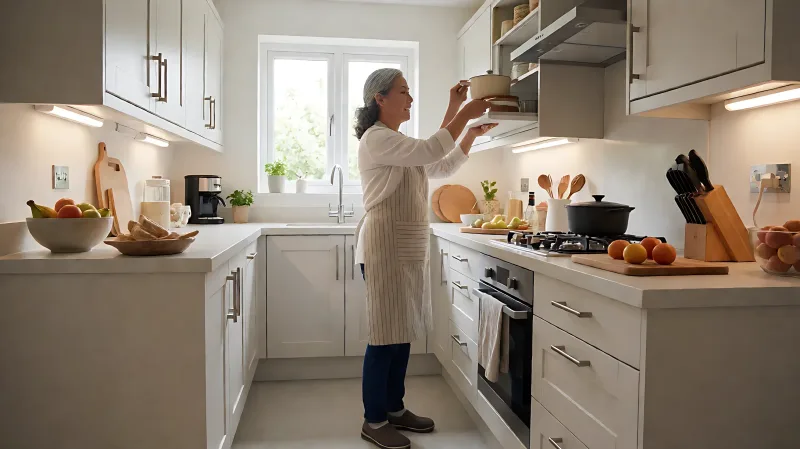
Discover practical adjustments to appliances, lighting, and layout that help older adults prepare meals safely while maintaining independence.
You can safely maintain your independence in the kitchen by adjusting your layout to waist height, swapping out heavy items for lightweight tools, and installing anti-slip flooring. These simple changes significantly reduce the risk of falls and burns, allowing older adults to continue cooking with confidence and joy.
Why are kitchens dangerous for older adults?
The kitchen is often the most active space in the home, but it also presents unique hazards. Smooth flooring combined with water spills creates a high risk for slipping. Additionally, the combination of hot surfaces, sharp blades, and cluttered countertops can lead to serious injury. According to the Centers for Disease Control and Prevention, one in four adults over the age of 65 experiences a fall each year, with the home being a primary location for these incidents. As grip strength and mobility naturally decline, the standard setup of a kitchen can become physically demanding and potentially hazardous. Proactive modifications are necessary to create an environment that supports safe cooking habits and prevents accidents before they happen.
How should you rearrange your kitchen layout?
Ages-friendly design focuses on reducing the need to bend, reach overhead, or twist. Arrange frequently used items, such as dishes and heavy cookware, between waist and shoulder height. This simple reorganization minimizes strain on joints and improves balance. Consider installing pull-down shelves or lazy Susans in upper cabinets to make retrieval easier without the need for a stepladder. Ensure there are clear pathways of at least three feet around the stove and sink to prevent tripping hazards. If you use a mobility aid like a walker or wheelchair, verify that these clearances allow for smooth turning and movement throughout the space.
Which appliances protect against fire and forgetfulness?
Modern technology can provide a vital safety net for seniors who may forget to turn off a burner. Look for stovetops equipped with automatic shut-off devices that deactivate the heat source after a set period. Smart plugs can also be used to manage small appliances like coffee makers, allowing them to be turned off remotely or on a schedule. When dealing with cooking oils, always remain in the room. If a grease fire occurs, never add water, which can cause the oil to splatter explosively. Instead, turn off the heat and smother the flames with a metal lid. Keeping a properly rated fire extinguisher within reach and practicing how to use it is a critical safety step.
How do you prevent slips and falls on the floor?
Footwear is the first line of defense. Avoid cooking in socks, slippers, or backless sandals, which offer no stability. Instead, wear shoes with non-slip soles that provide traction on slick surfaces. For the floor itself, consider replacing smooth tiles with textured vinyl, cork, or rubber materials that offer better grip. Place non-slip mats in high-risk zones, such as in front of the sink and stove. Ensure these mats have beveled edges to prevent tripping and are secured with backing so they do not slide underfoot. Address spills immediately with absorbent cloths to maintain a dry and safe workspace.
What adaptive tools make cooking easier and safer?
As coordination changes, everyday tools can become difficult to handle. Adapt your kit by incorporating lightweight cookware and ergonomic utensils with large, non-slip grips. Electric jar openers and can openers can save physical effort for those with limited strength. Use silicone pot holders that resist heat rather than thin dish towels, which can easily ignite if they touch a burner. When stirring hot liquids, always face the pot away from your body to prevent steam and splashes from causing burns. Lift the far edge of a lid first to direct steam away from your face and hands.
How can lighting and fixtures improve visibility?
Poor lighting contributes to a significant number of kitchen accidents, particularly for those with vision changes. Upgrade to bright, energy-efficient LED bulbs to eliminate shadows. Install under-cabinet lighting to illuminate work surfaces clearly and ensure you can see spills or small objects. Motion-activated lights near the entrance and cabinets are highly beneficial, as they turn on automatically when you approach. Additionally, replace round, difficult-to-turn cabinet knobs with wide D-shaped handles. For the sink, consider installing a lever-style faucet or a touchless model that requires minimal effort to operate, helping to prevent leaks and conserve water.
How do you manage electrical safety and cords?
Extension cords are a common tripping hazard and can pose fire risks if overloaded. Minimize their use by rearranging appliances to plug directly into wall outlets. If an appliance must be placed in a specific spot, consider having an electrician install an additional outlet to avoid daisy-chaining cords. Regularly inspect power cords for signs of fraying, cracking, or damage, and replace them immediately if needed. Keep the area around outlets clear to prevent plugs from catching on clothing or getting hot.
How often should I test my smoke detectors?
You should test your smoke detectors monthly to ensure they are operational. It is also a good practice to replace the batteries at least once a year, ideally when you change your clocks for daylight saving time. Consider installing detectors specifically designed for kitchen environments that are less likely to trigger from cooking steam or smoke.
What should I do if I cannot see the stove clearly?
If the layout makes it difficult to monitor the cooking area, try moving the stove to a location where you have a clear line of sight from the main workspace. Alternatively, install a mirror on a nearby wall to reflect the view of the burners, allowing you to check on your food without turning around.
Are there specific features to look for in a microwave?
When selecting a microwave, look for models with a digital display that shows cooking time and temperature clearly. Some units have sensor cook features that automatically adjust the power based on the food type, which reduces the risk of overheating or undercooking. Ensure the turntable spins freely to distribute heat evenly and prevent hot spots.