Fix Smart Home Sensor False Positives: DIY Guide
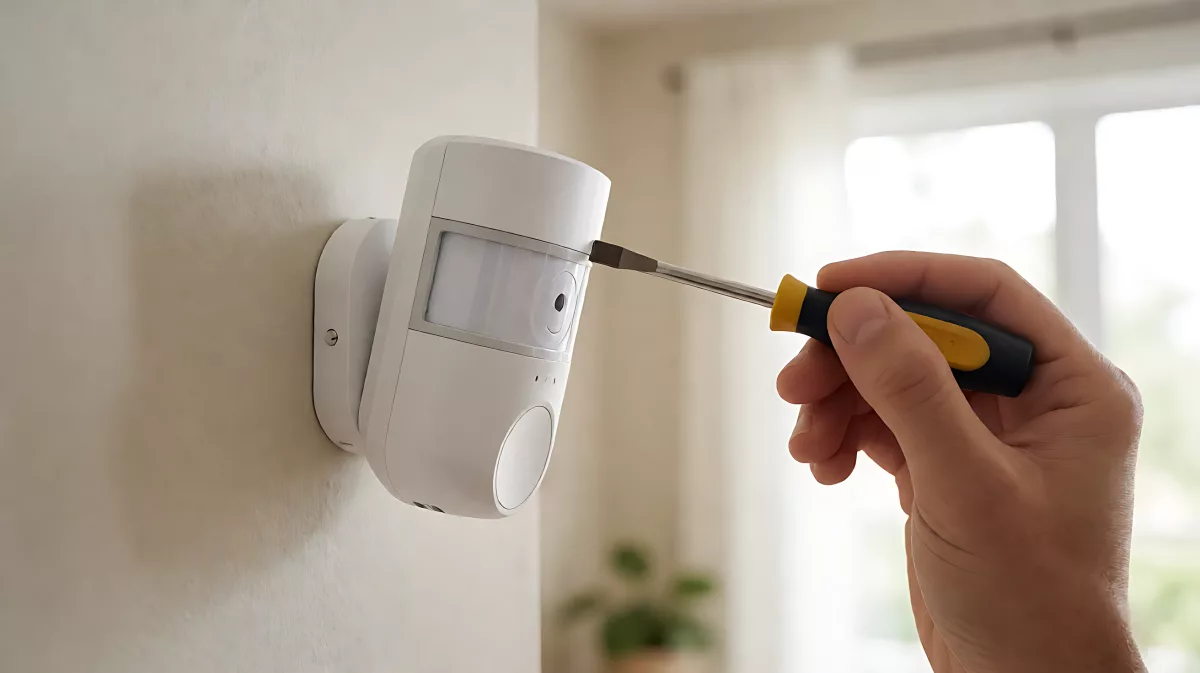
Smart home sensors often misinterpret environmental shifts as motion. Learn to identify the root causes, from low batteries to thermal gusts, and apply simple DIY fixes to restore reliability.
Smart home sensor false positives occur primarily due to low battery power, thermal changes in the air, or physical obstruction of the PIR lens. By systematically checking your device's power source, repositioning the unit away from direct sunlight or air drafts, and verifying the firmware version, you can significantly reduce unnecessary alerts. These three steps address the most common causes of motion detection errors reported in consumer home automation platforms.
Why Do Motion Sensors Trigger When No One Is Present?
Passive Infrared (PIR) sensors do not "see" objects in the traditional visual sense. Instead, they detect changes in infrared radiation, which is essentially heat. Because of this technology, they are highly sensitive to environmental shifts that mimic the thermal signature of a moving person. When a sensor registers a sudden change in heat within its field of view, it assumes motion has occurred. This mechanism explains why false positives are so frequent in smart home systems.
The primary culprit in many cases is thermal stratification. In heated or air-conditioned homes, warm and cool air layers can shift rapidly. For example, if a cold breeze from a window mixes with warm room air, the PIR sensor detects this temperature gradient as a heat source moving. This is particularly common during transitions between seasons or when external weather conditions change abruptly. As of recent consumer reports, many users have noted that sensors placed near large windows or air vents are more prone to these thermal false triggers.
What Role Does Battery Health Play in Sensor Accuracy?
It is a widespread myth that a motion sensor must wait until the battery indicator explicitly flags "low power" before performance degrades. In reality, PIR sensors are analog devices. When the voltage drops below the optimal operating range, the internal voltage regulation circuits become less stable. This instability can cause the sensor's trigger threshold to fluctuate, making it overly sensitive to minor thermal shifts.
Community discussions on major smart home forums consistently highlight that sensors with battery levels below 50 percent are the most frequent source of erratic behavior. The device may still register a valid signal on its screen, but the underlying voltage ripple can cause the sensor to "ghost," sending false motion reports to your hub. Replacing the CR2032 lithium coin cells with high-quality industrial-grade alternatives, rather than standard office supply batteries, can ensure a more stable voltage output throughout the battery's life.
How Often Should You Check Sensor Batteries?
While most sensors last 12 to 18 months, it is advisable to test them every six months. During this check, use a multimeter to verify the battery voltage is above 3.0 volts. If the voltage is lower, replace the battery even if the app indicates sufficient life. This proactive step prevents the gradual degradation that leads to intermittent false alarms.
How Can Physical Placement Eliminate False Alarms?
Placement is often the first mistake made during installation. PIR sensors rely on a Fresnel lens to divide the field of view into multiple sectors. If the lens is obstructed by dust, spider webs, or even condensation, the sensor may misinterpret the blockage as a change in heat distribution. Furthermore, pointing the sensor directly at a radiant heat source, such as a heater, air conditioner, or direct sunlight, will cause constant fluctuations in the baseline temperature.
According to industry best practices, sensors should be mounted between 2.4 meters and 2.7 meters above the floor. This height allows the PIR to detect the upper body of a person while minimizing interference from pets moving on the floor or air currents near the ground. If your sensor is installed too low, it is more likely to trigger when pets walk through the room, as their body heat is closer to the detection zone.
What Is the Ideal Angle for a PIR Sensor?
Most sensors have a 100-degree to 120-degree field of view. You should aim the center of this cone toward the area of highest human traffic, such as a doorway or a main walking path. Avoid aiming the sensor at reflective surfaces like glass doors or mirrors, as these can bounce infrared light back into the sensor and create static false readings.
How Can Software Settings Filter Out Bad Data?
Modern smart home hubs allow for logic programming that can mitigate hardware limitations. One effective strategy is to require multiple triggers for an alarm. Instead of alerting immediately when one sensor detects motion, you can program the system to wait for confirmation from a second sensor or to check that the motion event persists for a set duration, such as three seconds. This filters out momentary thermal spikes that do not correspond to sustained human movement.
Additionally, using "scheduled sensitivity" can help. You can program your sensors to be less sensitive during the day when false positives from sunlight and temperature changes are most likely. During the night, when the environment is thermally stable, you can increase the sensitivity to catch subtle intrusions. This adaptive approach reduces the volume of unnecessary notifications without compromising security during critical hours.
When Should You Consider a Hardware Replacement?
Even after optimizing battery and placement, some sensors develop internal faults. The PIR element itself can degrade over time, leading to a drift in the baseline temperature reading. If a sensor has been in use for several years and continues to trigger randomly despite new batteries and ideal placement, the electronic components may be failing. In such cases, the device is no longer reliable for security purposes.
Before replacing the unit, check for firmware updates from the manufacturer. Many issues with false positives have been addressed in recent software patches that improve the filtering algorithms. If the firmware is current and the problem persists, the cost of replacing the sensor is generally lower than the frustration of unreliable alerts. Look for models with dual PIR elements, which can differentiate between the heat of a large pet and a human more accurately.
FAQ
Can pets cause false positives in smart home sensors?
Yes, pets with a body mass of approximately 20 kilograms or more can trigger standard PIR sensors. This is because the sensor detects heat, not size. To mitigate this, mount sensors higher on the wall, above 2.4 meters, so the pet's head is below the detection cone, or use a sensor specifically designed with pet-immunity thresholds that require a larger thermal mass to trigger an alert.
Do direct sunlight changes affect indoor motion sensors?
Indirectly, yes. If sunlight heats up a wall or window frame adjacent to the sensor, the thermal mass of that surface changes. When clouds pass and the temperature drops, the sensor may detect this sudden shift in radiant heat as motion. Keeping sensors in shaded areas or using thermal insulation behind the mounting point can reduce this effect.
Is it safe to ignore false alarms for a few days?
No. Relying on inconsistent sensors for security is dangerous. If you cannot distinguish between a real threat and a false alarm, you may ignore a genuine intrusion. Treat persistent false positives as a fault in the system that requires immediate diagnostic attention to restore reliability.
Do wireless and wired sensors have different false positive rates?
Wired sensors generally provide more stable power, which reduces voltage-induced fluctuations. However, wireless sensors offer flexibility in placement. The difference in false positive rates is usually minor compared to placement and battery health. A poorly placed wired sensor will still have false alarms, just as a well-placed wireless one will remain accurate.