Emergency Binder Checklist for Seniors: Important Documents
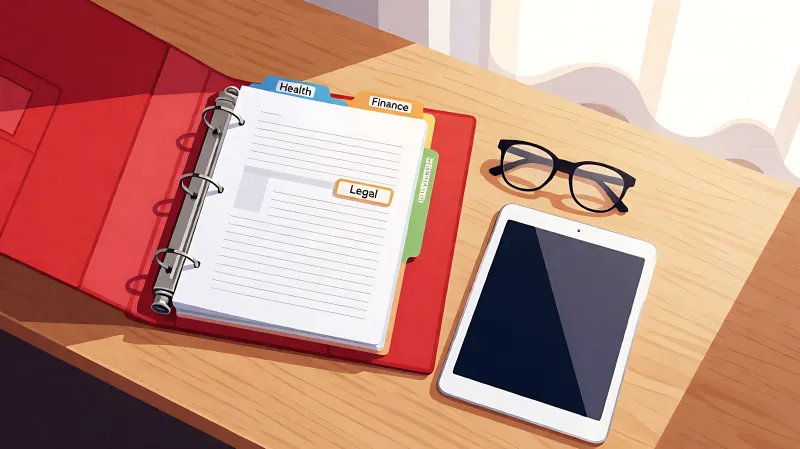
An emergency binder keeps critical records accessible during crises. This guide details the exact documents older adults and caregivers should organize to streamline estate planning and health care decisions.
An emergency binder for older adults should contain a centralized collection of vital legal, financial, and medical records. This physical or digital repository allows family members and caregivers to access critical information immediately during medical emergencies or estate settlement. According to the National Institute on Aging, keeping these papers in one place ensures that a senior’s specific wishes regarding health care and asset distribution are honored without delay.
For more information, see NIA healthy aging resources from the National Institute on Aging.
What specific documents belong in a senior emergency binder?
The contents of a well-organized emergency binder are divided into three primary categories: personal identification, financial oversight, and medical directives. The National Institute on Aging recommends that seniors maintain a master index of these items. This approach prevents the stress of searching for specific files when time is of the essence. A durable power of attorney for finances, for example, allows a designated agent to manage bank accounts and property if the senior becomes incapacitated. Without this document, family members may be unable to pay bills or access funds.
Personal identification records are the foundation of any document system. These should include a copy of the senior’s birth certificate, Social Security card, and passport. Additionally, marriage and divorce certificates, along with military service records, should be included. These documents are often required when opening estate accounts or applying for government benefits. Keeping a list of close family members, including their addresses and phone numbers, also helps emergency responders and doctors communicate effectively.
How do medical directives fit into estate planning?
Medical directives are distinct from general estate documents but are essential components of an emergency preparedness kit. A living will outlines specific treatments a patient wants to avoid, such as mechanical ventilation or tube feeding, in the event they cannot communicate. The National Institute on Aging emphasizes that these documents only take effect when the individual is unable to express their own wishes. A durable power of attorney for health care names a specific proxy to make medical decisions. This proxy should be someone familiar with the senior’s values and religious beliefs. Including both a living will and a medical power of attorney covers most unforeseen scenarios, from sudden strokes to chronic illness.
Health insurance information is another critical section. The binder should list policy numbers, agent contact details, and network provider lists for Medicare, Medicaid, or private insurance. If the senior has long-term care insurance, specific policy limits and exclusion details must be clearly noted. This information helps caregivers negotiate services and understand coverage boundaries without making expensive errors.
What financial records need to be accessible immediately?
Financial disarray can complicate the administration of an estate. The emergency binder should contain a list of all bank accounts, investment portfolios, and retirement funds. Instead of keeping the actual account numbers and passwords, which can be a security risk if the binder is lost, a list of institutions and account types is sufficient. The actual passwords should be stored in a separate, secure location known only to the executor or a trusted lawyer. However, having a catalog of assets helps the executor understand the scope of the estate quickly.
Insurance policies for life, home, and auto coverage must also be included. Policy holders need to know where the originals are filed, but copies in the binder allow for quick reference during claims. If the senior owns property, deeds and titles should be located, though the originals often remain in a safe deposit box. A simple index sheet in the binder should note the location of these original documents. For example, it might state: 'Original Will stored in Fireproof Safe, Combination in Lawyer's Office.'
How should the binder be stored and protected?
Storage location is as important as content. The National Institute on Aging suggests using a fireproof and waterproof safe for original documents, but keeping a master binder of copies in a highly visible and accessible location. If the binder is in a home office, the door should be easily opened in a panic. If the senior uses a bank safe deposit box, a duplicate set of vital documents must remain at home. This ensures that access to funds or medical info is not delayed by banking hours or lockout procedures.
For those who prefer a more structured approach, commercial document organization systems can be used. These kits often include pre-printed tabs and worksheets that guide users through the compilation process. They are particularly useful for caregivers helping seniors organize their lives, as the tabs list exactly what should be included in each section. This reduces the chance of missing a critical piece of paper.
Is a digital backup necessary for the emergency binder?
Yes, a digital backup is highly recommended. Scanning all documents and uploading them to a secure cloud storage service provides redundancy. If the physical binder is damaged by fire or water, the digital copies remain safe. However, the digital backup should not replace the physical binder entirely. In a power outage or internet failure, paper documents are the most reliable resource. The physical binder should be treated as the primary source of truth, with the digital file serving as a secondary reference.
When should the emergency binder be reviewed?
An emergency binder is not a one-time project. It requires annual reviews and immediate updates after major life events. Divorce, remarriage, the birth of a grandchild, or a significant change in health status all necessitate changes to financial powers of attorney and medical proxies. If a named proxy passes away, the documents must be updated immediately to name a new representative. The National Institute on Aging advises that seniors should review their plans with a doctor and their loved ones at least once a year to ensure everything is current.
Reviewing the binder with a trusted family member or attorney can also serve as a conversation starter for advance care planning. Discussing specific scenarios, such as the use of life support or organ donation, helps remove ambiguity. This shared understanding reduces the emotional burden on caregivers during a crisis.
Who should know where the emergency binder is located?
A small, trusted circle should know the location of the binder and any associated safe combinations. This usually includes the primary caregiver, a designated legal representative, and perhaps one close family member. It is not necessary for all neighbors or distant relatives to know. However, in the event of a 911 call, emergency responders may ask where vital information is located. Keeping the binder in a standard, easy-to-guess location like the main bedroom or office ensures it can be found without specific instructions. If it is in a safe, the combination should be written on a card inside the binder, or in a separate, secure location known only to the executor.
Does Medicare cover the cost of creating an emergency binder?
Medicare does not pay for the physical binder or the legal fees associated with drafting the documents. However, Medicare covers the physician's time for advance care planning discussions. The National Institute on Aging notes that these conversations are included in annual wellness visits for Medicare beneficiaries. This means that the medical advice portion of the process is free for patients, even though the administrative work of filling out the binder is a personal expense.
How do caregivers assist in organizing this information?
Caregivers play a vital role in maintaining the accuracy of the emergency binder. As seniors age, they may become less capable of updating their own records. A caregiver should help track expirations on insurance cards and passwords. They should also ensure that the list of emergency contacts remains current. Using a structured system with clear tabs makes it easier for the caregiver to keep the binder organized without needing to know the contents of every single file. This division of labor ensures that the family is prepared for both chronic and acute health events.