ADHD Senior Clutter Fix: Simple Steps
Struggling with visual noise and clutter? This guide offers a compassionate, step-by-step approach to reducing cognitive overload for seniors with ADHD, helping you regain independence and calm in your home.
Visual noise and endless decision points can trap seniors with ADHD in a loop of anxiety and inaction. This guide provides a low-effort, step-by-step sorting strategy that reduces cognitive overload by minimizing decisions and leveraging time-bounded sessions. Instead of perfecting your home, you will build a functional system that supports independence and lowers daily stress.
Why Clutter Hits Older ADHD Brains Harder
For many seniors, clutter is not just a mess; it is a visual alarm system. According to ADDitude Magazine, clutter often serves as a memory compensation strategy for the ADHD brain. When items are hidden in closed cabinets, they become out of sight and out of mind, leading to a need to keep things visible for functional access. This creates a paradox where the very thing causing stress is also being used to manage that stress. The result is a home filled with items that feel necessary until the brain realizes they are not, creating a persistent low-grade cognitive load that makes everyday tasks feel significantly harder.
Is This Clutter or a Hoarding Issue?
It is vital to distinguish between ADHD-driven clutter and hoarding disorder. Many families assume that accumulation equals a pathological inability to let go, but in fact, ADHD clutter is often about executive dysfunction. The barrier is the effort required to initiate sorting, not emotional attachment to every item. According to the National Institute of Mental Health, ADHD impacts executive functions like planning and organization, which explains why the physical act of putting things away feels physically exhausting. If the distress comes from a fear of losing information or a strong emotional bond to objects, that is a different clinical picture. For typical ADHD clutter, the goal is to reduce the friction between intention and action.
The 5-Step Low-Effort Sorting Strategy
To regain independence without burning out, follow this numbered procedure. Each step is designed to require minimal mental energy.
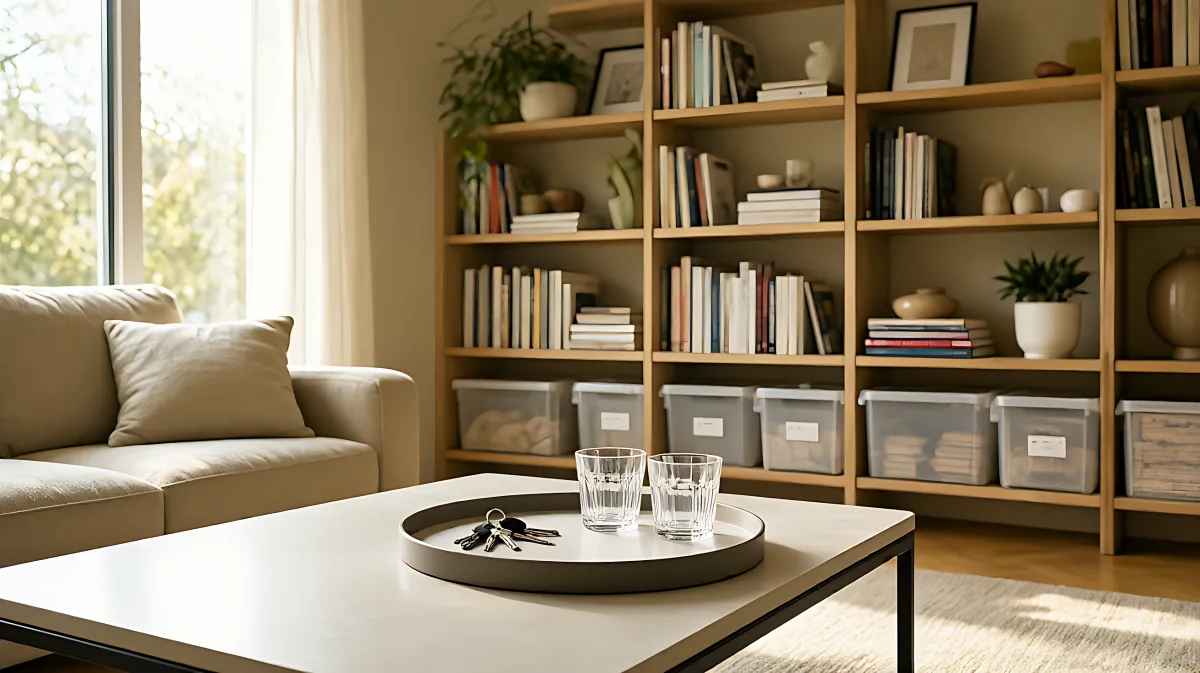
- Step 1: Define Your 'Landing Zones.' Identify the two or three surfaces where everything ends up (e.g., the kitchen counter, the armchair). Place a clear, lidded tray or open basket on each. This is your designated overflow space. It does not need to be beautiful; it just needs to exist.
- Step 2: The 15-Minute Timer Method. Set a visible timer for exactly 15 minutes. During this window, sort items into only three piles: 'Trash,' 'Donate/Sell,' and 'Keep.' When the timer rings, stop immediately. Do not aim for completion; aim for consistency. This prevents the paralysis that comes from staring at a large mess.
- Step 3: Label the 'Keep' Items. Use large-print labels on bins or drawers. For frequently lost items like glasses or remote controls, create a single, fixed spot. The rule is: the item lives here, always. This removes the daily decision of where to put things.
- Step 4: Clear the Landing Zones Every 48 Hours. Make it a routine to empty the overflow baskets every two days. This keeps the visual noise manageable and prevents the 'disaster pile' from growing back.
- Step 5: Reward the Process, Not the Result. After your timer session, do something enjoyable. This builds a positive association with decluttering, which is often avoided due to past failures.
Common Mistakes That Worsen Overwhelm
Many seniors assume they must clean the entire house in one day, but in fact, this approach almost always fails. The ADHD brain fatigues quickly when faced with high-stakes, large-scale projects. Instead, 'deep cleans' create more mess and more shame. The mistake is fighting the brain's need for visibility. Hiding things in closed closets increases cognitive load because you have to remember where they went. Open shelving or clear bins are better because they work with the ADHD brain, not against it. Another error is waiting until you are 'in the mood.' Motivation is unreliable. Systems and timers are reliable. Rely on the structure, not the feeling.
Comparison of Sorting Methods
Choosing the right method depends on your energy levels and cognitive state. Here is a quick comparison of three common approaches to help you decide which fits your current capacity.
| Method | Best For | Effort Level | Risk of Burnout |
|---|---|---|---|
| Timer-Based Sorting (15 mins) | Daily maintenance | Low | Low |
| Full Room Reset | Major life changes | High | High |
| 'One In, One Out' Rule | Preventing new clutter | Medium | Medium |
When to Ask for Help
If the task feels impossible, it is not a failure of willpower; it is a sign that you need support. You can hire a professional organizer who specializes in ADHD. According to Fallbrook Assisted Living, senior move managers and occupational therapists can provide expert assistance tailored to mobility and cognitive needs. They can help break down large projects into manageable chunks without judging your space. Inviting a trusted friend or family member to sit with you for 20 minutes can also provide the external accountability needed to start. You do not have to do this alone.
This article is for general information only and is not a substitute for professional medical advice, diagnosis, or treatment. Always consult a qualified clinician about your situation.
Frequently Asked Questions
How often should I declutter if I have ADHD?
You do not need to declutter daily. A routine of clearing 'landing zones' every two to three days combined with a weekly 15-minute sorting session is sufficient to prevent cognitive overload. Consistency matters more than intensity.
What should I do with items I am unsure about keeping?
Use a 'Park and Decide' box. Put uncertain items in a clearly labeled box in a single room. Set a calendar reminder for one month. If you have not used or looked at the items by then, donate them. If you did use them, put them back in their proper place. This removes the immediate decision pressure.
Is it safe to digitize all my papers?
Digitizing important documents like medical records or financial statements can reduce clutter, but keep physical copies of essential items in a single, fireproof safe or locked drawer. For non-essential papers, consider using a shredder to process mail immediately, preventing pile-ups that cause visual noise.