Can Wisteria Grow in Shade? Bloom Tips
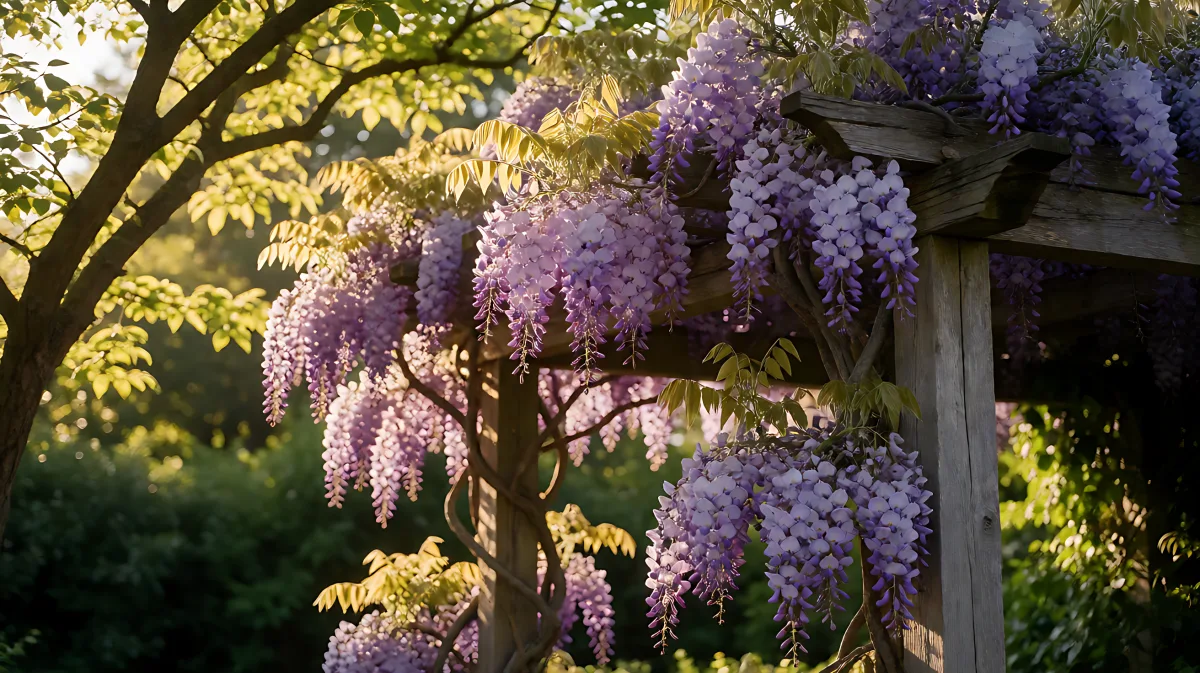
Wisteria survives in partial shade but loses its signature blooms without direct sun. Learn how to maximize flowering in low-light spots.
Yes, wisteria vines can survive in shaded areas, but they require at least six hours of direct sunlight daily for reliable flowering. In partial shade, the plant produces foliage and fewer blooms; in deep shade, it acts as a green vine with little to no flower production.
How much sunlight does wisteria need to bloom?
Wisteria is a light-demanding plant. The Royal Horticultural Society and the University of Florida Extension confirm that six hours of direct sun is the minimum threshold for a heavy display of racemes. If your garden spot provides only three to four hours of direct light, expect the flower buds to drop significantly. The upper portion of the vine is critical; if the main stems reach into full sun, even a shaded root zone can still support some blooming.
Chinese wisteria, or Wisteria sinensis, is the most shade-tolerant of the common species. Utah State University Extension notes that this variety will grow in partial shade, though its flowering is still less reliable than in full sun. Japanese and American wisteria are slightly less forgiving of low light conditions.
What happens if wisteria is in deep shade?
In spots where direct sun never reaches the plant, wisteria grows slowly and remains spindly. White Flower Farm states that few or no flowers form in these conditions. The vine survives if the soil is decent, but it becomes a foliage-only plant. For a shaded corner where you want green cover, this is acceptable. However, if your goal is the famous purple cascades, deep shade is a wasted effort.
How can you improve blooms in limited sunlight?
If your only option is a partially shaded spot, specific management techniques can shift the balance in your favor. These steps do not guarantee full-sun results, but they maximize the potential of the available light.
- Train upper growth into light: Even if the base is shaded, guide the main stems so the top of the vine reaches the sunniest part of the trellis or wall.
- Prune twice a year: In summer, shorten whippy growth to five or six leaves from the main stem. In early spring, cut these shoots back to two or three buds. This concentrates energy into flower buds rather than leafy growth.
- Adjust fertilization: Skip high-nitrogen fertilizers, which push leaves at the expense of flowers. Use a balanced or bloom-boosting formula instead. Garden Design notes that wisteria often needs some environmental stress to trigger bud formation.
- Choose grafted plants: Seed-grown wisteria can take 15 to 20 years to bloom. Grafted or cutting-propagated vines flower in three to five years, which is crucial when you cannot alter the light conditions.
Common mistakes that kill blooms
Many gardeners assume that any shade is fine for wisteria, but in fact, the type of shade matters immensely. A common error is planting in deep shade and expecting blooms. The vine will grow, but the flowers will not come. Another frequent mistake is overfeeding with nitrogen. Excess nitrogen is the fastest way to turn a potential bloomer into a leafy monster that never sets a bud. Finally, using weak supports is risky; mature wisteria is heavy, and a collapsed trellis can break the vine and set back flowering by years.
Which wisteria species handle shade best?
While all wisteria prefers sun, Chinese wisteria is the hardiest option for less-than-ideal light. It is vigorous and fast-growing, which means it requires the most aggressive pruning. If you have a spot with dappled light, this species offers the best chance of seeing some flowers. Japanese wisteria, or Wisteria floribunda, is slightly less tolerant but produces longer flower racemes when given the chance. Kentucky wisteria is a smaller, hardier alternative but also relies heavily on sun for color.
Checklist for shade-tolerant wisteria care
- Confirm the vine gets at least three to four hours of direct sun on its upper growth.
- Prune in summer, shortening long whips to five or six leaves.
- Prune again in early spring, cutting those shoots to two or three buds.
- Stop all high-nitrogen fertilizer for the season.
- Ensure the plant is grafted, not seed-raised, to ensure earlier flowering.
- Allow a full growing season before judging results, as wisteria responds slowly to changes.
Frequently Asked Questions
Can wisteria grow in full shade?
No, wisteria will not produce flowers in full shade. It may survive as a leafy vine, but the lack of direct sunlight prevents the plant from generating the energy needed for blooms. If you have a spot with no direct sun, consider a shade-tolerant alternative like Virginia creeper or English ivy.
How many hours of sun does wisteria need?
Wisteria needs at least six hours of direct sunlight daily for a heavy bloom display. In locations with only three to five hours of direct light, expect reduced flower counts and smaller racemes.
Does pruning help wisteria in shade?
Yes, pruning is essential. Heavy pruning in summer and spring concentrates the plant's energy into flower bud production rather than long, leafy stems. This is particularly important in shaded areas where the plant might otherwise become leggy and sparse.
Is Chinese wisteria better for shade than Japanese wisteria?
Chinese wisteria is generally more shade-tolerant, but it is also more vigorous and requires more aggressive pruning. Japanese wisteria prefers full sun and will suffer more in low-light conditions, though it produces longer flower clusters when successful.