How to Fix Poor Container Garden Drainage and Save Plants
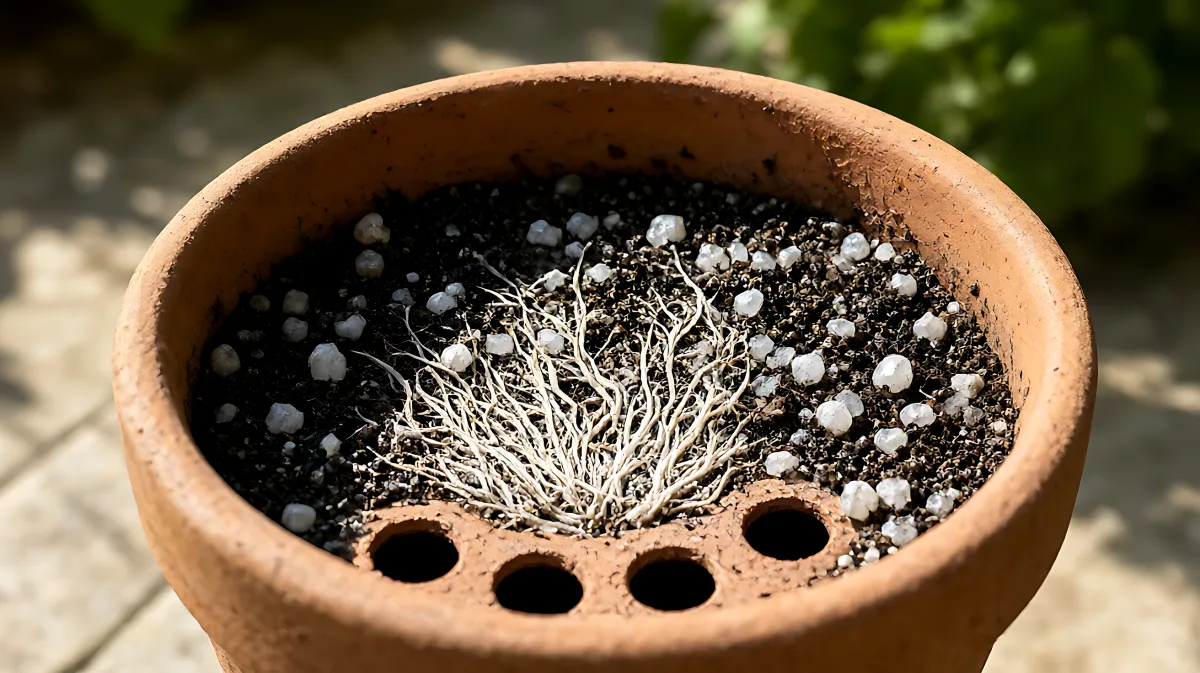
Struggling with wilted plants despite wet soil? Poor drainage is likely the culprit. This guide provides a step-by-step repair plan to save your containers and ensure healthy roots.
Poor drainage is the leading cause of container plant failure, accounting for more than 50% of potted plant deaths according to recent horticultural studies. To fix it, ensure your containers have at least three to five one-quarter-inch holes drilled into the bottom, mix perlite into your soil for aeration, and never place gravel at the base, as it traps water rather than draining it.
Why Is Proper Drainage Critical for Container Roots?
Healthy roots do not just absorb water; they breathe. Roots require oxygen to survive, releasing carbon dioxide as they grow. When a container lacks adequate drainage, water fills the air spaces between soil particles. This creates an anaerobic environment where roots suffocate. As Illinois Extension notes, few plants can tolerate sitting in stagnant water, and without oxygen, beneficial aerobic bacteria die. They are replaced by anaerobic bacteria that produce toxic compounds, including hydrogen sulfide, which gives waterlogged soil that distinctive swampy, rotten egg smell.
When this process begins, the damage is often irreversible. Rotted roots become brown, mushy, and black, losing their ability to transport nutrients. Once root rot sets in, the plant rarely recovers, even if you improve drainage later. Additionally, poor drainage locks up essential nutrients in the soil. Your plant may appear yellowed and stunted not because it lacks fertilizer, but because its suffocating roots cannot access the minerals available in the pot. Research indicates that plants in poorly drained containers can perform 50% to 70% worse than those in well-drained ones, suffering from dropped flowers, stunted growth, and significant leaf yellowing.
How Do You Diagnose a Drainage Failure Before Plants Die?
Many families assume that if soil is wet, the plant is thirsty. In fact, the opposite is usually true. If a plant is wilting but the soil feels saturated, you are likely dealing with root rot caused by drainage failure, not a need for more water. Here is a quick diagnostic checklist to identify the problem early:
- Surface Pooling: If water sits on the soil surface for more than five to ten minutes after watering, the soil has compacted or the holes are clogged.
- Moisture Duration: Stick your finger two to three inches into the soil. If it remains soaking wet three to four days after watering, the container is holding too much water.
- Olfactory Check: Sniff the soil. A fresh, earthy scent indicates health. A sour, foul, or sewage-like odor signals anaerobic bacterial activity and root decay.
- Surface Growth: The appearance of green algae, white fuzzy mold, or moss on the soil surface is a clear indicator that the container is retaining excessive moisture.
What Are the Best Ways to Repair Poor Drainage?
Fixing drainage issues involves a combination of physical adjustments to the container and changes to the soil mix. The most common mistake gardeners make is adding a layer of gravel or stones at the bottom of the pot. Contrary to popular belief, this does not improve drainage. In fact, it creates a "perched water table" where water pools above the gravel because it cannot drain through the interface quickly enough. This effectively reduces the usable soil volume for your roots. Instead, use a uniform, well-draining soil mix from the bottom of the pot to the top.
To repair existing containers, start by emptying the pot and breaking up compacted soil. Add a ratio of one part amendment, such as perlite, pumice, or coarse sand, to three parts standard potting mix. This creates air pockets that allow excess water to escape. If your decorative ceramic or resin pot lacks holes, use a drill with a masonry bit for clay or ceramic, and a standard bit for plastic. Create three to five holes, each at least one-quarter inch in diameter, at the base. Some gardeners place a coffee filter over the holes to prevent soil loss, though this is often unnecessary for small holes.
Once the pot is planted, elevation is key. Avoid using permanent saucers that hold water indefinitely, as this keeps the roots wet continuously. Instead, use pot feet, bricks, or wooden slats to allow water to flow freely out of the container. If you must use a saucer, empty it completely after watering so the soil does not sit in a basin of standing water.
How Can You Prevent Future Drainage Issues?
Prevention is far easier than reviving a rotting root system. Choose containers with pre-drilled holes whenever possible. Monitor the drying time of your specific soil mix, as different planters and weather conditions affect how quickly water evaporates. In winter, waterlogged soil stays colder longer, damaging roots, while in summer, it can overheat. By maintaining a soil mix that drains freely and ensuring the bottom of your pots are not sitting in pooled water, you create an environment where roots can breathe and thrive. Remember, the goal is moist soil, not wet soil.
Is gravel at the bottom of a pot helpful for drainage?
No. Placing gravel or stones at the base of a container does not improve drainage. It actually creates a perched water table that traps moisture above the layer, reducing the space available for roots and keeping the soil wetter for longer. It is better to use only soil amended with perlite or coarse sand throughout the entire container.
How many drainage holes does a container need?
A standard container should have at least three to five holes in the bottom, each with a diameter of at least one-quarter inch. Larger planters may require more holes to ensure excess water escapes quickly enough to prevent waterlogging.
What should I do if my plant is wilting but the soil is wet?
Do not add more water. Wilting in wet soil is a primary symptom of root rot, where damaged roots can no longer absorb moisture. Stop watering, improve drainage by elevating the pot, and consider repotting with fresh, aerated soil if the problem persists.
Do ceramic pots need different care than plastic pots?
Yes. Ceramic and clay pots are porous, allowing moisture to evaporate through the sides. They dry out faster than plastic pots, so they may require more frequent watering. However, if the ceramic pot has no drainage holes, it is a major risk factor for root rot, making it essential to drill holes into the base.