Wheelchair Accessible Raised Bed Height Guide
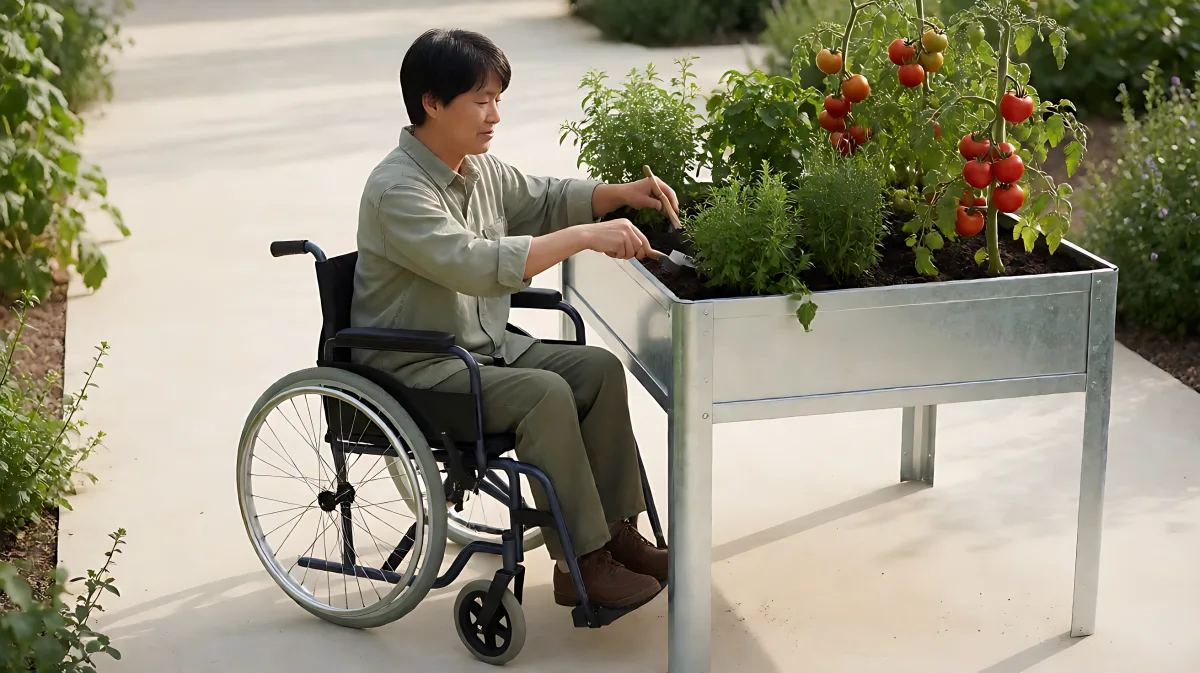
Creating a garden that works for wheelchair users requires more than just lifting soil off the ground. This guide details the specific dimensions, approach angles, and layout strategies needed to make container gardening comfortable and effective for seated gardeners.
The ideal raised bed height for wheelchair users typically ranges between 24 and 34 inches, depending on whether the gardener approaches the bed from the side or the front. For a parallel approach where the user sits beside the bed, the height should be no more than 34 inches. For a forward approach where the wheelchair rolls partially under the structure, the recessed area requires specific clearance of at least 27 inches in height and 30 inches in width. Getting these dimensions right ensures that gardening remains a therapeutic joy rather than a source of strain.
Why Bed Height Matters More Than Just Soil Depth
Many gardeners assume that any elevated box will work for accessibility, but in fact, the relationship between the bed’s height and the wheelchair user’s reach is critical. If the soil surface is too high, the user must hunch forward, causing back and neck pain. If it is too low, they cannot see the plants or reach the base of the stems easily. The goal is to place the growing medium within the user’s natural horizontal reach zone without excessive leaning.
According to recent 2026 horticultural accessibility guidelines, the standard working height has stabilized around the 28-inch mark for most standard wheelchair users. This height allows the user’s forearms to rest comfortably while planting. It is not a one-size-fits-all solution, however; individual chair configurations, armrest lengths, and footplate positions all affect the optimal height. Measuring the specific user is the first step in a successful design.
Parallel Approach vs. Forward Approach
Choosing how the wheelchair interacts with the bed is the most important design decision. There are two primary methods: parallel and forward access.
How Does the Parallel Approach Work?
In the parallel approach, the wheelchair user pulls up alongside the bed. This is ideal for long, narrow raised beds placed between pathways. The bed’s width from the side edge to the center should not exceed 2 feet, ensuring the user can reach across the planting area without straining their shoulder. The overall height of the bed should be between 28 and 34 inches. This setup is excellent for growing long rows of herbs or salad greens where the user moves along the side of the bed.
How Does the Forward Approach Work?
The forward approach involves rolling the front wheels of the wheelchair partially under the bed. This creates a more intimate connection with the plants and is often preferred for compact spaces or table-style gardening. For this to work, the bed must have an open underside. The clearance under the bed must be at least 27 inches tall and 30 inches wide. The front-facing width of the bed should be no more than 25 inches so the user can reach the back of the planting area without twisting. This method is particularly effective for square or rectangular tabletop-style planters.
Essential Dimensions for an Accessible Garden Layout
Height is only one component of an accessible garden. The surrounding infrastructure must support the movement of the wheelchair. Pathways between raised beds must be smooth, firm, and free of curbs. A gentle slope is acceptable, but steps are a major barrier that should be avoided entirely.
Based on 2026 best practices, pathways should be at least 36 inches wide to allow for easy turning and passing. If space permits, a T-shaped or U-shaped bed configuration can allow users to roll directly into the center of the garden structure, providing access to all sides of the plants without needing to turn the chair repeatedly.
Step-by-Step Checklist for Designing Your Garden
To ensure your new garden space is truly accessible, follow this checklist before purchasing materials or breaking ground:
- Measure the User: Have the primary gardener sit in their wheelchair. Measure from the top of the armrests to the ground. This is your baseline for reachable height.
- Set Bed Height: Aim for a soil surface that aligns with the user’s forearm level. For parallel beds, keep the top rim at 28-34 inches. For forward beds, ensure the under-structure clearance is at least 27 inches.
- Define Path Widths: Mark out pathways that are minimum 36 inches wide. Use compacted gravel, concrete, or pavers to ensure a non-slip, stable surface.
- Check Turn Radius: Identify if the wheelchair can turn 360 degrees at the end of the pathway. A T-shaped bed placement can eliminate the need for a large turning space at the back of the garden.
- Plan Water Access: Ensure a water source or drip irrigation tap is within 5 feet of the beds. Carrying water cans over long distances is a common source of fatigue.
- Select Materials: Choose durable, weather-resistant materials. Metal beds offer clean lines and easy temperature regulation, while wood is warmer to the touch. Ensure the base of the bed allows for drainage but not structural instability.
Choosing the Right Plants for Seated Gardeners
The type of plants you choose should match the effort required to tend them. Low-maintenance crops are ideal for accessible gardens, as they reduce the frequency of close-up pruning and harvesting. Herbs like rosemary, mint, and lavender are excellent choices because they are fragrant, attractive to pollinators, and require minimal daily attention. Lettuce varieties that grow upright, such as oakleaf or butterhead, allow the user to reach the bottom leaves without crouching. Cherry tomatoes are also a strong contender, as the compact fruit can be picked from a standing or seated position if the plant is supported by stakes.
For gardeners with visual impairments, sensory plants like lavender and bee balm provide tactile and olfactory rewards that make the gardening experience more engaging. Avoid plants that require frequent bending to check for soil moisture, as this defeats the purpose of the raised bed. Instead, rely on the visual cue of soil color or set up a simple drip irrigation system.
Common Mistakes and How to Avoid Them
One of the most frequent errors is building beds that are too deep. While deep soil is good for root vegetables, it requires lifting more soil to plant. For lettuce, herbs, and shallower-rooted crops, a soil depth of 8 to 12 inches is sufficient. This reduces the weight and volume of soil needed, making initial setup easier and reducing the risk of spilling soil when filling the bed. Another mistake is ignoring the weight of the structure. A filled raised bed can weigh several hundred pounds. Ensure the legs or supports are sturdy enough to remain level on uneven ground. If using wheeled planters, check that the locks engage securely on sloped surfaces.
Maintenance Tips for Long-Term Accessibility
Maintenance should be designed to minimize reaching and bending. Use long-handled tools such as reachers and grippers for weeding. Keep supplies like seeds, gloves, and water cans on a nearby shelf or cart that is within arm’s reach. Regularly check the stability of the bed legs, especially after heavy rains which can soften the ground. If you use metal beds, check for any rust formation at the bottom, which can indicate poor drainage. A well-maintained accessible garden is one that brings joy without causing pain, so adapt the setup to your current physical needs, not the other way around.
Frequently Asked Questions
What is the exact height for a raised bed used by a wheelchair user?
The recommended range is 24 to 30 inches for the soil surface in a standard parallel access bed. For a forward access bed where the chair rolls under, the underside clearance must be at least 27 inches tall. For gardeners who stand but have back issues, a height of 30 to 36 inches is often more comfortable.
How wide should the pathway between raised beds be?
Pathways should be at least 36 inches wide to allow a wheelchair to turn and maneuver comfortably. If two people need to pass each other, a width of 48 inches is preferable. The surface must be smooth and firm, with no steps or large bumps.
Can I use furniture risers to lift a standard planter?
It is not recommended. Household furniture risers are not designed for the weight of soil and water or for outdoor weather exposure. They may collapse or become unstable. Instead, purchase a purpose-built planter with integrated legs or a solid base that is specifically rated for heavy loads and outdoor use.
What is the best approach for small patio spaces?
In small spaces, the forward approach is often more efficient because it allows the user to sit directly in front of the bed, eliminating the need for a wide pathway alongside it. A U-shaped or L-shaped configuration allows the user to access multiple sides of the garden from a single parking position.
Are mobile garden beds a good option?
Mobile beds are excellent for individuals who may need to move the planter for sunlight or to protect plants from rain. Ensure the wheels are large enough for the terrain and that the bed has a locking mechanism. However, they are heavier when filled, so be cautious when moving them across grass or mulch.