Why Wearables Fail: Insights vs. Technology Explained
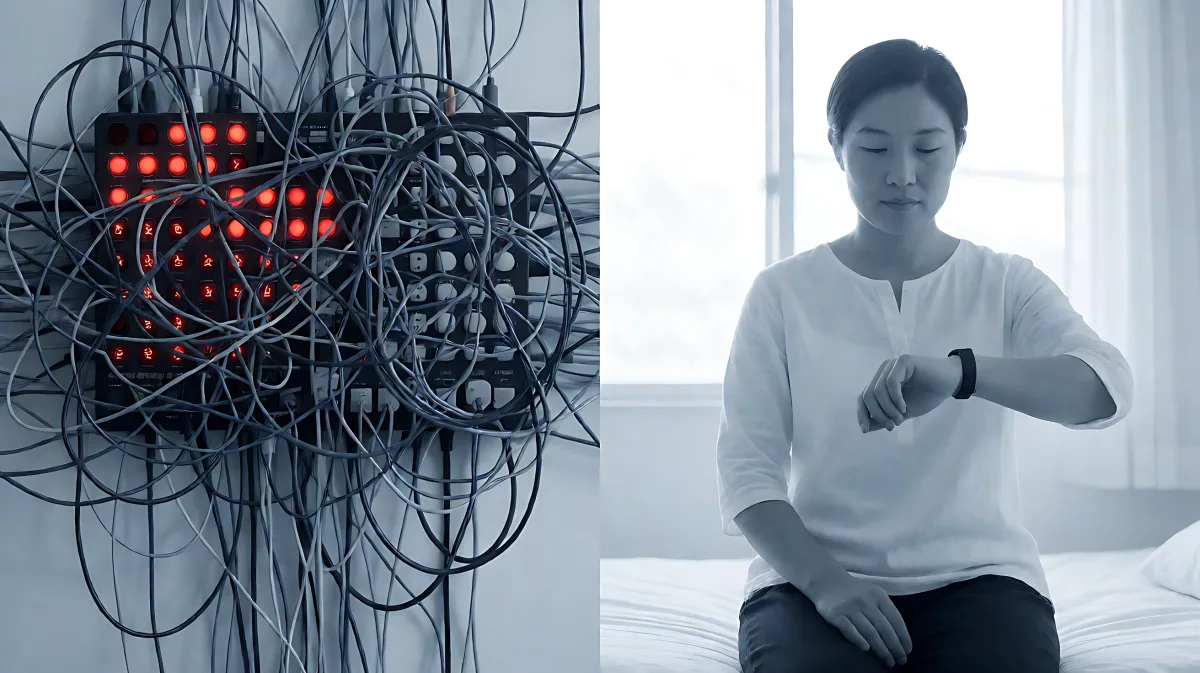
Despite over 530 million devices shipped, wearables face high abandonment. This deep dive explores why insight gaps, not just tech flaws, drive failure, from startup autopsies to neurofeedback design errors.
Wearables primarily fail because of a disconnect between technological capability and human behavioral context, not merely due to hardware defects. Approximately 65 percent of wearable startups collapse due to intense competition from major tech giants, while user abandonment rates for smartwatches and fitness trackers remain near 30 percent. Success in the wearables sector requires designing for specific human needs rather than just accumulating sensors, a shift that is now defining the next generation of health-tech devices.
Why do insights matter more than hardware specs?
For years, the narrative around wearable technology focused on sensors, battery life, and processing power. However, current market data suggests a different story. While the global wearable technology market is projected to exceed $150 billion by 2029, the journey to that milestone is fraught with user dissatisfaction. Around 32 percent of Americans currently use a wearable device, and nearly 41 percent of U.S. households own one. Yet, daily usage rates are significantly lower. This gap reveals that the problem is not a lack of devices, but a lack of perceived value over time.
Users often abandon devices when the experience does not fit their lifestyle. Charging a device every day is not a habit most people enjoy forming. Similarly, when a smartwatch provides too much data rather than actionable advice, it becomes a source of noise rather than insight. As one industry observer noted, users do not quit technology; they quit experiences that do not align with their expectations. A runner might stop tracking heart rate after three weeks not because the sensor is broken, but because the data does not change their training outcome. A nurse might remove a smartwatch mid-shift because the constant notifications disrupt their focus. The technology works, but the human behavior it tries to influence fails.
What are the primary causes of startup failures in the wearable space?
An analysis of 20 failed wearable startups reveals a devastating pattern. These companies collectively burned through $1.9 billion in venture capital, with an average lifespan of just 5.5 years. The most common killer is competition, accounting for 65 percent of these failures. Startups rarely fail because they could not build a good product; they fail because they could not survive against incumbents like Apple, Samsung, and Google who control the operating system, app stores, and default health platforms.
- Competition: 65 percent of failures. When a major player enters the market, startup funding evaporates and retail partnerships dissolve.
- Product or Tech Failure: 15 percent of failures. Devices are too heavy, battery life is insufficient, or software reliability is poor. For example, Daqri spent $275 million on AR helmets that were impractical for real-world use.
- Market Need Validation: 10 percent of failures. Founders built solutions for problems users did not have, requiring behavior changes people were unwilling to make.
- Operational Issues: 10 percent combined for team conflicts and unit economics. Hardware margins are thin, and inventory risk is high.
Notable examples include Jawbone, which raised $930 million but could not sustain momentum against the Apple Watch, and Humane, which failed to deliver on its AI vision despite $230 million in funding. The pattern is consistent: startups spend years perfecting a device, launch to modest traction, and then watch a tech giant release a superior ecosystem-integrated product.
How do biofeedback wearables fall short in health claims?
A specific subset of wearables, including meditation headbands and heart rate variability (HRV) devices, faces a unique design flaw known as reward misspecification. A recent academic analysis highlights that many consumer EEG headbands and biofeedback systems reward measurable proxy signals rather than the actual outcomes they promise. For instance, a device might reward a user for achieving 'calm' brain waves, but the user learns to produce those waves through shortcuts that do not actually improve mindfulness or long-term mental health.
This creates three failure modes: proxy mismatch, where the measured signal does not equal the desired state; strategy shortcutting, where users game the system; and transfer failure, where skills learned with the device do not apply to unassisted life. Devices like Muse and HeartMath often fall into this trap by making implicit claims about states that are structurally unmeasurable by current wearable technology. The solution lies in designing for single, reliably measurable targets and using the device as a training tool that fades out rather than a permanent crutch. No current product fully meets these rigorous design criteria, leaving a gap in the health-tech market.
What opportunities exist for new entrants in 2026?
The landscape has shifted. The era of general-purpose consumer wearables competing directly with Apple Watch is largely over for startups. However, new opportunities are emerging in vertical-specific applications. With over 530 million devices already in the market, the focus is moving from hardware manufacturing to software layers that provide AI-driven insights across existing devices. Furthermore, industrial and professional markets are maturing. Field service technicians, healthcare workers, and industrial operators are now accepting wearables as productivity tools rather than consumer gadgets.
Success in this new phase requires avoiding the 'triple threat' of hardware complexity, software expectations, and fashion dynamics. Instead, companies are finding traction by solving specific jobs in specific contexts where existing solutions fail. This might include hands-free access to manuals for field workers or safety-focused augmented reality for industrial applications. The key takeaway from the $1.9 billion in failed capital is that depth beats breadth. Building for a specific human behavior in a specific context is more viable than trying to be the next everything-connector for everyone.
Frequently Asked Questions
What is the average lifespan of a wearable startup?
Based on recent analyses of failed hardware companies, the average lifespan of a wearable startup is approximately 5.5 years. These companies often raise multiple rounds of funding and ship products but rarely survive the competitive pressure from major tech ecosystems or the high costs of hardware maintenance.
Why do users abandon smartwatches?
Users abandon smartwatches primarily due to a lack of long-term value. Common reasons include charging fatigue, discomfort, data overload that does not lead to actionable insights, and privacy concerns. The technology often works, but it fails to integrate seamlessly into the user's daily habits and expectations.
Is the wearable market saturated?
While the consumer market is dominated by a few major players like Apple, Samsung, and Garmin, leading to consolidation, the B2B and vertical-specific markets are not saturated. There is significant room for innovation in industrial wearables, specialized health analytics, and AI-powered software that works with existing hardware without requiring new device development.
What is 'reward misspecification' in wearables?
Reward misspecification occurs when a wearable device optimizes for a measurable proxy signal (like a specific heart rate or brain wave pattern) rather than the true intended outcome (like genuine mental calm or cardiovascular health). This leads to users learning to 'game' the device without actually achieving the health benefit it claims to provide.