TAVR Surgery for Aortic Stenosis: Symptoms & Risks
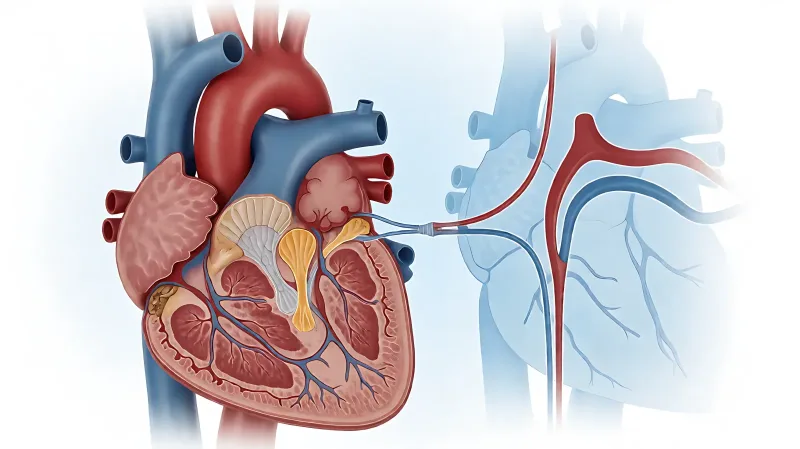
Explore the critical signs of aortic stenosis and how TAVR offers a minimally invasive solution for elderly patients, including recovery times, risks, and long-term valve durability.
Severe aortic stenosis affects about 7 percent of adults over age 65, yet many remain untreated until symptoms become severe. Transcatheter Aortic Valve Replacement (TAVR) is a minimally invasive procedure that replaces the stiff valve without opening the chest. For many elderly patients, it offers faster recovery and improved survival compared to traditional open-heart surgery.
For more information, see MedlinePlus medical encyclopedia from the National Library of Medicine.
What Are the Warning Signs of Aortic Stenosis?
In its early stages, aortic stenosis is often silent. The condition develops slowly as calcium builds up on the aortic valve leaflets, causing them to stiffen. As the valve narrows, the heart must pump harder to push blood through it. The U.S. Food and Drug Administration (FDA) notes that symptoms usually emerge only when the obstruction is significant. Key warning signs include:
- Shortness of breath during physical activity or when lying flat.
- Chest pain or tightness, often triggered by exertion.
- Palpitations or an irregular heartbeat.
- Fainting spells or severe dizziness upon standing up.
- Fatigue that limits daily activities like walking or climbing stairs.
The American Heart Association (AHA) warns that once symptoms appear, the prognosis changes dramatically. Without intervention, the average survival rate drops to 50 percent at two years and 20 percent at five years. This makes early detection via echocardiograms crucial for older adults experiencing these symptoms.
How Does TAVR Differ From Traditional Surgery?
Traditional Surgical Aortic Valve Replacement (SAVR) requires sternotomy, an incision through the chest bone, and the use of a heart-lung machine. TAVR avoids this open chest approach. Instead, the procedure is performed via a catheter, usually inserted through the femoral artery in the groin. The small, collapsed valve is delivered to the heart and expanded in place.
| Feature | TAVR | SAVR (Open Heart) |
|---|---|---|
| Incision Size | Small (less than 1 inch) | Larger sternotomy cut |
| Average Procedure Time | Approximately 90 minutes | Approximately 4 hours |
| Recovery Time | Typically 1 to 2 days in hospital | Typically 5 to 7 days in hospital |
| Target Patient | High-risk or inoperable candidates | Standard-risk candidates |
This minimally invasive nature makes TAVR particularly suitable for elderly patients whose bodies may not withstand the stress of open-heart surgery. The National Institutes of Health (NIH) highlights that TAVR has become a standard of care for high-risk patients, with ongoing trials expanding its use to lower-risk groups.
Who Is Eligible for Valve Replacement?
Not everyone with aortic stenosis is immediately a candidate for TAVR. Doctors must confirm that the disease has progressed to a severe stage where symptoms are present. The decision involves a multidisciplinary Heart Team, including cardiologists, cardiac surgeons, and imaging specialists. They assess the patient's vascular health to ensure the catheter can reach the heart, as well as their overall frailty.
While TAVR is less invasive, it is not without risks. According to the Centers for Disease Control and Prevention (CDC), potential complications include:
- Conduction Issues: The new valve can sometimes interfere with the heart's electrical system, necessitating a pacemaker.
- Paravalvular Leakage: A small gap may remain between the new valve and the artery, causing minor regurgitation.
- Stroke: Although rare, clots dislodged during the procedure can cause neurological events.
- Vascular Injury: The access site in the groin can sometimes be damaged.
What About Medication?
Medication cannot reverse aortic stenosis. Drugs may manage high blood pressure or heart failure symptoms, but they do not fix the mechanical obstruction of the calcium-hardened valve. The only effective treatment for severe stenosis is replacing the valve. Relying on medication alone for severe cases significantly increases the risk of sudden cardiac death.
How Long Does a Replaced Valve Last?
The durability of the new valve depends on the material chosen. TAVR typically uses bioprosthetic valves made from animal tissue, such as bovine pericardium or porcine aortic valve tissue. These are more durable than historical models but are subject to wear and tear over time. Most bioprosthetic valves are designed to last 10 to 15 years. In younger patients, this may require a second replacement procedure later in life, though this is less common in the elderly demographic for which TAVR is primarily used.
Mechanical valves, made from carbon or metal, last a lifetime but require lifelong anticoagulant blood thinners, which is why they are rarely used in TAVR procedures for older adults due to bleeding risks.
What Should You Expect After the Procedure?
Recovery from TAVR is significantly faster than open-heart surgery. Most patients are discharged from the hospital within 24 to 48 hours. Follow-up appointments are usually scheduled at 30 days and one year. During this period, the focus is on monitoring the valve's function via echocardiograms and ensuring the access site has healed properly.
Patients should report any chest pain, sudden shortness of breath, or signs of stroke immediately. These could indicate complications such as paravalvular leakage or embolic events. Long-term outlooks are positive, with many patients reporting a return to normal daily activities and a significant reduction in fatigue and shortness of breath.
Frequently Asked Questions
Is TAVR the same as TAVI?
Yes. TAVR stands for Transcatheter Aortic Valve Replacement, while TAVI stands for Transcatheter Aortic Valve Implantation. They refer to the exact same procedure and are used interchangeably in medical literature.
Can I travel after TAVR surgery?
Generally, there are no strict restrictions on travel after the initial recovery period. However, you should avoid heavy lifting for the first few weeks to allow the groin incision to heal. Always consult your heart team before booking long-distance trips, especially in the first month.
Will I need blood thinners after the procedure?
Most TAVR patients do not require long-term blood thinners unless they have atrial fibrillation or another condition that warrants it. Unlike mechanical valve surgery, TAVR with bioprosthetic valves usually does not mandate anticoagulation therapy.
How do I know if my new valve is failing?
Regular echocardiograms will detect any changes in valve function. Symptoms to watch for include a return of shortness of breath, chest pain, or swelling in the legs. If these symptoms reappear years after your procedure, contact your doctor immediately for evaluation.