Stop False Smoke Alarms: Placement & Tips for Seniors
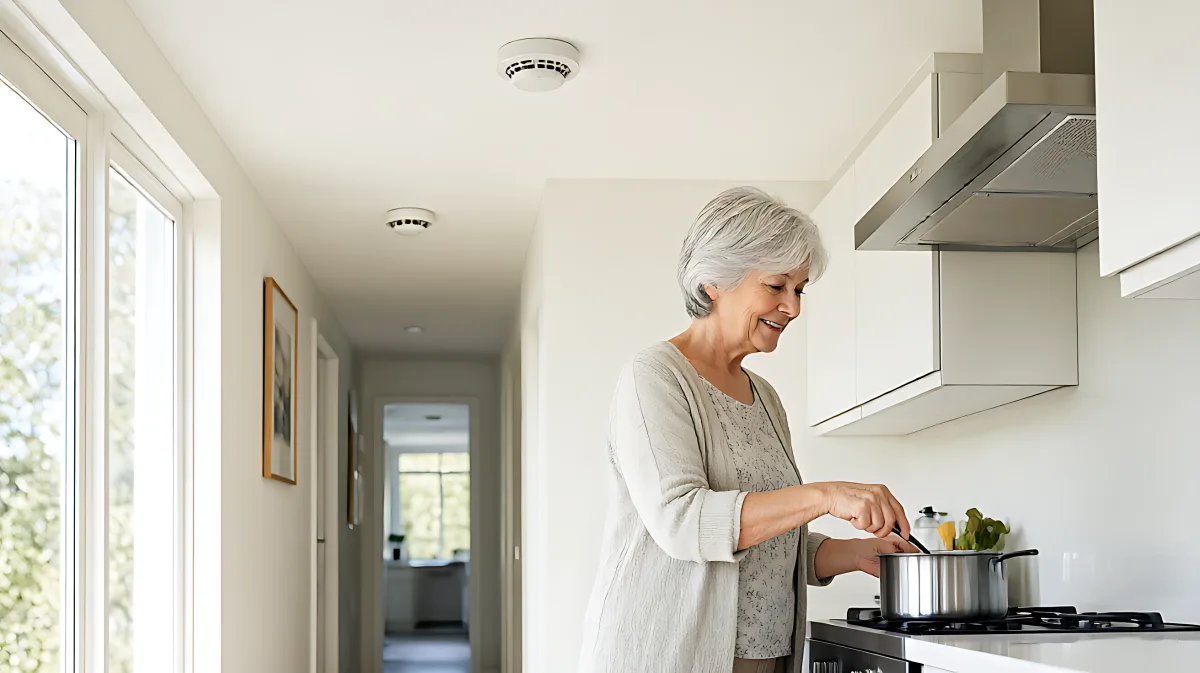
Reduce nuisance smoke alarms by swapping kitchen units for heat detectors, moving sensors away from steam sources, and using interconnected smart systems tailored for aging hearing and mobility.
False smoke alarms occur when cooking steam, dust, or humidity triggers sensors instead of actual fire. You can stop this by replacing kitchen smoke detectors with dedicated heat detectors, moving remaining units at least six feet from steam sources, and installing interconnected dual-sensor alarms elsewhere. This setup distinguishes real threats from nuisance triggers while keeping every room connected.
Why Do Smoke Alarms Keep Going Off While Cooking?
Steam from boiling water and smoke from frying pans are the primary causes of nuisance alarms in the kitchen. Many families assume that any beeping unit is just a broken battery, but in fact, the sensor is likely detecting vapor rather than combustion particles. The US Fire Administration advises that you should never remove the battery to stop the noise, as this disables your only early warning system.
Instead, open a window to ventilate the room and press the hush button on the device. If the alarm continues to trigger frequently during meals, the unit is simply in the wrong location for the task. Moving the device several feet away from the stovetop or replacing it with a heat detector solves the root cause.
How Should Placement Rules Change for Older Adults?
Standard safety guidelines place smoke alarms in every bedroom and outside each sleeping area. However, senior homes require a more nuanced approach due to hearing loss and slower reaction times. A study by Karlstad University found that older adults are overrepresented in fire fatalities, often due to impaired vision or hearing that prevents them from reacting to standard high-pitched beeps. Interconnected systems ensure that if one alarm sounds, all units in the house activate, reducing the risk of missing the alert in another room.
Consider the difference between a standard setup and an optimized senior-safe setup:
| Feature | Standard Home Setup | Optimized Senior-Safe Setup |
|---|---|---|
| Kitchen Detection | Smoke detector on ceiling | Heat detector only |
| Bathroom/High Humidity | Standard smoke alarm nearby | No alarm within 6 feet of steam |
| Notification | Audio beep only | Visual strobe + vibrating pad |
| Connection | Standalone units | Interconnected to personal alarm or app |
For individuals with hearing impairment, add alarms with strobe lights or vibrating pads. You can also customize the sound to a lower frequency or a spoken voice alert, which is less intimidating than a sharp siren. This customization helps ensure the alert is recognized without causing panic or confusion.
What Is the Best Detector Type for Reducing False Alarms?
There are two main sensor types: ionization and photoelectric. Ionization alarms are faster for fast-flaming fires, while photoelectric alarms are better for smoldering fires but more prone to false triggers from cooking smoke. The US Fire Administration recommends using dual-sensor alarms, which combine both technologies, or separate ionization and photoelectric units for broader coverage.
However, for the kitchen, a heat detector is often the superior choice. Heat detectors trigger when the temperature rises to a specific threshold, ignoring smoke and steam entirely. This makes them ideal for areas where cooking fumes are constant. You can find these units for the same price range as standard alarms, with basic models starting around $24.
What Maintenance Steps Prevent Sensor Errors?
Dust accumulation and insect webs can clog sensor chambers, causing random false alarms. A consistent maintenance routine prevents these technical errors. Follow this checklist to keep your system reliable:
- Test every alarm monthly using the test button.
- Replace nine-volt batteries at least once a year, even if the alarm is sounding.
- Replace the entire unit every ten years, as sensors degrade over time.
- Use a vacuum cleaner to gently remove dust from the exterior of the sensor chamber.
- Check for and remove any insect webs from inside the unit.
Many homeowners assume that a new battery fixes every issue, but in fact, a ten-year-old sensor is obsolete regardless of power source. If your unit was manufactured more than a decade ago, it needs replacement. This simple rule ensures the internal optics remain sharp and responsive.
How Can Technology Help Monitor Alerts Remotely?
Smart detectors connect to your smartphone, sending a push notification when an alarm is triggered. This is particularly useful for families who want to verify if a neighbor is safe. When a smart detector links to a personal alarm system, the monitoring center can distinguish between a fire alert and a carbon monoxide alert. This connection allows the operator to call the resident directly, verifying their status within seconds.
Before you implemented these changes, you might have faced three or four false alarms a week, each time requiring you to walk to the kitchen to hush the device. After swapping the kitchen unit for a heat detector and moving the bathroom sensor out of the steam path, you likely experience zero nuisance alarms. The system now only activates for genuine threats, giving you peace of mind without the daily annoyance.
When should you replace a smoke detector?
Replace every smoke detector ten years from the date of manufacture, which is printed on the back of the unit. Even if the battery is new, the internal sensors degrade and lose sensitivity over time, making them unreliable.
Can I just turn off the alarm while cooking?
No. Disabling the alarm or removing the battery is dangerous. Instead, open a window to clear the air and use the hush button on the device. If it sounds frequently, move the unit away from the heat source or switch to a heat detector.
Do heat detectors catch smoldering fires?
Heat detectors trigger when the temperature rises significantly, which happens later than smoke detection. They are best used in kitchens where smoke is expected, but you should still install smoke detectors in all other living areas to catch smoldering fires early.
What if I live alone and have hearing loss?
Use interconnected alarms equipped with strobe lights and vibrating pads. These visual and tactile alerts do not rely on hearing. You can also link the system to a personal response monitor that notifies a caregiver or monitoring center directly.
Are battery or hardwired alarms better for seniors?
Hardwired alarms with a battery backup are generally more reliable because they do not fail when the main power runs low. However, battery-operated units with ten-year lithium batteries are a good alternative that eliminates the need for annual battery swaps.
This article is for general information only and is not a substitute for professional medical advice, diagnosis, or treatment. Always consult a qualified clinician about your situation.