Social Security Earnings Limits: What You Can Make at Full Retirement
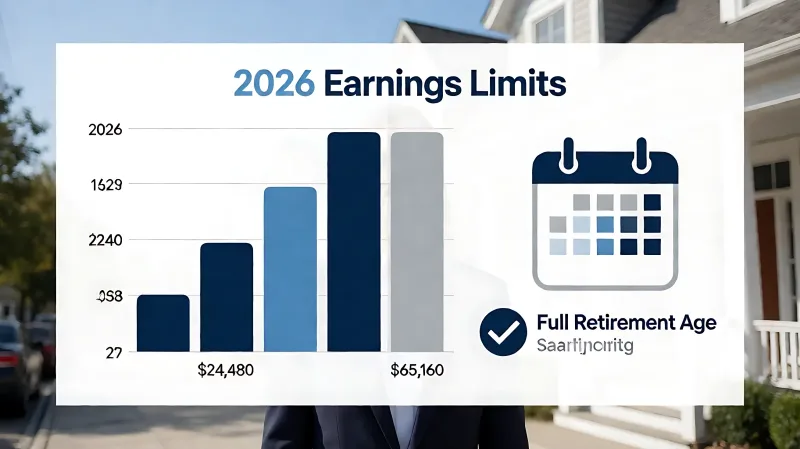
Working while collecting Social Security benefits is allowed, but the Social Security Administration enforces annual income caps for those under full retirement age. For 2026, the limit is $24,480 if you remain under your threshold age all year. This guide explains how deductions work, what counts as earnings, and how reaching full retirement age changes the rules permanently.
Working while receiving Social Security benefits is permitted, but the Social Security Administration (SSA) limits how much you can earn if you have not reached your full retirement age. In 2026, the annual earnings limit is $24,480 for those under full retirement age. If you exceed this threshold, the agency deducts one dollar from your monthly benefit for every two dollars you earn above the limit. However, once you reach full retirement age, these earnings restrictions are lifted, and you can earn unlimited income without reducing your benefits.
For more information, see SSA guidance on working while receiving benefits from the Social Security Administration.
What are the 2026 Social Security earnings limits?
The SSA adjusts these limits annually to reflect changes in the national average wage index. The specific amount you can earn before facing a benefit reduction depends on your age relative to your full retirement age.
If you are under your full retirement age for the entire year of 2026, the earnings limit is $24,480. For every two dollars you earn above this figure, one dollar is subtracted from your Social Security benefit payments. This is a straightforward deduction that can significantly impact your monthly cash flow if you continue to work full-time.
If you reach your full retirement age during the year 2026, a different, higher limit applies. The SSA only counts your earnings for the months before you reach that milestone. For 2026, the limit for the portion of the year prior to your full retirement age is $65,160. In this transition period, the deduction ratio is more favorable: one dollar is deducted from your benefits for every three dollars you earn above the limit. Once you hit the month you reach full retirement age, no further deductions apply, regardless of how much you earn for the rest of the year.
How does the earnings test deduct from benefits?
Understanding the math behind the deduction is crucial for planning your retirement finances. The SSA uses specific ratios to calculate how much of your benefit is withheld. It is important to note that these withheld funds are not lost permanently.
When you are under full retirement age all year, the formula is strict. Suppose your monthly benefit is $800, totaling $9,600 for the year. If you work and earn $33,400, you have exceeded the $24,480 limit by $8,920. The SSA deducts half of that excess ($4,460) from your total annual benefits. You would receive $5,140 that year instead of the full $9,600.
In the year you reach full retirement age, the calculation is less punitive. If you reach that age in August 2026, the earnings limit for the first seven months is $65,160. If you earn $72,000 total, but $66,000 of that happens between January and July, you are $840 over the limit. The SSA deducts one dollar for every three dollars over, which is $280. This amount is subtracted only from the benefits paid for the months before your full retirement age. From August onward, you receive your full benefit with no further reductions.
What counts as reportable earnings?
Not all money you bring home is considered "earnings" by the Social Security Administration. The agency looks specifically at wages from employment or net profits from self-employment. This includes:
- Wages from an employer
- Net profit from self-employment
- Bonuses
- Commissions
- Vacation pay
Conversely, the SSA does not count the following toward your earnings test limits:
- Pensions
- Annuities
- Investment income
- Interest payments
- Veterans benefits
- Other government or military retirement benefits
This distinction is vital for retirees who may rely on passive income streams. You can invest your savings or receive pension payments without triggering the earnings test, provided you do not have active wages or self-employment income that exceeds the threshold.
Does working increase my future benefits?
Yes. A major advantage of working while collecting benefits is that your benefit amount may actually go up. The SSA reviews your work record annually. If your latest year of earnings is one of your highest-earning years, they recalculate your benefit. This increase is retroactive to January of the year after you earned the money. While the immediate effect of the earnings test is a reduction, the long-term effect of continued work can be a permanent boost to your monthly income once you pass full retirement age.
Additionally, the SSA holds onto any benefits that were deducted due to the earnings test. When you reach full retirement age, they recalculate your benefit and pay you back the withheld amounts, plus interest. This means the work you do now can effectively increase your future retirement income, provided you stay under the deductible thresholds or are prepared for the temporary reduction.
What happens when I reach full retirement age?
Once you reach your full retirement age, the earnings test no longer applies to your benefits. You can earn as much as you want without having your Social Security payment reduced. The SSA will also recalculate your benefit to give you credit for any months where benefits were reduced or withheld due to excess earnings in previous years. This recalculation ensures that you receive your full, adjusted benefit amount starting from the month you reach full retirement age.
Full retirement age is determined by your birth year. For those born in 1960 or later, the full retirement age is 67. For those born earlier, it ranges from 65 to 67. You can use the SSA's retirement age calculator on their official website to find your specific milestone.
Frequently asked questions
Can I work full time and still get Social Security benefits?
Yes, you can work full-time while receiving Social Security benefits. If you are under full retirement age and earn more than the annual limit of $24,480 in 2026, your benefits will be reduced. However, these reductions are temporary and do not result in a permanent loss of benefits. Once you reach full retirement age, you will receive your full benefit regardless of your income, and the SSA will recalculate your benefit to account for the previously withheld amounts.
Do pensions count toward Social Security earnings limits?
No, pensions, annuities, and investment income are not counted toward the Social Security earnings test. The SSA only considers wages from employment or net profits from self-employment. You can receive a pension and earn unlimited investment income without affecting your Social Security benefits, as long as your earned wages do not exceed the applicable limit.
What should I do if my earnings change after I start collecting benefits?
If you are under full retirement age and believe your earnings will differ from what you reported, you must notify the Social Security Administration immediately. You cannot report a change in earnings online. You should call the SSA at 1-800-772-1213 or contact your local office. Failing to report higher earnings can lead to overpayments that you may eventually have to repay.
How are the 2026 earnings limits calculated?
The Social Security Administration updates the earnings limits annually based on the national average wage index. This ensures that the limits keep pace with inflation and wage growth. For 2026, the limit for those under full retirement age is $24,480, and the limit for the transition year is $65,160. These figures are published on the SSA website each year, typically in late summer of the preceding year.
Does working outside the US change the rules?
Yes, different rules apply if you are under full retirement age and working outside the United States. The earnings test is not applied to earnings from work outside the US if you are a U.S. citizen or national. However, specific conditions and reporting requirements exist. It is recommended to consult the SSA publication "Your Payments While You Are Outside the United States" or contact the Office of Earnings & International Operations for detailed guidance on international work.