How to Pay for Long-Term Care: 5 Options Explained
Navigating the high costs of aging care requires more than just savings. Discover the five primary funding sources for long-term care, including government assistance and insurance strategies, and learn how to avoid common financial pitfalls in 2026.
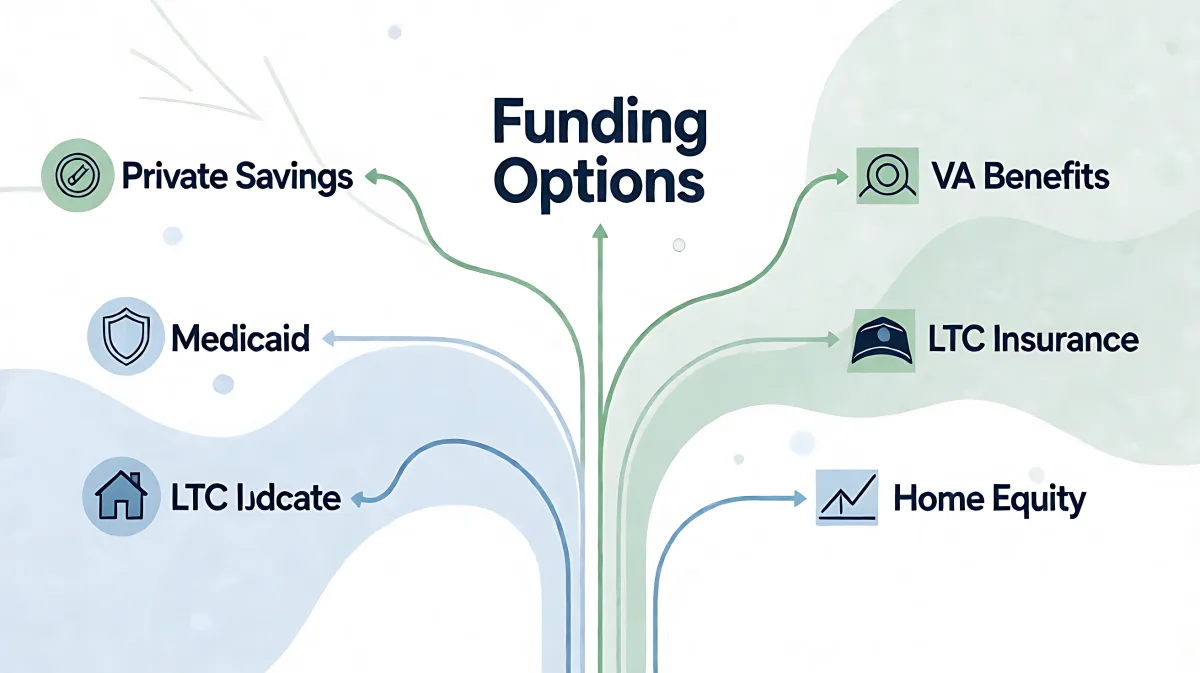
When a family member requires long-term care, the primary challenge is funding the ongoing costs that exceed $5,000 monthly for assisted living in many US regions. The five main payment options for 2026 are long-term care insurance, Medicaid (often used as a safety net after assets are depleted), Veterans Affairs (VA) benefits, private savings, and home equity resources.
How much does long-term care actually cost?
Costs for care vary significantly by location and the type of assistance required. According to recent data from The Care Compass, the average monthly cost for in-home personal care ranges from $4,500 to $6,500, while specialized memory care can cost between $5,500 and $9,000 per month. For seniors entering a skilled nursing facility, the average monthly expense sits between $8,000 and $12,000. Given that the average duration of care is three years, families must be prepared for a total expenditure of approximately $180,000 to $270,000 for standard care, rising to $582,000 in severe nursing home scenarios.
| Type of Care | Estimated Monthly Cost (2026) | Typical Included Services |
|---|---|---|
| In-Home Aide | $4,500 – $6,500 | Personal care, medication management, and daily supervision |
| Assisted Living | $4,000 – $7,000 | Housing, meals, activities, and assistance with activities of daily living (ADLs) |
| Memory Care | $5,500 – $9,000 | Secured environment with specialized dementia staff and monitoring |
| Nursing Facility | $8,000 – $12,000 | 24/7 skilled nursing, medical care, and rehabilitation services |
Does Medicare cover long-term care?
A critical misconception among US families is that Medicare covers the ongoing custodial care associated with aging. It does not. Medicare is a health insurance program that pays for doctor visits, hospital stays, and short-term skilled rehabilitation (up to 100 days) following a hospitalization. It will not pay for help with bathing, dressing, or eating on an indefinite basis. This leaves a significant financial gap that must be addressed through other channels.
What about Medicare Advantage plans?
Some Medicare Advantage plans (Part C) offer limited perks, such as meal delivery or transportation. However, these are not a substitute for a dedicated care plan. They do not cover the high monthly rates of nursing homes or assisted living. Families should never base their long-term financial security on the slim additional benefits provided by these health insurance plans.
How does Medicaid help pay for care?
Medicaid is the largest single payer for long-term care in the United States, covering roughly 42% of all LTC spending. In 2026, federal rules generally require applicants to have countable assets of about $2,000 or less to qualify. While rules vary by state, a surviving spouse is typically allowed to keep up to $154,140 in assets and approximately $3,853.50 in monthly income to prevent immediate financial ruin for the partner at home. The most complex part of Medicaid planning is the five-year look-back rule, which reviews asset transfers to ensure no one is gifting wealth to bypass the asset limit.
What is a Medicaid look-back period?
The look-back period is a window of time—usually 60 months—before a Medicaid application during which the government reviews all asset transfers. If a senior gave away property or cash during this period, they may face a penalty period where Medicaid will not pay for their care. California uses a shorter 30-month look-back period, but most states adhere to the federal 60-month standard. Planning ahead with an elder law attorney is essential to navigate these rules legally.
Are VA benefits a viable option?
For veterans who served during a wartime period, the VA Aid and Attendance benefit is a powerful funding source. In 2026, this pension can pay up to $2,431 per month to a veteran and their spouse if they meet specific income and asset limits, which currently sit at approximately $150,538. This benefit is specifically designed to help with the costs of daily living assistance and is not available to all veterans; the individual must be over age 65 or permanently disabled and require help with at least one ADL.
Who qualifies for the VA Aid and Attendance benefit?
To qualify, a veteran must have served at least 90 days on active duty, with at least one day occurring during a wartime period, and received a discharge that is honorable or general. The benefit also has a 36-month look-back period for asset transfers, which is significantly shorter than the Medicaid window. This makes it a more accessible safety net for military families planning for elder care.
How can private insurance and savings be used?
Long-term care insurance is a specialized policy that pays a daily or monthly benefit when care is needed. Premiums in 2026 range from $1,700 to over $9,000 annually, depending on the age at purchase and the health status of the applicant. Hybrid products, which combine life insurance or annuities with an LTC rider, are becoming more popular because they offer a death benefit to heirs if care is never needed. For families with substantial liquid assets, self-funding through savings is the most direct route, though it requires roughly $255,000 to $510,000 to cover a three-to-five-year care period without drawing on government aid.
What are the common mistakes families make?
Many families assume that their primary home is fully protected during the Medicaid application process, but in fact, while a home can be an exempt asset for a surviving spouse, it is highly vulnerable to estate recovery after the senior's death. Another frequent error is waiting until a medical crisis occurs to seek an insurance policy; by that time, health issues may make a senior uninsurable, or the premiums will be prohibitively high. Finally, giving away assets too early triggers the look-back penalty, which can result in months of total ineligibility for Medicaid benefits.
Should you consult a financial advisor before choosing a path?
Yes. Because Medicaid and VA rules involve complex asset and income calculations, consulting an elder law attorney or a financial advisor specialized in geriatric care is one of the highest-return investments a family can make. They can help structure assets to protect a portion for heirs while still ensuring access to necessary care facilities.
What steps should you take to start planning?
Starting the conversation about care costs can be difficult, but following a structured process ensures no critical step is missed.
- Conduct a Net Worth Audit: Total up all liquid assets, real estate values, and annual income to determine your current funding level.
- Assess Health Status: Review any existing long-term care insurance policies or hybrid life insurance to see what benefits are already in place.
- Review Veterans Service History: If a spouse or partner served in the military, check if their service period qualifies for VA Aid and Attendance benefits.
- Consult an Elder Law Attorney: Speak with a specialist 3 to 5 years before care is needed to explore Medicaid planning strategies like irrevocable trusts.
- Identify Care Preferences: Determine whether the preference is for in-home care or a facility, as this changes the funding strategy significantly.
Frequently Asked Questions
How much of my income does a nursing home keep under Medicaid?
In California's Medi-Cal program, a single senior in a nursing home is allowed to keep a personal needs allowance of $35 per month for items like haircuts and snacks. The remainder of their income is applied directly to the cost of their care at the facility.
Can I use a reverse mortgage to pay for my care?
Yes, a Home Equity Conversion Mortgage (HECM) allows seniors over 62 to borrow against their home's equity. The loan is repaid when the home is sold or the senior moves out, making it a way to access funds without a monthly debt payment.
What is the look-back period in California?
Unlike most US states that use a 60-month look-back period for Medicaid applications, California uses a 30-month period. This means that gifts or transfers made within the last two and a half years are subject to a penalty, but older transfers are not.
Do I need to be disabled to get VA benefits?
You do not need a disability, but you must meet the age or service requirement. To qualify for the Aid and Attendance benefit based on age alone, you must be over 65. If you are under 65, you must be permanently disabled. If you are housebound or require assistance with ADLs, you may qualify regardless of age.
How long does it take for Medicare to stop paying for a hospital stay?
Medicare covers a maximum of 100 days in a skilled nursing facility after a qualifying three-day hospital stay. Days 1 through 20 are paid in full, days 21 through 100 require a daily co-pay, and coverage ends completely on day 101.