Senior Bedroom Sleep Guide: Lighting and Acoustics Tips
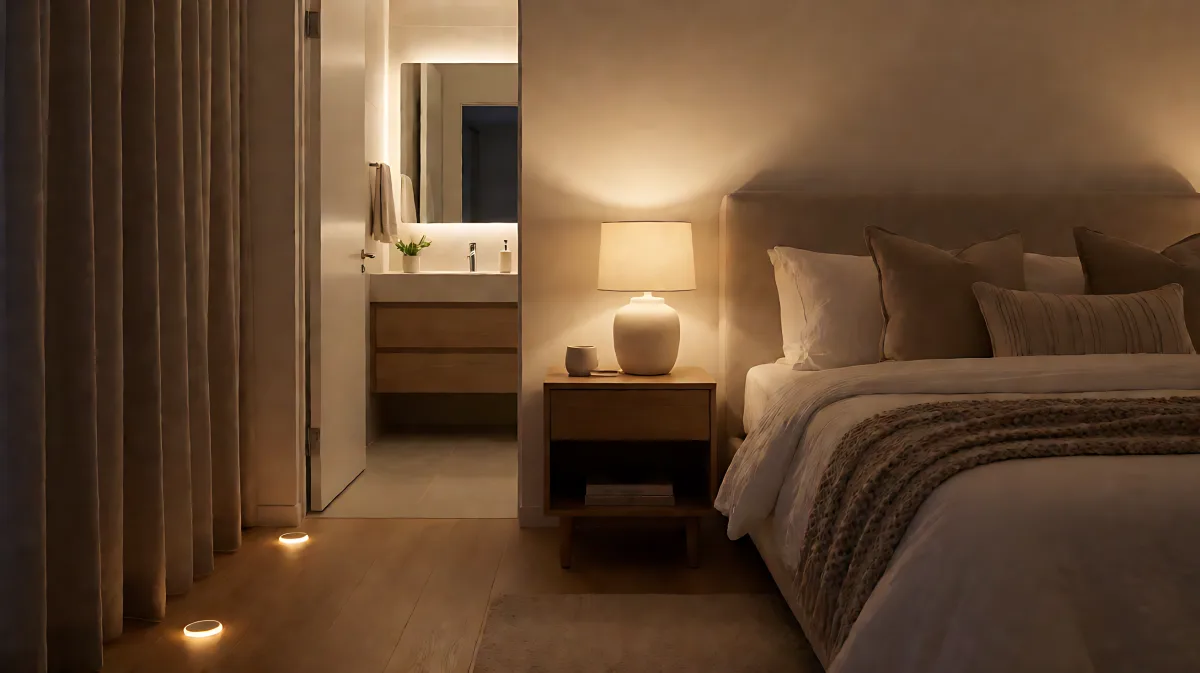
Creating the right sleep environment is crucial for seniors. This guide covers lighting, sound management, and temperature adjustments to enhance rest quality and safety.
Improving sleep quality for older adults requires balancing light, sound, and temperature. The ideal senior bedroom is dark, quiet, and cool, specifically maintaining a temperature between 60 and 67 degrees Fahrenheit. By layering lighting for safety and using acoustic dampening techniques, seniors can create a restorative sanctuary that supports deeper, more consistent rest.
Why do seniors need specific bedroom adjustments?
As we age, our bodies undergo changes that affect sleep architecture. Melatonin production decreases, making it harder to initiate sleep. Additionally, eyes require up to three times more light to read comfortably after age 60, yet too much light at night disrupts the circadian rhythm. Sensitivity to noise also increases, meaning minor disturbances can cause frequent awakenings. Dr. Cheri D. Mah, a sleep physician at Stanford Lifestyle Medicine, notes that the bedroom environment plays a significant role in how well we sleep, acting as a trigger for the body's rest mode.
What are the primary sleep challenges for older adults?
Many seniors assume that sleep issues are simply part of aging and cannot be fixed. However, in fact, environmental factors often exacerbate these natural changes. Common challenges include reduced sleep depth, frequent nighttime urination (nocturia), and increased sensitivity to temperature fluctuations. Addressing these with targeted environment modifications can significantly improve sleep consolidation.
How should you layer bedroom lighting?
Lighting in a senior bedroom should serve two distinct purposes: safety and relaxation. A single overhead light is often insufficient and creates glare. Instead, a three-layer approach is recommended. The first layer is ambient lighting, which should be dimmable and warm, ideally around 3000 Kelvin for the evening. The second layer is task lighting, such as swing-arm lamps for reading, which needs to be brighter to accommodate aging eyes. The third and most critical layer for seniors is night and safety lighting.
What are the best safety lighting options?
To prevent falls during nighttime trips to the bathroom, install motion-activated path lights along the hallway. Use amber-colored bulbs, which are less likely to disrupt melatonin production than blue or white light. Ensure that light switches are clearly illuminated or backlit. For those who use adjustable beds, ensure the remote control is within easy reach and that the path to the bathroom is free of tripping hazards like loose rugs.
How can you optimize bedroom acoustics?
Seniors are more susceptible to waking up due to noise, particularly during the light sleep stages that occur throughout the night. A completely silent room is not always necessary, but a consistent, low-level background noise can mask disruptive sounds like traffic or household noises. White noise machines or fans are effective tools for this purpose. For better sound insulation, heavy curtains and area rugs can absorb sound and reduce echoes within the room.
What are the common misconceptions about noise and sleep?
Many people believe that total silence is best for sleep. But in fact, absolute silence can make sudden noises more startling. A consistent sound source, such as a white noise machine set at a low volume, helps create a uniform auditory environment. Adaptive noise machines can even increase volume slightly when external noise spikes occur, keeping the sleeper in a deeper rest state.
What temperature and bedding settings work best?
The body's core temperature drops naturally at night to signal sleep onset. Supporting this drop with a cool room environment is vital. Studies suggest that a bedroom temperature between 60 and 67 degrees Fahrenheit supports more uninterrupted sleep. For bedding, use breathable materials like cotton, bamboo, or silk to regulate temperature. Avoid heavy quilts, and instead, use layered bedding that allows the senior to adjust comfort easily. A hot shower or bath taken about 90 minutes before bedtime can also aid in this cooling process, as the body releases heat rapidly after exiting the warm water.
What is a step-by-step checklist for a sleep-friendly bedroom?
- Control Light: Install blackout curtains and use amber, motion-sensor nightlights for the path to the bathroom.
- Manage Noise: Place a white noise machine near the head of the bed and add heavy drapes to dampen outside sounds.
- Regulate Temperature: Set the thermostat to 60–67 degrees Fahrenheit and use breathable, moisture-wicking sheets.
- Ensure Comfort: Select a medium-firm mattress and use pillows to support spinal alignment, especially for side sleepers.
- Establish Routine: Create a 15-minute wind-down routine that excludes screens and includes gentle stretching or reading.
When should you seek professional help?
If environmental changes do not resolve sleep issues, it may be time to consult a healthcare provider. A sleep therapist or geriatrician can evaluate for underlying conditions such as sleep apnea or medication side effects. Occupational therapists can also offer specific advice on bedroom modifications to improve mobility and safety.
Frequently Asked Questions
What is the ideal bedroom temperature for seniors?
Research indicates that a temperature between 60 and 67 degrees Fahrenheit is optimal for consolidated sleep. If this feels too cold, start by lowering the thermostat one degree every few days to find a personal balance.
How much light do I need for reading in bed?
Task lighting should provide 50 to 75 foot-candles at the surface. Use a well-positioned lamp, such as a swing-arm fixture, to avoid eye strain while reading.
Are blackout curtains necessary if I have a sleep mask?
While sleep masks are helpful, blackout curtains are superior for blocking out early morning light that can cause unaware awakenings. They also provide sound dampening and thermal insulation.
How can I make my bedroom quieter without major renovations?
Use soft furnishings like thick curtains, rugs, and upholstered furniture to absorb sound. A white noise machine is a cost-effective way to mask unavoidable external noises like traffic or neighbors.