Residential Entrance Accessibility: Design Standards & Guide
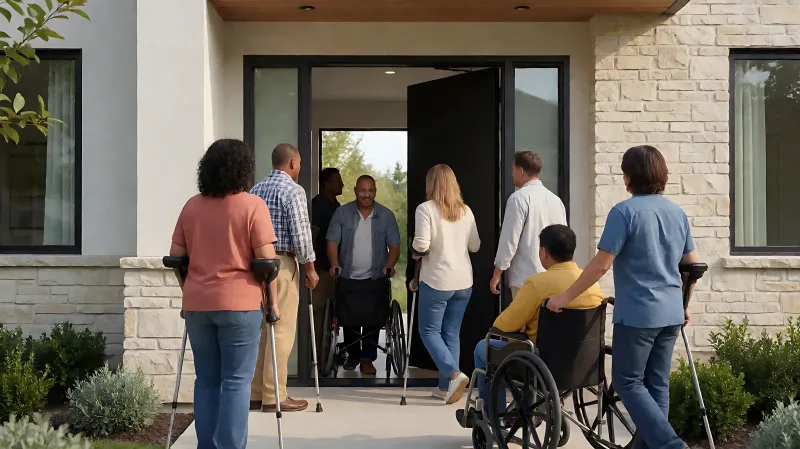
What is Accessibility in Residential Entrances? Accessibility in residential environments is a critical social topic that impacts quality of life, comfort, and safety for everyone. It goes beyond serv
What is Accessibility in Residential Entrances?
Accessibility in residential environments is a critical social topic that impacts quality of life, comfort, and safety for everyone. It goes beyond serving individuals with permanent disabilities; it addresses the temporary challenges faced by those with injured limbs, people carrying heavy bags, or families with strollers. According to the German Federal Basic Law and the UN Convention on the Rights of Persons with Disabilities, individuals have the right to access living areas without restrictions regardless of their physical condition or age.
For more information, see NIA healthy aging resources from the National Institute on Aging.
True accessibility means enabling autonomous life without external assistance. It ensures that everyday actions, such as opening a heavy door or navigating a threshold, are not barriers. This inclusive design benefits the elderly, travelers with luggage, and anyone seeking a more comfortable living environment.
How Do Legal Standards and Regulations Govern Accessibility?
Accessibility design is governed by a framework of laws and technical standards that vary by country but generally align with international conventions. In Germany, for instance, the Basic Law mandates that people with disabilities must not face disadvantages. The Act on Equal Rights for Persons with Disabilities defines accessibility as the ability to enter and use structural facilities and living areas in a normal manner without special difficulty or external help.
Technical specifications are often found in standards like DIN 18040-1 (public buildings) and DIN 18040-2 (residential units). These standards stipulate that in multi-story residential buildings, the ground floor units must be accessible, with living areas, bedrooms, bathrooms, and kitchens being wheelchair-reachable. Public buildings, including schools, hospitals, and retail spaces, must allow access for persons with disabilities, the elderly, and parents with children without assistance.
What Are Key Design Elements for Accessible Entrances?
Effective residential entrance design focuses on removing physical and operational barriers. Key elements include:
- Door Dimensions and Automation: Wide door openings and automatic doors powered by reliable systems. For example, radar proximity switches can open doors without physical contact, which is particularly useful for individuals using wheelchairs or assistive devices. This also enhances hygiene in public and medical settings by reducing surface contact.
- Threshold Management: Minimizing or eliminating steps at entrances to ensure smooth transitions for wheelchairs, walkers, and strollers.
- Smart Home Integration: Modern accessibility concepts often integrate smart home technology, allowing residents to control lighting, heating, and door access remotely or via voice, supporting independence for aging populations.
As the global population ages, with projections suggesting a significant increase in the 65+ demographic, the demand for 'aging-in-place' features is rising. Designers must consider future-proofing homes to accommodate changing mobility needs.
Frequently Asked Questions
Does accessible design only help people with disabilities?
No. Accessible design is universally beneficial. It helps people with temporary injuries, those carrying heavy items, parents with strollers, and the elderly. It ensures that living spaces are usable by the widest possible range of people without the need for special accommodations.
What is the role of technology in residential accessibility?
Technology, such as automatic door operators and smart home systems, enhances independence. For instance, non-contact proximity switches allow users to open doors without physical contact, which is safer for individuals with limited dexterity and more hygienic in shared spaces.
Are there specific standards for private homes?
Yes. Standards like DIN 18040-2 in Germany specifically address residential accessibility, requiring that in multi-unit buildings, at least one ground-floor unit be designed for wheelchair access, including living rooms, bedrooms, and wet areas.
How does accessibility relate to hygiene?
Accessible entrances often feature touchless operation mechanisms. This reduces the spread of pathogens, making it a dual-benefit solution for both inclusive access and public health safety, particularly in healthcare facilities and high-traffic public buildings.
Key Takeaway
Residential entrance accessibility is a universal design imperative that enhances comfort, safety, and independence for all users. By adhering to legal standards and integrating smart, automated solutions, architects and homeowners can create inclusive environments that support aging populations and diverse user needs.
References
- Web Accessibility Standards: Guidelines, JavaScript SEO Updates, and Senior Design
- Senior Home Safety Guide: Slip-Proofing, Lighting, and Grab Bars
- Best Open-Source Note and Collaboration Software: A Complete Guide