Closet Safe Room Conversion: Steps and Costs
Transforming a spare closet into a secure safe room is a practical way to enhance home safety. This guide covers structural reinforcement, cost breakdowns, and essential safety standards for families.
Converting a spare closet into a secure safe room involves reinforcing the structure with solid doors, steel panels, and heavy-duty locks to create a protected space for family members during emergencies. This approach offers a cost-effective alternative to building a dedicated bunker, leveraging existing architectural elements to provide shelter from severe weather or intrusion threats.
Why Closets Are Prime Candidates for Safe Room Conversions
Many homeowners assume that only large, centrally located rooms can function as safe spaces, but in fact, compact closets are often ideal due to their enclosed nature and strategic placement within the home. According to structural assessment principles cited by FEMA and the International Code Council (ICC-500), interior rooms with minimal external exposure offer the highest level of protection during high-wind events. A closet situated on a lower floor or within the central hallway provides natural buffering from external forces. Additionally, these spaces are typically smaller, meaning they require less material to reinforce and heat or ventilate compared to larger rooms.
What Structural Upgrades Are Necessary?
To turn a standard drywall closet into a secure zone, you must address three key areas: the door, the frame, and the walls. The door is usually the weakest point in any closet, so replacing a hollow-core door with a solid-core wood or steel unit is the first priority. The frame must be reinforced with metal reinforcements and secured with long screws that anchor into the studs, not just the surface. For the walls, consider installing steel sheeting or ballistic panels inside the existing drywall to resist impact. If you are planning to store sensitive items, such as firearms, Liberty Safe recommends avoiding floor safes in closets because they are common targets for burglars who spend no more than ten minutes inside a home. Instead, focus on hiding the entry point or using the closet as a broader shelter space rather than a single-point storage vault.
How Much Does a Closet Conversion Cost?
In 2026, the cost of converting a closet into a functional safe room varies significantly based on the level of protection required. A basic do-it-yourself project focusing on door replacement and simple reinforcement ranges from $1,000 to $2,500. This estimate includes materials such as a solid door ($300–$600), secure locking mechanisms ($50–$200), and basic wall reinforcement materials ($400–$1,200). For a professional installation that complies with FEMA P-320 guidelines for storm-resistant safe rooms, costs can range from $4,000 to over $15,000. The higher end of this spectrum includes reinforced concrete, custom steel panels, and integrated ventilation systems. Financing options are available through several home improvement providers, making this investment more accessible for families looking to prioritize long-term safety.
What Essential Features Should You Include?
A functional safe room is more than just a locked box; it is a livable space for the duration of an emergency. Below is a checklist of essential features to include in your closet conversion:
- Secure Locking System: Install a multi-point deadbolt system that is operable from the inside without a key to prevent lockout. Avoid locks that can be jammed or picked from the outside.
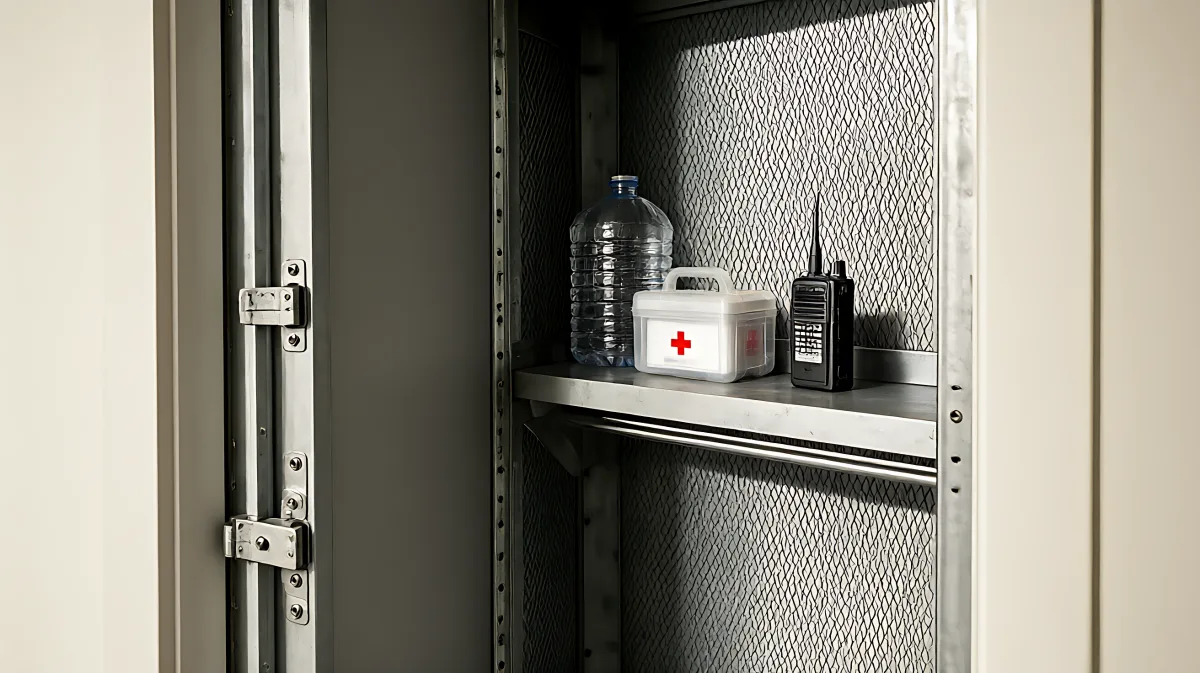
- Emergency Supplies Kit: Stock the closet with at least three days' worth of water, non-perishable food, a flashlight with extra batteries, and a basic first-aid kit.
- Communication Access: Ensure a charged cell phone or a landline phone is available inside the closet to contact emergency services.
- Ventilation and Comfort: For prolonged stays, consider installing an air filtration system or simple ventilation slats to prevent heat buildup and stale air.
- Seismic Anchoring: In earthquake-prone regions, anchor heavy shelving and any stored equipment to the walls to prevent them from becoming projectiles during shaking.
How Do Grab Bars and Accessibility Fit Into Safety Design?
For households with seniors or individuals with mobility challenges, a safe room must also be an accessible one. The bathroom is statistically the most dangerous room in the house for older adults, and the principles of fall prevention apply to safe room design as well. While grab bars are primarily associated with bathrooms, the concept of secure, stable touchpoints is critical in any enclosed space. If your closet is near the main living areas or used frequently, consider the height and reach of your household members. The Americans with Disabilities Act (ADA) recommends that support bars have a diameter between 1.25 and 1.5 inches to be easily gripped by hands affected by arthritis. Although you do not need to install grab bars inside a storm shelter, understanding these ergonomic standards helps in designing shelving and access points that are easy for all family members to use. A secure space that is difficult to enter or navigate defeats its purpose during an emergency.
Common Mistakes to Avoid When Retrofitting a Closet
Many families assume that adding a digital keypad lock is sufficient security, but in fact, the structural integrity of the frame is far more important than the locking mechanism alone. A high-tech lock on a weak, hollow-core door offers minimal protection against a determined intruder or severe wind forces. Another common misconception is ignoring hidden utilities. Before drilling into closet walls for reinforcement, you must locate plumbing pipes and electrical wiring. Drilling blindly can cause catastrophic water damage or short-circuit electrical systems. Finally, do not skip the concealment aspect if security is a primary goal. As noted by security experts, bedrooms and closets are among the first places burglars check. If your goal is theft prevention, consider installing a false front, such as a sliding bookshelf or mirror, to hide the reinforced door entirely.
FAQ
Can a standard closet withstand a Category 4 hurricane?
A standard closet is not inherently hurricane-resistant. To withstand a Category 4 hurricane, you must upgrade to a FEMA P-320 compliant safe room, which involves reinforcing walls with reinforced concrete or steel, using impact-rated doors, and ensuring the structure can handle 160 mph winds. Basic closet conversions are sufficient for protection from intrusions or severe thunderstorms but not extreme hurricanes.
How do I hide a reinforced safe closet door?
You can conceal a reinforced closet door by installing a sliding bookcase, a swinging wall mirror, or custom cabinetry that matches the surrounding interior design. These barriers should be heavy and secure to prevent easy access, but they also serve to make the security feature invisible to casual visitors or intruders who search for valuables.
Is it worth converting a closet into a safe room for theft prevention?
For theft prevention, a reinforced closet with a hidden entry can be highly effective. However, storing high-value items like jewelry or cash in a closet is less secure than a certified fire-rated vault. If you are storing firearms or sensitive documents, consider installing a dedicated free-standing safe inside the closet and bolting it to the floor, which adds a layer of protection beyond the structural integrity of the walls.