Bathroom Slip Risk Assessment Guide for Seniors
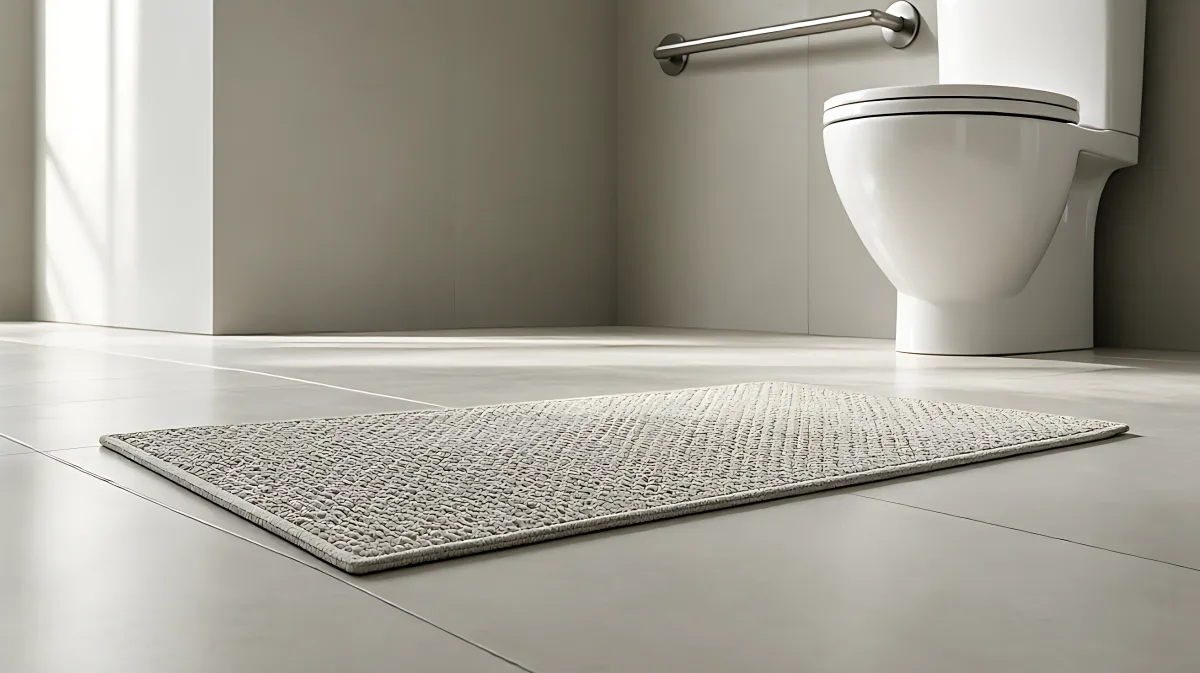
A step-by-step guide to evaluating your bathroom's fall risk. Learn how to read tile safety ratings, identify hidden hazards, and implement low-cost modifications to keep your home secure.
To assess fall risk on slippery bathroom tiles, verify that your flooring meets the ANSI DCOF standard of 0.42 or higher for wet conditions and perform a room-by-room inspection for lighting gaps and structural hazards. This proactive approach significantly reduces the chance of injury in one of the most common sites for domestic accidents.
For many households, the bathroom is the room where aesthetics often outweigh safety considerations. While a glossy, polished tile look is desirable, it can create dangerous conditions when water is involved. The World Health Organization reports that over 30 million people globally suffer falls each year severe enough to require medical attention. In the US and UK, home falls are a leading cause of injury among older adults, with the bathroom consistently ranked as the highest-risk area due to the combination of wet surfaces and confined spaces.
What Is the DCOF Rating System?
Understanding slip resistance starts with the Dynamic Coefficient of Friction, or DCOF. This metric measures the traction a surface provides while in motion, which is far more relevant to walking than static measurements. The American National Standards Institute (ANSI) A137.1 sets the benchmark for residential safety. Specifically, indoor flooring intended for wet areas should carry a DCOF rating of at least 0.42. Tiles rated for exterior wet use or those exposed to oils and greases often require a higher threshold of 0.60.
Many homeowners assume that any textured tile is automatically safe, but in fact, the specific rating matters more than the visual texture alone. A tile might have a rough finish but still fail to meet the minimum friction coefficient if it is too smooth or polished. Before purchasing or installing new flooring, look for the ANSI slip rating on the product specification sheet. This single number tells you if the tile is suitable for a dry bedroom (ID rating), a kitchen that sees splashes (IW rating), or a constantly wet shower floor (IW+ rating).
How to Perform a Room-by-Room Safety Audit
A physical inspection is necessary to identify hazards that ratings cannot predict. Use this checklist to evaluate your bathroom before deciding on upgrades:
- Lighting Check: Ensure the main light switch is accessible without opening the door. Install motion-sensor night lights to illuminate the path from the bedroom door to the toilet and shower. Poor lighting at night is a primary trigger for misjudged steps.
- Support Hardware: Confirm that grab bars are securely anchored into wall studs, not just drywall. If bars are missing, note the locations for immediate installation. The standard recommendation is one bar near the toilet and another inside the shower or tub.
- Clutter and Cord Management: Remove excess towels, bottles, and hoses from the floor. Trip hazards caused by tangled shower hoses or forgotten bath mats are distinct from slip hazards and must be addressed separately.
- Mat Condition: Inspect non-slip mats for mold buildup or detached backings. A mat that curls up creates a trip hazard, while a contaminated mat can reduce friction further. Replace mats that show signs of wear immediately.
Common Misconceptions About Tile Maintenance
One frequent error is the belief that regular cleaning with standard products maintains slip resistance. In reality, many commercial cleaners leave a residue that significantly lowers the DCOF of a tile surface over time. To preserve the traction provided by textured or matte porcelain tiles, use pH-neutral cleaners that do not leave a film. Additionally, humidity and soap scum can fill the microscopic pores of a tile, effectively smoothing out the texture that provides grip. Periodic deep cleaning with a steam cleaner can help restore the original surface profile without the need for re-grouting or replacement.
Specific Upgrades for High-Risk Areas
If your current tiles have a low DCOF rating, you have a few practical options. The most robust solution is replacing the flooring with tiles explicitly rated IW or IW+ for interior wet conditions. For those who cannot replace the subfloor, high-quality anti-slip coatings can be applied, though these may alter the color and finish. Simpler, immediate fixes include installing suction-cup grips on the shower floor and using walk-in shower designs to eliminate the need to step over a tub wall, which is a major fall risk for individuals with limited mobility.
For families caring for elderly relatives, the addition of a shower bench is highly recommended. This allows users to sit while washing, reducing the time spent standing on slippery surfaces. When combined with proper lighting and secure grab bars, this setup creates a layered safety system that addresses both the environmental and physical factors of fall risk.
Is a DCOF of 0.42 enough for a busy household?
Yes, for standard residential bathrooms and kitchens that get wet but are not constantly submerged, a DCOF of 0.42 meets the ANSI A137.1 standard for interior wet areas. However, for public showers or areas with heavy foot traffic and water, an IW+ rating or a DCOF of 0.60 is preferred for maximum safety.
Do rubber mats completely eliminate the risk of slipping?
No. While non-slip mats add traction, they can still shift if the adhesive backing fails or if the mat is not the correct size for the space. A shifting mat becomes a trip hazard. Always check the mat's underside for integrity and ensure it fits the space without overlapping edges.
How often should I check my bathroom safety setup?
It is best practice to conduct a visual check every month to look for new clutter or loose mats. A more thorough assessment, including checking the security of grab bar anchors and the condition of lighting, should be performed every six months, especially if the household includes individuals with mobility challenges.