How to Retrofit a Porch Swing for Safety
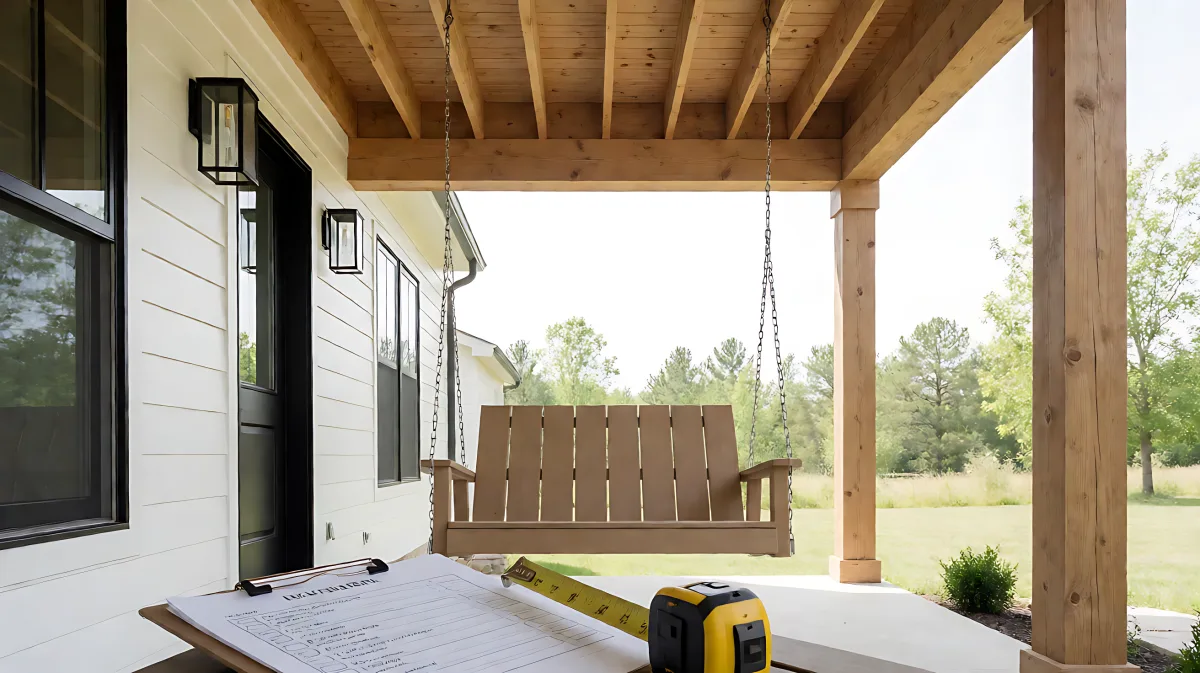
Adding a porch swing can fall flat if the structure isn't ready. This guide walks you through the critical safety retrofit steps, including checking joist integrity, ensuring proper clearance, and selecting the right hardware for a secure install.
Retrapping a porch swing for safety means verifying that the overhead structure can hold the weight and ensuring enough clearance for movement. Most porches can support a swing if you install it into solid wood joists or beams that can handle a minimum load of 500 to 800 pounds. You must also maintain at least 12 inches of clearance on all sides and hang the seat between 17 and 19 inches off the ground for safe, comfortable access.
How do I know if my porch structure can support a swing?
Before you hang a single chain, you must verify the integrity of the overhead structure. Many homeowners assume that if a picture light hangs from the ceiling, a swing will too, but in fact, a swing exerts dynamic force and significant weight that light fixtures are not designed to bear. You need to look for solid, load-bearing wood joists or a header beam. If your ceiling is just drywall or thin beadboard paneling without a deep structural member behind it, you cannot attach the swing directly to the surface. You must open up the ceiling to access the joists.
According to guidance from This Old House, experts recommend adding a new ceiling joist if the existing one is not positioned where you want the swing to hang. In one recent renovation, carpenter Nathan Gilbert added a 4x6 beam and new 2x8 joists to support a swing because the original structure was only two feet from the edge, which was insufficient for the desired clearance. If your porch was built more than two decades ago, or if you see any sagging, rot, or cracks in the ceiling, you should consult a structural engineer before proceeding.
What are the correct clearance measurements for a safe install?
Comfort and safety depend on accurate spacing. If the swing swings into a wall, a door, or the stairs, it becomes a hazard. Industry standards suggest specific zones for safety. You should measure from the hanging point to the nearest obstruction. The goal is to prevent the swing from hitting anything when it reaches its full arc.
| Measurement Area | Recommended Clearance |
|---|---|
| Behind the swing | 12 to 18 inches |
| Front of the swing | 12 to 18 inches |
| Each side | Minimum 12 inches |
| Seat to ground | 17 to 19 inches |
For a standard two-person swing, which is typically 58 inches wide, your porch must be at least five to seven feet deep to accommodate the swing itself plus the necessary rear clearance. If you are installing a larger daybed swing, which is about 86 inches wide, you will need even more space, with anchor points spaced roughly 84 inches apart.
What hardware do I need for a secure retrofit?
Never use wire, thin rope, or interior-rated hooks for a porch swing. You need outdoor-rated, heavy-duty hardware. The most critical components are the ceiling anchors and the chains. Look for stainless steel or galvanized hardware rated for at least 800 pounds. Many high-quality swing kits come with pre-set hanging systems, including pulleys for smoother movement and cinch brackets to adjust the seat angle.
If you are adding the swing to an older porch, you may need to reinforce the attachment points. This often involves using construction adhesive and joist hangers to secure new lumber. As seen in professional installations, you might need to remove existing trim or fascia boards to access the joists, then reinstall them neatly using an oscillating tool for precise cuts.
How can I make the swing safer for seniors or children?
Porch swings are increasingly used in aging-in-place strategies and senior centers because they promote social engagement and relaxation. However, they present unique accessibility challenges. A systematic review of home modifications for aging in place noted that only 10 percent of American homes are adequately designed for aging populations. For a senior-friendly swing, focus on entry and exit points.
Ensure the swing seat is not too low, as standing up from a 17-inch height requires more strength than a standard chair. Some facilities opt for gliders instead of swings because the motion is smoother and requires less effort to initiate. If you keep the swing, ensure the foot space is unobstructed. Consider adding handholds or keeping the swing in a covered, dry area to prevent slippery conditions. The American Association of Retired Persons found that over 87 percent of adults 65 and older prefer to age in place, so making your porch accessible and safe is a significant investment in their quality of life.
What is the step-by-step retrofit checklist?
Follow this actionable list to ensure a safe and code-compliant installation:
- Inspect the ceiling: Open up a section of the ceiling to locate the solid wood joists. Do not attach to drywall or thin panels.
- Verify load capacity: Confirm the joists can support 500 to 800 pounds. Add a new joist or beam if the current structure is weak or in the wrong position.
- Measure clearance: Mark the hanging points to ensure at least 12 inches of space on all sides and 12 to 18 inches at the rear.
- Select hardware: Buy heavy-duty stainless steel anchors and chains rated for outdoor use and the specific weight of your swing.
- Install anchors: Bolt the anchors into the center of the joists, not the edges. Use washers to distribute the load.
- Hang the swing: Attach the chains to the anchors and adjust the seat height to 17 to 19 inches off the ground.
- Test the load: Have an adult sit on the swing gently to test the stability before full use.
Frequently Asked Questions
Can I hang a porch swing from a rafter instead of a joist?
Generally, no. Rafters are part of the roof structure and may not be designed to hold vertical loads. Joists and beams are horizontal structural members that span the opening. Always attach your swing to a solid joist or a dedicated beam. If you cannot find a suitable joist, you must install one.
How much weight can a typical porch swing hold?
Most standard two-person porch swings are rated for 500 to 800 pounds. This includes the weight of the swing itself and the occupants. Reinforced daybed models can hold more, but you must always check the manufacturer's specifications and ensure your hardware meets or exceeds this rating.
What if my porch has a concrete floor?
Concrete floors are generally fine for swings as long as the swing does not hit the stairs or walls. The primary concern is the overhead structure. However, if you have children, you may want to add a soft mat or ensure the swing is raised sufficiently so that feet do not scuff or strike the concrete hard during motion.
Do I need a permit to install a porch swing?
Most local building codes do not require a permit for hanging a swing on an existing porch, provided you do not significantly alter the structural framing. However, if you are adding new beams, removing load-bearing walls, or cutting into major joists, you may need a structural engineer's sign-off. Always check with your local municipality.
How do I prevent the swing from rusting?
Use stainless steel or galvanized hardware for all chains and anchors. Avoid carbon steel in outdoor or wet environments. If you are painting the swing frame, use a primer and paint rated for exterior wood or use poly-lumber, which is a synthetic material that does not rot, splinter, or rust, and requires zero maintenance.