How to Prove Mental Capacity for Legal Documents with Dementia
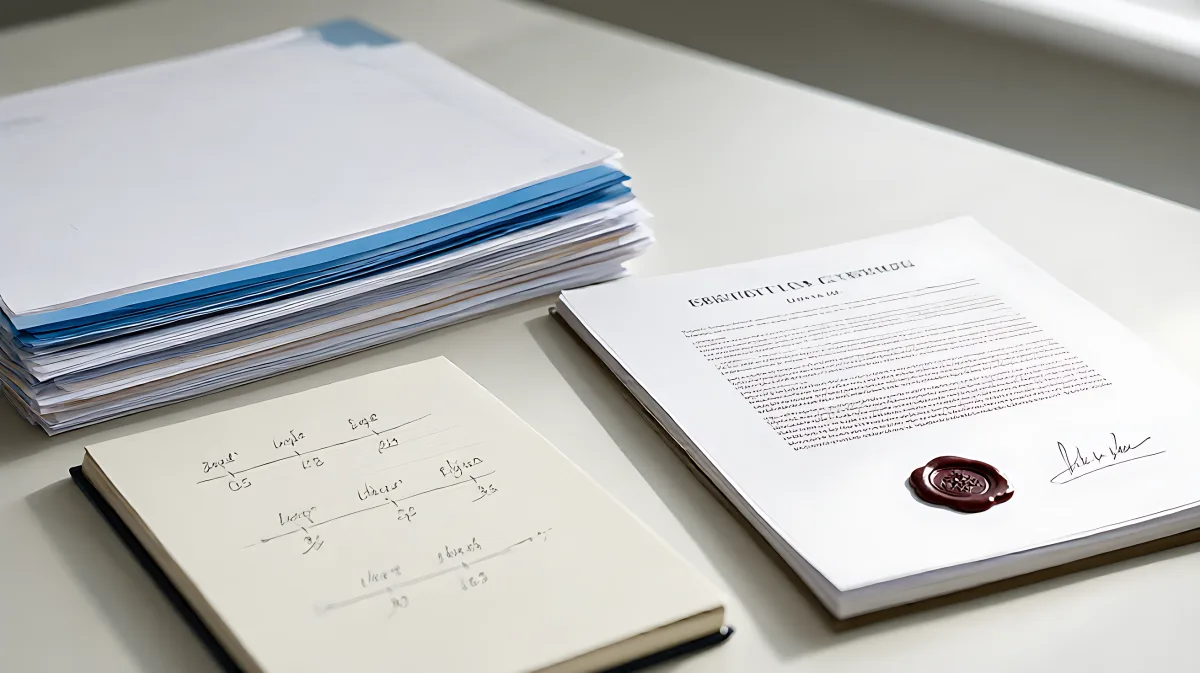
Families often assume dementia automatically voids legal documents, but the law focuses on momentary capacity. This guide explains how to build a defensive timeline using medical data and witness logs to protect a will or trust executed during a lucid window.
For families defending a will or trust signed by a loved one with dementia, the key is proving they understood the document at the specific moment of signing. You must build a layered timeline of medical timestamps and witness observations that document a lucid interval. As of 2025, courts increasingly reject single doctor letters in favor of this comprehensive data trail.
Why a Dementia Diagnosis Does Not Automatically Void a Will
Many families assume that any diagnosis of Alzheimer’s or dementia instantly destroys a person's legal capacity. In fact, the law operates on the principle of testamentary capacity, which is specific to the moment of execution. A person can have advanced memory issues but still understand who their heirs are, what they own, and that they are signing a will. According to the National Institute on Aging, cognitive decline is a spectrum. This means a patient might struggle with daily tasks but retain the specific mental clarity needed for a legal signature.
The legal standard requires the signer to comprehend the nature of the document, the extent of their assets, and the natural objects of their generosity. If these three elements are present at the time of signing, the document generally stands, even if the patient is confused the next day.
What Specific Evidence Holds Up in Probate Court
To prove a document was signed during a lucid window, you need more than a recollection. You need hard data. The most persuasive evidence comes from standardized neuropsychological tests. A score on the Montreal Cognitive Assessment (MoCA) provides a quantifiable baseline. For example, a score of 26 out of 30 suggests intact capacity, while a score of 14 suggests significant impairment. Attorneys can use these numbers to argue that the patient was in the "lucid" zone at the time of signing.
Clinical records also matter, but they must be contemporaneous. A note from three months after the signing saying "patient is confused" is less powerful than a note from the day of signing that says "patient is alert and oriented x4."
How to Build a Timeline of Capacity
You must construct a before-and-after narrative that isolates the moment of signing. This requires gathering records from periods of stability and contrasting them with periods of decline. The goal is to show that the legal act occurred during a period of stability.
Start with the medical records. Request complete files, not just summaries. Look for nursing notes that indicate orientation, such as knowing the date, place, and reason for their visit. Also, check for cancelled appointments or medication compliance issues, which can signal when capacity began to fluctuate. Under HIPAA, you need legal authority, such as a power of attorney, to access these records if the patient cannot consent.
- Collect pre-diagnosis cognitive screenings to establish a baseline of normal functioning.
- Obtain full neuropsychological test results, including MoCA or MMSE scores, closest to the signing date.
- Gather physician notes from the week prior to signing that explicitly mention the patient's alertness and orientation.
- Secure witness statements from individuals present during the signing who can attest to the patient's clarity.
- Note any medication changes that might have caused temporary delirium or, conversely, restored clarity.
How Witness Logs Strengthen Your Case
Medical data tells the story of the brain, but witness logs tell the story of the behavior. Courts value lay witness testimony that grounds the medical evidence in reality. A journal kept by a caregiver over several months is powerful. It should record specific incidents: what the patient said, their mood, their ability to recognize family members, and their understanding of recent events.
For the day of the signing, witnesses should note that the patient asked specific questions about the document, explained their reasons for the changes, and behaved consistently with their long-term preferences. This combats the argument that the document was signed due to undue influence.
Common Mistakes That Weaken a Defense
Families often make errors that are easy for opposing counsel to exploit. One major mistake is relying on a single doctor’s letter. As noted by Mayo Clinic resources on cognitive impairment, a vague note is easy to challenge. You need a layered body of evidence. Another error is failing to document the lucid interval specifically. General notes about health do not prove capacity at the exact moment of signing.
Finally, do not wait until the dispute is in court to start gathering records. Retroactive documentation is rarely compelling. The paper trail must exist in real time. If the patient did not have a power of attorney, accessing these records can become a legal nightmare, often requiring a guardianship petition before you can even collect the evidence you need to defend the estate document.
What Weight Does Each Type of Evidence Carry?
Not all evidence is created equal. According to a 2025 survey of probate judges referenced by the American Bar Association, neuropsychological testing carries the most weight, followed by medical records and then witness testimony. Understanding this hierarchy helps you prioritize your efforts.
| Evidence Type | Weight in Judicial Decisions | Example |
|---|---|---|
| Neuropsychological Testing | 32% | MoCA score of 28 on the day of signing |
| Medical Records/Imaging | 27% | Physician note stating "alert and oriented" |
| Caregiver Daily Logs | 18% | Journal entry noting patient asked about grandchildren |
| Expert Witness Testimony | 14% | Neurologist explaining the fluctuating nature of the disease |
| Lay Witness Accounts | 9% | Bank teller confirming patient was coherent during a visit |
Protecting the Document Before a Dispute Arises
The best defense is a well-documented execution. When signing documents for someone with mild cognitive impairment, schedule the appointment during their time of day when they are most alert. Use a neutral location. Have two disinterested witnesses present. Consider recording the signing (if legal in your state) or having a notary document the patient's responses to specific questions about the document's terms.
Attorneys can perform capacity evaluations right before signing. This provides a legal opinion that the person understood the document. While not a guarantee, it is a strong indicator that the family acted in good faith.
This article is for general information only and is not a substitute for professional medical advice, diagnosis, or treatment. Always consult a qualified clinician about your situation.
FAQ
Can a person with early-stage dementia sign a will?
Yes. As long as they have testamentary capacity—the ability to understand their assets, family, and the nature of the document—they can legally sign. Early-stage symptoms rarely prevent this understanding.
What is the difference between a doctor's note and a neuropsychological test?
A doctor's note is a subjective observation. A neuropsychological test, like the MoCA, is an objective score. Courts prefer objective scores because they are harder to challenge or dismiss as bias.
Do I need a power of attorney to get medical records?
In most cases, yes. If the patient cannot consent to release their information, you need legal authority. If no authority exists, you may need to petition for guardianship to access the records, which creates a circular legal challenge.
How detailed should witness logs be?
Specific and dated. Write down exactly what the patient said and did on the day of signing. Avoid vague terms like "seemed fine." Instead, write "patient identified me by name, discussed his desire to leave the house to his daughter, and signed the document without hesitation."