Can Grip Strength Tests Detect Early Dementia Risk?
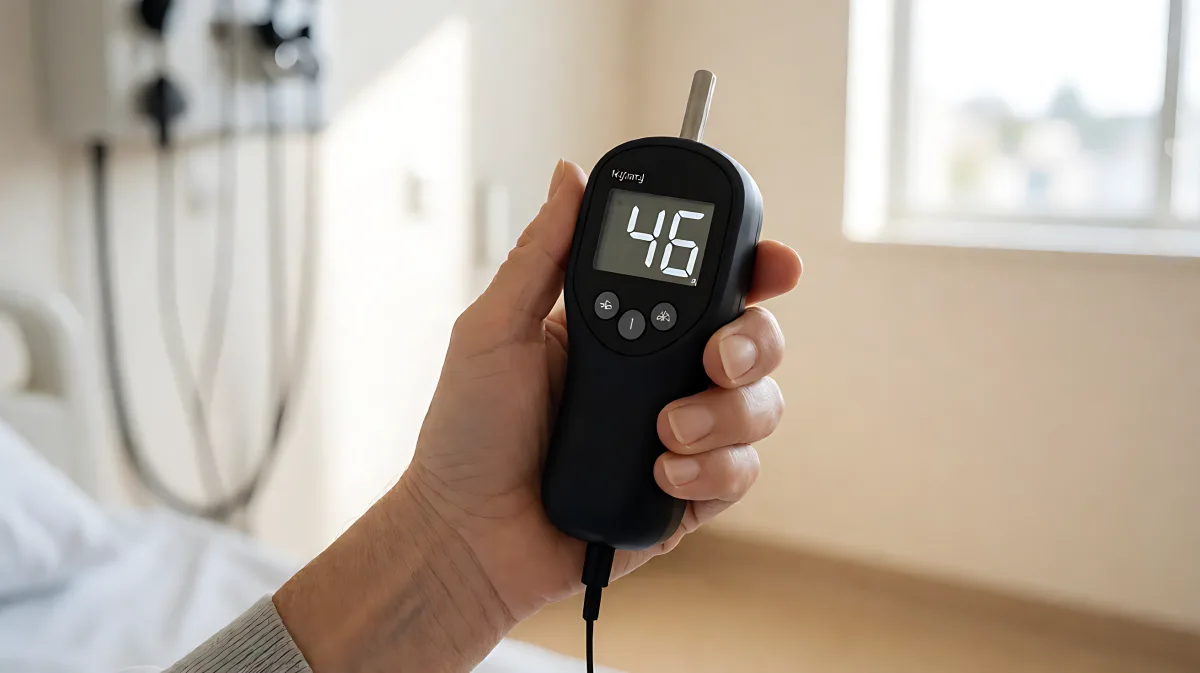
Researchers are looking at grip strength gauges as a potential early warning system for dementia. While not a diagnostic tool, low readings can signal broader physical and cognitive health issues that warrant closer medical attention.
Simple grip strength gauges are emerging as a valuable tool for flagging potential early cognitive decline. A meta-analysis published in the journal Frontiers in Aging Neuroscience found that individuals with poorer baseline grip strength had a hazard ratio of 1.99 for cognitive decline and 1.54 for dementia, meaning they were nearly twice as likely to experience these outcomes compared to those with stronger grip. While a low reading is not a diagnosis, it serves as a critical early signal that a broader health assessment is needed.
Why Is Hand Strength Linked to Brain Health?
Many families assume that grip strength is purely a muscular or skeletal measure, unrelated to the brain. In fact, grip strength is a proxy for overall physiological reserve and neurological integrity. The hand is a complex tool requiring the coordination of nerves, muscles, joints, and the brain pathways that plan and control movement. When these systems begin to fail, grip strength often declines before noticeable memory or thinking problems appear.
Researchers at Cedars-Sinai Medical Center note that skeletal muscle sends chemical and metabolic signals that influence inflammation, insulin sensitivity, and vascular health. Because the brain and muscles share these pathways, weakness in the grip can reflect systemic issues that also affect cognitive function. This link is part of why geriatricians use grip strength as part of a standard frailty screen, alongside walking speed and other functional markers.
What Do the Large-Scale Studies Show?
The relationship between physical strength and cognitive health is backed by significant data. The ASPREE trial, a massive study involving more than 18,000 participants in Australia and the US, examined the combination of slow gait and weak hand grip. The findings revealed that a combined poor performance in both areas was linked to a 79% increased risk of dementia and a 43% increased risk of cognitive decline over the study period. When both measures declined together over time, the risk for dementia rose to 89%.
Similarly, analyses using the UK Biobank, a long-running cohort of hundreds of thousands of adults, have consistently found that people with lower grip strength tend to score worse on tests of memory, processing speed, and overall cognition. These associations often hold up even after researchers account for age, which is notable because grip strength naturally decreases as we get older.
How Do Doctors Interpret These Numbers?
It is crucial to understand that a low grip strength reading does not guarantee a future diagnosis of Alzheimer’s or another form of dementia. It is a flag, not a verdict. However, it does identify individuals who are at higher risk. According to Dr. Zaldy Tan, director of the Memory and Healthy Aging Program at Cedars-Sinai, measuring grip strength in early-to-middle age helps identify people who may be at risk for cognitive decline later in life. This allows for earlier intervention through lifestyle changes or medical monitoring.
How Should You Test Your Own Grip Strength?
Measuring grip strength is straightforward and non-invasive. You can use a digital hand dynamometer, which is available at many physical therapy offices and some primary care practices. The test involves squeezing the device as hard as you can, usually with each hand, for several seconds. The device records the force in kilograms. The entire process takes less than a minute.
Norms vary by body size, age, and sex. As a general guide, men typically peak around 99 to 121 pounds (45 to 55 kilograms) in early-to-mid adulthood, while women peak around 55 to 77 pounds (25 to 35 kilograms). By the 70s and 80s, these values typically fall to roughly 55 to 77 pounds for men and 33 to 55 pounds for women. A significant drop from your personal baseline is more important than a single low number.
Common Mistake: Ignoring the Trend
A common misconception is that one low reading is all that matters. In reality, clinicians look at trends over time. A single weak squeeze might be due to a bad night’s sleep or a minor joint injury. However, a consistent downward trend in grip strength, especially when paired with a slowing walking speed, is a much stronger predictor of cognitive risk. Doctors recommend tracking these metrics over months or years to spot meaningful changes.
How Can You Protect Your Grip and Brain?
While you cannot simply train a stronger handshake to prevent dementia, maintaining overall physical resilience supports brain health. The goal is to delay the decline in grip strength and cognitive function by addressing the underlying causes of frailty. Here is a practical checklist to help you maintain optimal strength and cognitive health:
- Engage in resistance training: Aim for two sessions per week with light weights or resistance bands. This builds strength broadly and supports cardiovascular health.
- Monitor gait speed: Walk a measured distance (like a hallway) and time your pace. A slowing gait combined with weak grip is a high-risk signal.
- Manage chronic conditions: Keep blood pressure, diabetes, and cholesterol under control, as these affect both muscle mass and brain health.
- Prioritize sleep and social connection: Poor sleep and isolation are linked to cognitive decline and physical frailty.
- Consult a physician: If you notice new hand weakness, frequent dropping of objects, or changes in handwriting, seek medical advice to rule out neurological issues.
Frequently Asked Questions
Does weak grip strength mean I will definitely get dementia?
No. The link between weak grip and cognitive decline is observed in large population studies, not as a reliable prediction for any single person. Many individuals with below-average grip strength never develop cognitive problems, while others with strong grips do. It is one data point in a larger clinical picture, not a standalone diagnosis.
How accurate are grip strength gauges in detecting cognitive decline?
Grip strength gauges are not diagnostic for dementia. However, they are highly effective as screening tools for frailty. Research shows that poor grip strength, especially when combined with slow gait, significantly increases the statistical risk of cognitive decline. They are best used as part of a routine geriatric assessment rather than a standalone test.
What is the recommended frequency for testing grip strength?
For the general public, testing annually during a routine physical exam is a good baseline. For those already showing signs of frailty or cognitive slowing, clinicians may recommend monitoring every six months to track trends. The key is consistency in how the test is performed and the time of day, as grip strength can vary slightly throughout the day.
Can improving grip strength reverse early cognitive decline?
There is no evidence that grip strength training alone reverses established dementia. However, the physical activity and cardiovascular benefits of strength training are tied to better cognitive outcomes. Improving overall physical resilience can help maintain function and delay the progression of frailty, which is strongly associated with cognitive impairment.