Microgravity Sleep Research: What It Means for Your Sleep
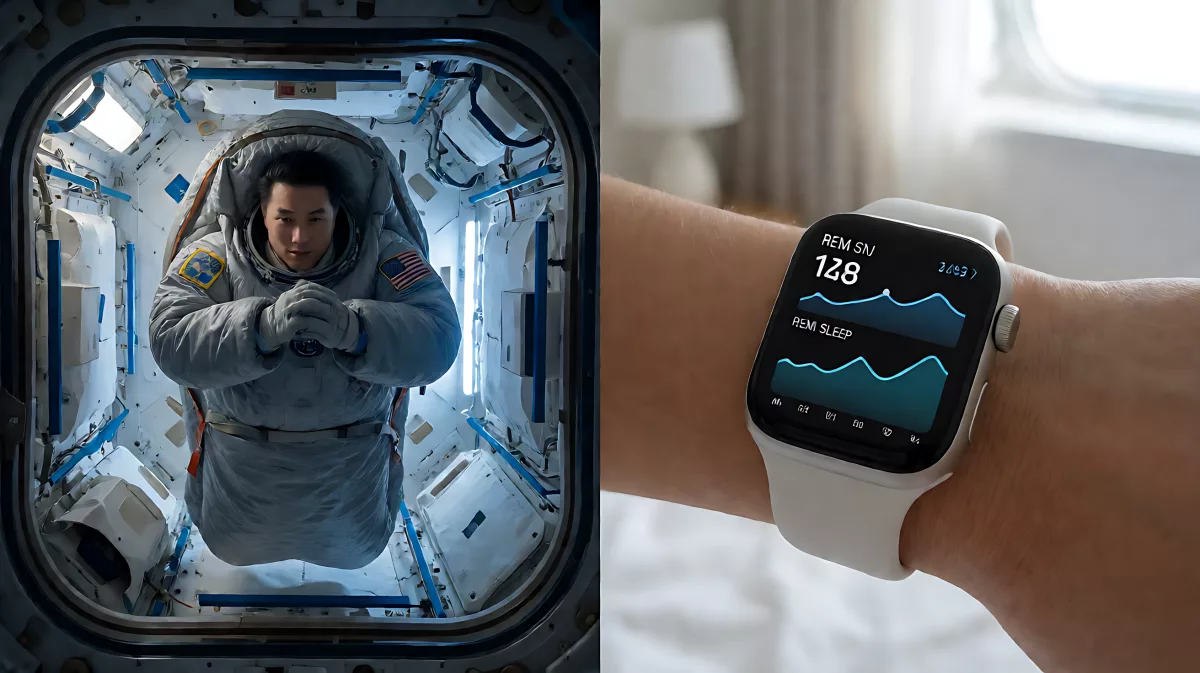
Astronauts face unique sleep challenges in orbit, but the data they generate is transforming how we understand and treat sleep issues on Earth. Here is what recent studies reveal about the impact of microgravity on rest and biological rhythms.
Microgravity sleep research reveals that the lack of consistent light-dark cycles and gravitational pull in space disrupts circadian rhythms and sleep architecture. By analyzing astronaut data from the International Space Station and simulated bed-rest studies, scientists have identified specific ways microgravity affects recovery, leading to new monitoring technologies and health protocols that now benefit sleep clinics and wellness tracking on Earth.
Why Sleep Is Disrupted in Microgravity
Living in orbit fundamentally changes how the human body regulates its internal clock. On the International Space Station, which orbits Earth every 90 minutes, crew members experience a sunrise and sunset sixteen times a day. This rapid cycling confuses the brain’s suprachiasmatic nucleus, the master regulator of circadian rhythms. Without the natural evening drop in melatonin and morning cortisol spikes that occur on Earth, astronauts often struggle to fall asleep and stay asleep, resulting in fragmented rest that can impact mission performance.
Beyond light exposure, the absence of gravity makes finding a comfortable sleeping posture difficult. Most astronauts are accustomed to the sensory input of gravity on their joints and muscles. In microgravity, the body’s core temperature regulation, which typically drops during deep sleep to facilitate rest, is altered. Dr. Simon Archer, a professor of molecular biology of sleep at the University of Surrey, notes that the removal of the normal posture cycle is a significant reinforcement signal for biological rhythmicity. When that signal is absent, the amplitude of many physiological variables, including sleep-wake cycles, decreases, leading to reduced health resilience.
Key Findings from Simulated Microgravity Studies
Researchers cannot always conduct experiments on the space station, so they use head-down tilt bed rest protocols on Earth to simulate the physiological effects of microgravity. A significant 60-day study coordinated by the European Space Agency involved 20 men who underwent this simulation to track changes in their biological rhythms. The study, published in npj Microgravity, provided critical insights into how sustained posture changes affect sleep health.
| Parameter | Observation in Simulated Microgravity |
|---|---|
| Sleep Duration | Participants averaged less than 6.5 hours of sleep per night, indicating chronic partial sleep deprivation. |
| Biological Rhythms | The amplitude of wrist skin temperature, motor activity, and sleepiness rhythms decreased significantly during the bed-rest period. |
| Thermoregulation | The normal association between rising wrist skin temperature and deeper sleep stages was lost, suggesting disrupted thermoregulatory processes. |
| Nap Behavior | Daytime naps increased, particularly at the beginning of the simulation, as the body attempted to compensate for poor nighttime sleep. |
These findings highlight that sleep in microgravity is not just shorter; it is qualitatively different. The loss of temperature-rhythm coupling is a marker of reduced physiological robustness. Dr. Derk-Jan Dijk, Director of the Surrey Sleep Research Centre, emphasizes that large cohort studies, such as those using the UK Biobank, have already shown that the amplitude of 24-hour rhythmicity predicts future health. The space data confirms that these rhythms are fragile and can be destabilized by environmental changes like zero gravity.
How Space Research Applies to Terrestrial Health
While the International Space Station serves as a unique laboratory for human physiology, the data collected there has immediate applications for people living on Earth. The monitoring tools developed for astronauts, such as the EXPAND Database and remote data collection platforms, are being adapted for use in clinical settings and consumer health technology. These systems allow for continuous, passive tracking of sleep quality and fatigue, moving beyond self-reporting to objective, real-time data.
One major application is in the treatment of shift workers and medical professionals. The circadian disruptions experienced by astronauts are similar to those faced by nurses and pilots who work irregular hours. By understanding how the body’s internal clock degrades under high-stress, fragmented conditions, researchers are developing better pharmaceutical and non-pharmaceutical interventions to maintain alertness and health. Dr. Mathias Basner, a leading voice in space sleep science at the University of Pennsylvania, points out that the reaction time and vigilance deficits caused by fragmented sleep in space are directly applicable to the safety concerns of shift work on Earth.
Furthermore, the insights into thermoregulation are influencing the design of wearable sleep monitors. On Earth, temperature is a key factor in sleep quality. The space studies showed that when the body’s temperature rhythms become flat, sleep suffers. This has led to new wearables that not only track movement but also monitor skin temperature to provide users with personalized feedback on their sleep environment. For instance, if a user’s temperature rhythm is not dropping appropriately before bed, the device can suggest adjusting room temperature or timing, mirroring the countermeasures used on the International Space Station.
The Role of Light and Behavioral Interventions
Light is the most powerful cue for circadian rhythm entrainment. In space, artificial lighting systems are carefully controlled to simulate a 24-hour day, but the challenges of maintaining these cues in a moving spacecraft are complex. Research from the International Space Station has refined our understanding of how light dose, spectrum, and timing affect melatonin suppression. These findings are now used in the design of therapeutic light boxes and smart lighting systems for hospitals and homes, aiming to improve sleep for the elderly and those with circadian rhythm sleep-wake disorders.
Behavioral strategies are also being standardized. Protocols that require astronauts to maintain strict sleep-wake schedules are being tested for their efficacy in preventing chronic fatigue. The use of pharmacological aids to enhance sleep quality is another area of active research, with the goal of developing safe, non-addictive options that can be used for short-term intervention in high-stress environments. As missions to Mars become more realistic, the need for robust sleep maintenance strategies will only grow, pushing the technology forward and making it more accessible to the general public.
What the Future of Space Sleep Science Looks Like
As we prepare for long-duration missions, sleep is no longer just a comfort issue; it is a critical component of mission success and astronaut safety. The integration of artificial intelligence with sleep data collected in microgravity is allowing for predictive models of fatigue. This means that in the near future, a pilot or a space traveler might receive an alert that their sleep quality is declining before they even feel the effects, allowing them to take corrective action.
The cross-pollination between space and terrestrial sleep science is creating a more holistic approach to human health. By studying the extremes of the environment, we are uncovering the fundamental vulnerabilities of the human biological clock. These discoveries are not just for those who travel to the stars; they are for everyone who struggles with a disrupted sleep schedule, whether due to jet lag, work demands, or chronic illness.
How does simulated microgravity affect the body’s internal clock?
Simulated microgravity, often studied through head-down tilt bed rest, causes a decrease in the amplitude of biological rhythms such as body temperature and motor activity. This flattening of rhythms disrupts the natural sleep-wake cycle, leading to shorter sleep durations and a loss of the correlation between skin temperature and sleep depth, which indicates a weakening of the body’s circadian drive.
What are the practical applications of astronaut sleep data?
Astronaut sleep data drives the development of advanced monitoring technologies, such as remote data collection platforms and wearable devices that track sleep quality, fatigue, and circadian health. These tools are being adapted for use on Earth to help shift workers, the elderly, and individuals with sleep disorders by providing more objective and continuous health insights than traditional sleep studies.
Can findings from space research help treat insomnia on Earth?
Yes. The research into how the body recovers from fragmented sleep and how light and temperature affect circadian rhythms in space is informing new behavioral and pharmaceutical protocols for insomnia. Understanding the limits of wearables versus direct brain monitoring, as discussed by sleep scientists, is leading to more accurate and personalized treatments for sleep disturbances on Earth.
What role does the International Space Station play in sleep research?
The International Space Station serves as a unique orbital laboratory where scientists can study the long-term effects of microgravity on human physiology. It hosts experiments like the Sleep-Long project, which collects data on sleep architecture, fatigue, and recovery, providing insights that are impossible to obtain in a terrestrial setting and contributing to the broader understanding of human health in varying gravitational environments.