Safe Gutter Cleaning for Seniors: Ladder Fall Prevention
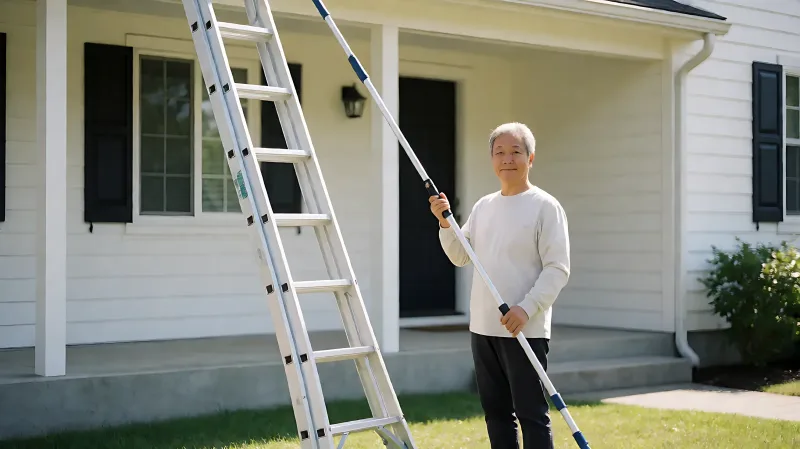
Falls are a leading cause of injury for seniors. This guide outlines critical ladder safety protocols and safer alternatives for cleaning gutters without risking a fall.
Seniors face elevated fall risks when maintaining homes. The National Institute for Occupational Safety and Health (NIOSH) emphasizes that using a proper ladder setup and avoiding high-risk tasks significantly reduces injury likelihood. For senior homeowners, the safest approach involves long-reach tools and strict ladder protocols to prevent falls while cleaning gutters.
For more information, see NIA health information for older adults from the National Institute on Aging.
Why Are Falls Dangerous for Older Adults?
Falls are the leading cause of accidental injury among adults aged 65 and older in the United States. The Centers for Disease Control and Prevention (CDC) notes that bones become less dense with age, making recovery from fractures more difficult and prolonged. A fall from a ladder can result in hip fractures or head injuries, which can dramatically alter a senior's quality of life. NIOSH data highlights that ladder-related incidents remain a persistent hazard in both residential and professional settings. Prioritizing prevention over reaction is essential for aging in place safely.
What Are the Signs of Increased Fall Risk?
Seniors should assess their balance, flexibility, and vision before attempting any elevation work. If you require a walker, have dizziness issues, or take medications that affect balance, ladder work is generally not recommended. Consulting with a healthcare provider about physical readiness is a prudent step before starting any home maintenance project.
How Do You Set Up a Ladder Safely?
Proper setup is the most critical factor in ladder safety. The Occupational Safety and Health Administration (OSHA) provides specific standards that apply to professional workers but serve as excellent safety benchmarks for homeowners.
- The 4-to-1 Rule: For every 4 feet of height the ladder reaches, the base should be 1 foot away from the wall. This creates a safe angle of approximately 75 degrees.
- Stable Surface: Ensure the ground is level, firm, and free of debris or leaves. Soft soil or wet grass can cause the ladder to sink or slide.
- Extension Height: The ladder should extend at least 3 feet above the point of support, such as the gutter edge or roof line, to provide a safe handhold for climbing.
Always check the ladder for damage before use. Cracks, bent rungs, or missing feet indicate the ladder is unsafe and should be discarded. For seniors, fiberglass ladders are often preferred near power lines because they do not conduct electricity.
What Is the Three Points of Contact Rule?
While climbing or working on a ladder, maintain three points of contact with the rungs at all times. This means having two feet and one hand on the ladder, or one foot and two hands on the ladder. Never overreach. If you cannot reach a section of the gutter, move the ladder instead of stretching. Overreaching shifts the center of gravity and can tip the ladder.
What Safer Alternatives Exist for Gutter Cleaning?
NIOSH advocates for the hierarchy of controls, which prioritizes eliminating hazards over relying on personal protective equipment. For seniors, eliminating the need to climb a ladder is the safest strategy.
Can You Clean Gutters From the Ground?
Yes. Long-reach gutter vacuums and wands allow homeowners to clean gutters safely from the ground. These tools typically feature hoses up to 25 feet long with attachable nozzles that fit into the gutter downspout or interior. By keeping your feet on the ground, you eliminate the risk of a fall entirely. This method is highly recommended for anyone with mobility concerns or balance issues.
Are Gutter Guards Worth the Investment?
Installing gutter guards or screens can reduce the frequency of cleaning by keeping large debris out. While they do not eliminate the need for maintenance, they make the task easier and less often. Some systems allow for the installation of leaf filters that minimize clogs during peak shedding seasons.
What Protective Gear Should You Use?
If you must use a ladder, proper gear adds a layer of safety. While OSHA does not mandate harnesses for residential ladder work, falling from a height of six feet or more in construction contexts triggers strict fall protection requirements under 29 CFR 1926.501. For homeowners, the focus is on stability and grip.
- Footwear: Wear non-slip, closed-toe shoes with good traction. Avoid sandals or smooth-soled shoes.
- Gloves: Use cut-resistant gloves to protect hands from sharp metal edges and thorns.
- Eye Protection: Wear safety glasses to prevent debris from falling into your eyes when scooping out clogs.
- Communication: Keep a charged mobile phone on your person in case of an emergency.
Is a Spotter Necessary?
Having a spotter standing at the base of the ladder is highly recommended for senior homeowners. A spotter can hold the ladder steady, alert you to hazards on the ground, and assist in lowering the ladder safely. Never attempt this task alone if you feel unsure.
When Should You Hire a Professional?
If your home has multiple stories, steep roofs, or difficult terrain, hiring a professional is the safest option. Gutter cleaning companies specialize in fall protection and have the equipment to handle the job efficiently. The CDC advises that reducing physical strain is crucial for long-term health. Spending a small amount on a professional service is often cheaper than medical bills associated with fall injuries.
How Often Should Gutters Be Cleaned?
In most regions, gutters should be cleaned at least twice a year. Autumn is critical for removing leaf accumulation, and spring helps clear pine needles and winter debris. Regular maintenance prevents water overflow, which can damage foundations and basements.
Frequently Asked Questions
What is the recommended angle for a ladder?
The recommended angle is approximately 75 degrees. Use the 4-to-1 rule: for every 4 feet of height, set the base 1 foot away from the wall. This ensures stability and prevents the ladder from slipping or tipping.
Can seniors safely clean gutters with a ladder?
It is possible, but it carries higher risk. NIOSH suggests using long-reach tools to stay on the ground. If you must use a ladder, ensure it is inspected, properly set up, and that you have good balance. A spotter is strongly advised.
What type of ladder is best for gutter cleaning?
A fiberglass extension ladder is often best for homes with overhead power lines, as it is non-conductive. Ensure the ladder has a high duty rating and stabilizers to prevent it from swaying against the gutter.
Are harnesses required for home gutter cleaning?
OSHA does not typically require harnesses for residential ladder work. However, for work on roof edges or high eaves where a fall could be severe, professional guidelines recommend fall arrest systems. For most seniors, the priority is avoiding the ladder entirely through ground-based cleaning tools.