Kitchen Lighting for Low Vision: 5 Smart Fixes to Try
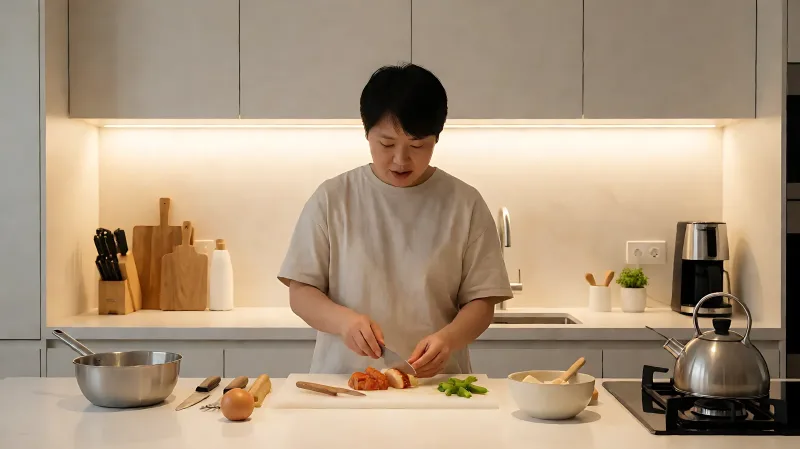
Discover practical ways to upgrade your kitchen with low vision in mind. From strategic lamp placement to choosing the correct bulb temperature, these tips help you cook, read, and move safely.
Effective kitchen lighting for low vision focuses on high-contrast task illumination and glare control. Rather than relying on a single overhead light, you should layer bright, even under-cabinet fixtures with a dedicated task lamp. To see food clearly, choose cool white bulbs around 4000 Kelvin and position lights to shine onto your work area, not into your eyes.
Why standard kitchen lighting fails people with low vision
As we age, our eyes require significantly more light to function effectively. According to the Macular Society, a person aged 60 needs about three times more light than someone in their twenties. If that individual also has a condition such as macular degeneration, the requirement can double, meaning they need roughly six times the illumination of a sighted 20-year-old. Standard kitchen bulbs often fall short of this demand, leaving the cook working in shadow or dealing with harsh reflections.
The primary goal of kitchen modifications is to enhance contrast. For those with low vision, light is not just about seeing; it is about distinguishing objects, colors, and edges. The Perkins School for the Blind highlights that proper lighting reduces eye strain and helps users complete tasks like chopping vegetables or reading a recipe without straining. When light is diffused evenly, it makes it easier to identify colors and breaks through the misty vision that many low-vision individuals experience.
What type of bulbs work best for kitchen tasks
Choosing the right bulb is the first step toward a safer kitchen. LED bulbs are generally the top recommendation for low-vision users because they are energy-efficient, long-lasting, and do not get excessively hot. Unlike halogen bulbs, which can reach dangerous temperatures and pose a burn risk, LEDs provide instant, crisp brightness. The Robert Cizik Eye Clinic notes that LEDs offer superior lighting quality and can be adjusted for specific tasks.
Brightness is measured in lumens. A standard 100-watt incandescent bulb provides roughly 1,550 lumens, but a modern LED can achieve the same brightness with only 18 watts. For kitchen work surfaces, you want high lumen output. Perkins recommends avoiding compact fluorescent bulbs (CFLs) where possible, as they can emit a cool, harsh light and contain mercury, which requires careful disposal. Instead, look for LED strips or bulbs that are specifically designed to remain cool to the touch, reducing the risk of accidental burns while cooking.
How should you position task lights to avoid shadows
Placement is as critical as the bulb itself. Overhead central lighting often creates a dark zone under your chin, casting a shadow over your work area. To avoid this, under-cabinet lighting is one of the most effective solutions. These strips illuminate the counter directly, eliminating the shadows created by the user's body.
If you are using a task lamp, position it below eye level so it shines onto the task rather than into your eyes. The Macular Society advises that lamps should be stable and have shades that prevent direct glare. For reading labels or recipes, place the light so it does not cast the shadow of your head onto the page. Halving the distance between the light source and the object will quadruple the light intensity on that object, so fine-tune the position until the illumination feels comfortable.
Which color temperature reduces eye strain in the kitchen
Light color is measured in Kelvin (K). Lower numbers indicate warm, yellow light, while higher numbers indicate cool, white light. For functional areas like the kitchen, cooler temperatures are preferred because they enhance contrast and alertness. The VIP Elderly safety guide suggests that 3500K to 4100K is ideal for task areas. This range makes it easier to see the difference between raw and cooked food, or to spot small objects on the counter.
However, you should avoid extremely cool lights above 5000K. Perkins explains that these daylight-white bulbs can create harsh glare and are unlikely to provide good contrast for those with certain eye conditions. Stick to a consistent color temperature throughout the home to avoid the eye fatigue that comes from adjusting to different light colors in different rooms.
What additional lighting features improve kitchen safety
Beyond basic bulbs and placement, several technological upgrades can make the kitchen more accessible. Motion-sensor lights are a vital addition for hallways leading to the kitchen and for under-sink areas. These sensors activate automatically, removing the need to fumble for switches in the dark. The VIP Elderly guide highlights that motion sensors are particularly valuable for preventing falls during nighttime trips to the kitchen for water or medication.
Consider installing dimmer switches. While you need high light for cooking, you may prefer lower light for casual dining or cleaning. Dimmers allow you to control the intensity without swapping bulbs. Additionally, ensure that light switches are high-contrast, such as yellow on a white wall, so they are easy to locate. Motion-activated lights and touch-sensitive lamps are excellent alternatives for those with limited mobility or arthritis.
FAQ
How many lumens do I need for a kitchen with low vision?
There is no single rule, but aim for high output. A typical kitchen work surface benefits from 3,000 to 5,000 lumens of combined task lighting. Start with your current setup and add under-cabinet LED strips until you can see details clearly without straining. Test by halving the distance to the light; if it becomes four times brighter, you may need to back the light up slightly to reduce glare.
Are halogen lights better than LEDs for reading in the kitchen?
LEDs are generally safer and more efficient. While halogen lights provide bright, white light, they get very hot and can be dangerous to handle. LEDs offer the same brightness without the heat risk and last significantly longer. For most low-vision users, a high-lumen LED is the superior choice.
Should I use natural light in the kitchen?
Yes, but control the glare. Open curtains wide to let in daylight, but use vertical blinds or roller blinds to prevent direct sun from shining into your eyes. The Macular Society recommends removing net curtains, which can create confusing patterns, and ensuring windows are clean for maximum light entry.
What is the best bulb color for identifying food quality?
Cool white LEDs between 3500K and 4100K are best. This color temperature provides high contrast, making it easier to distinguish between fresh and spoiled items. Avoid warm yellow bulbs for detailed food preparation, as they can distort color perception.
Can I use a magnifier with a task light?
Yes, but position it correctly. Keep the magnifier parallel to the light source so you are looking through it at a well-lit object. Do not place the magnifier directly under the light, as this causes reflections and pools of light that obscure your view. This technique helps reduce the magnification power you need to use.