Best Pool Depth for Arthritis: Senior Safety Guide
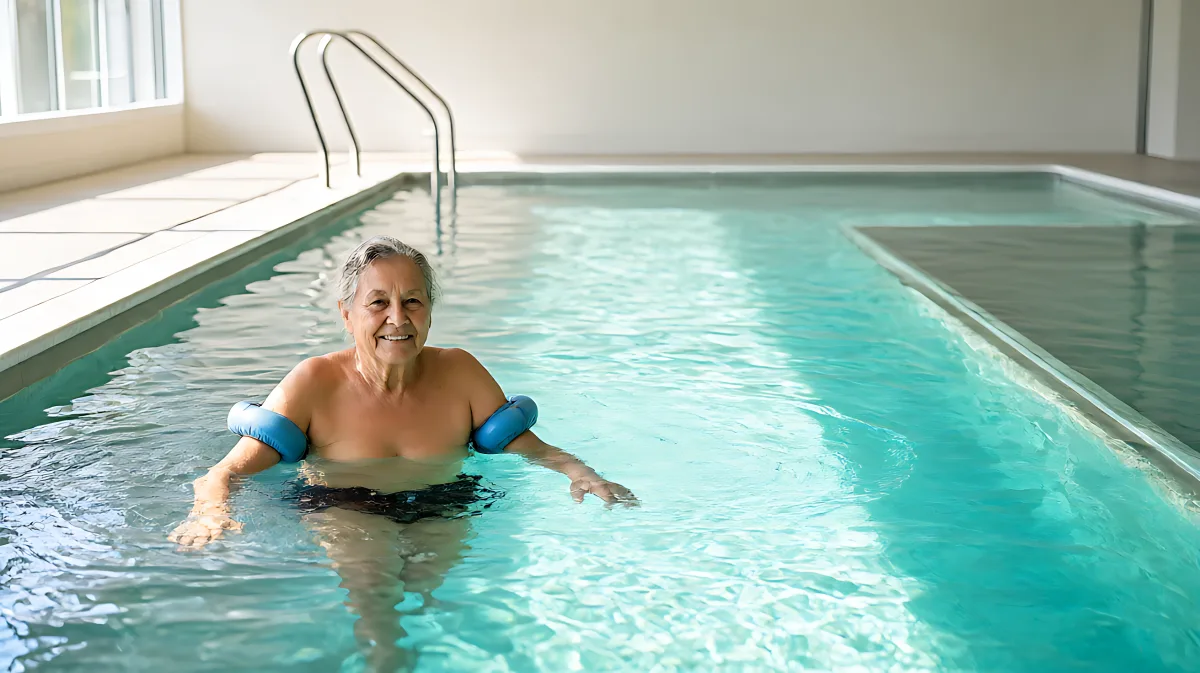
Choosing the right pool depth is critical for safe and effective arthritis relief. This guide breaks down the specific depth ranges, temperature needs, and safety features required for senior aquatic therapy in 2026.
For seniors managing arthritis, the ideal indoor pool depth typically ranges from waist-height (4 to 5 feet) to chest-height (5 to 6 feet). According to the American Physical Therapy Association, this depth range allows water buoyancy to support up to 90 percent of body weight, significantly reducing joint stress while providing enough resistance for muscle strengthening.
Why Pool Depth Matters for Joint Health
Water acts as a natural weight-loss system for the body. When you stand in water, the fluid you displace pushes back against you with equal force. This buoyancy takes the load off your hips, knees, and ankles, allowing you to perform movements that would be painful on land. However, depth is not just about standing. It determines the level of resistance and the type of exercise you can safely perform.
Many families assume that deeper is always better for therapy, but in fact, excessive depth can lead to a false sense of security and increase the risk of head-injury falls if balance is compromised. For most senior arthritis patients, a pool with varying depths offers the most flexibility.
What Is the Safest Depth for Walking and Treadmill Use?
For aquatic treadmills and walking programs, a depth of 3 to 4 feet is often recommended for beginners or those with severe balance issues. This allows the user to keep their feet on the floor if they need to stop, reducing anxiety. As confidence grows, the depth can increase to 5 feet to allow for full range-of-motion movements without dragging the feet on the pool bottom.
How Does Water Temperature Interact with Depth?
Depth and temperature must be considered together. The Arthritis Foundation recommends warm water therapy to keep joints loose and reduce pain. For therapeutic exercise, the water temperature should ideally range from 92 to 98 degrees Fahrenheit (33 to 37 degrees Celsius). In a home pool, maintaining this temperature across a large volume of water requires a robust heating system. If the pool is too deep, the volume of water is higher, making it harder to maintain a consistent warm temperature efficiently.
Key Standards for Indoor Therapy Pools
When selecting or designing an indoor pool for arthritis management, specific standards ensure safety and efficacy. Industry leaders like SwimEx and Endless Pools design their units with multiple depth zones to accommodate different mobility levels.
- Zero-Depth Entry: Many modern therapy pools feature a ramp or zero-depth area that starts at 0 inches and gradually increases. This is critical for seniors with limited agility who cannot climb traditional pool steps.
- Shallow Zone (3-4 feet): Designed for water walking, seated exercises, and users who need to keep their feet grounded for stability.
- Deep Zone (5-6 feet): Allows for floating, full-body resistance training, and swimming. Chest-high water (5 to 6 feet) is generally the sweet spot for maximizing buoyancy without requiring swimming proficiency.
- Fixed Handrails: Strategically placed grab rails are mandatory in both shallow and deep zones to provide support during transitions.
How to Choose the Right Depth for Your Specific Condition
Your specific joints dictate your optimal depth. If you suffer from knee or hip osteoarthritis, the goal is to remove weight-bearing stress. If you have upper body arthritis, you need enough depth to allow for full arm range of motion without hitting the pool floor.
Which Depth Is Best for Knee Arthritis?
For knee pain, a depth of 4 to 5 feet is ideal. This height allows you to walk comfortably without the knee joint locking or putting pressure on the lower leg. At this depth, you can perform lunges and squats in water, which are significantly easier to tolerate than their land-based counterparts because the water supports the weight of your legs.
Which Depth Is Best for Shoulder and Upper Body Pain?
If your arthritis affects your shoulders, elbows, or wrists, you need a deeper zone, typically 5 to 6 feet. This allows you to float or swim without your feet touching the bottom. You can use arm flippers or pool noodles to maintain buoyancy while exercising the upper body. The resistance of the water helps strengthen the muscles around the joint without the impact of gravity.
Safety Checklist for Senior Aquatic Therapy
Before starting a pool therapy routine, follow this checklist to ensure a safe environment. Always consult your physical therapist for individualized advice.
- Verify Water Temperature: Ensure the pool is heated between 92 and 98 degrees Fahrenheit (33 to 37 degrees Celsius). Cooler water can increase muscle stiffness and pain.
- Check Depth Markings: The pool should have clear, visible depth markers at 1-foot, 3-foot, and 5-foot intervals. This helps you stay in your safe zone.
- Test Non-Slip Surfaces: The pool floor and entry ramps must have a textured, non-slip coating. Water and standard concrete are a dangerous combination for seniors.
- Install Supportive Gear: Use a styrofoam noodle or a flotation vest if you are in the deep zone. These devices act as a safety net if you lose balance.
- Limit Session Length: Start with 15 to 20 minute sessions. Overheating or fatigue can lead to poor coordination, increasing the risk of slipping.
Common Mistakes to Avoid
One common misconception is that you need to be a strong swimmer to benefit from water therapy. In fact, most aquatic exercise programs for arthritis are designed for non-swimmers. You do not need to be comfortable with your face in the water. You can keep your head above the surface, hold onto the wall, and perform leg and arm exercises while standing or sitting on a pool step.
Another mistake is ignoring hydration. The humid, warm air of an indoor pool can be dehydrating. Many seniors do not realize they are losing fluids because they are not sweating visibly. Bring a water bottle to the pool deck and sip regularly during your session.
FAQ
What is the minimum depth for an effective therapy pool?
The minimum effective depth for most arthritis exercises is 4 feet. This allows for a full stride while walking and enough resistance for arm movements. Pools shallower than 4 feet may restrict the range of motion and limit the effectiveness of the therapy.
Can I use a standard home pool for arthritis therapy?
Yes, but it must be modified. A standard residential pool is often too cold and may not have adequate depth consistency. You should install a pool heater to maintain 92-98 degrees Fahrenheit and ensure the depth is at least 4 feet in your exercise zone. Adding a zero-entry ramp is highly recommended for safe access.
How often should I swim in a therapy pool?
For best results, aim for three to four sessions per week. Consistency is more important than duration. Short, regular sessions of 20 to 30 minutes are generally better tolerated by arthritic joints than one long, exhausting workout per week.
Does water depth affect the intensity of the workout?
Yes. Deeper water (5-6 feet) increases the resistance for arm movements and allows for full-body swimming, which raises the cardiovascular intensity. Shallow water (3-4 feet) focuses more on leg strength and balance with lower overall intensity, making it safer for beginners.