Home Fire Extinguisher Types & Kitchen Safety Guide
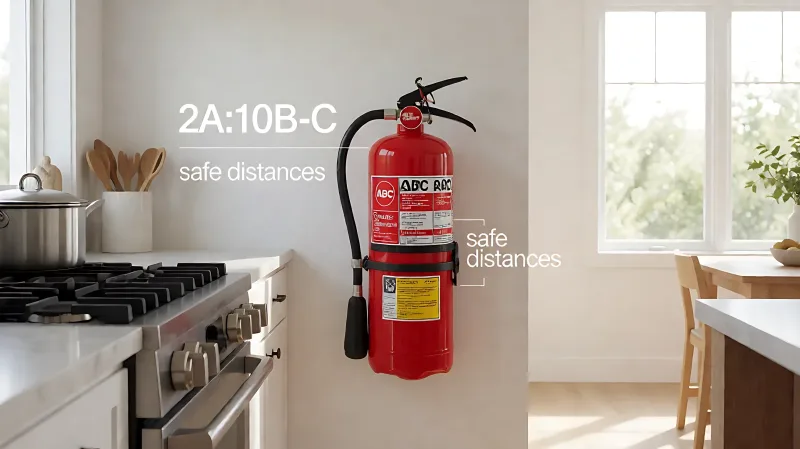
Discover the right fire extinguisher for your kitchen and home. Learn about ABC ratings, NFPA placement guidelines, and how to protect yourself from the most common household fire hazards.
The National Fire Protection Association (NFPA) recommends installing a 2A:10B:C rated fire extinguisher on every level of your home, with units positioned within 40 feet of potential fire hazards. For kitchen safety, specifically, place an extinguisher near the exit but not between you and the door, ensuring you have a clear path to escape. Since cooking equipment causes nearly half of all residential fires, having the correct multi-purpose dry chemical extinguisher in the kitchen is a critical defense against grease and wood-based fires.
For more information, see NIA health information for older adults from the National Institute on Aging.
What type of fire extinguisher should be in a home kitchen?
For most American households, a multipurpose dry chemical extinguisher with an ABC rating is the standard recommendation. These units are designed to combat the three most common household fire classes. Class A fires involve ordinary combustibles like wood, paper, and cloth. Class B fires involve flammable liquids such as gasoline, propane, and paint. Class C fires originate from energized electrical equipment.
While Class K extinguishers are specifically rated for commercial kitchens using cooking oils and fats, they are rarely practical for residential use due to their high cost and maintenance requirements. Instead, the NFPA and most fire safety experts advise that a standard ABC extinguisher is sufficient for home kitchens. This type of extinguisher uses a dry chemical agent that interrupts the chemical reaction of the fire and smothers it by depriving it of oxygen. It is effective against the flash fires that can occur when grease ignites, provided the fire is in its very early stages.
It is crucial to avoid using a carbon dioxide (CO2) extinguisher for general household fires. While CO2 is excellent for electrical fires because it leaves no residue, it does not perform well against Class A fires like a burning sofa or wood paneling. These fires can smolder and reignite even after the visible flames are out, making a dry chemical agent a safer bet for general home protection.
How should you place fire extinguishers in your home?
Placement is just as important as the type of extinguisher you choose. The goal is to have a unit within reach without it obstructing your escape route. The NFPA provides specific guidelines for residential placement, treating most homes as "light hazard" occupancies.
- Every Level: Install one extinguisher on each floor of your house. If you have a two-story home, you need at least two units.
- Distance from Hazards: Extinguishers should be no more than 40 feet away from areas where a fire might start, such as the kitchen, garage, and living room.
- Accessibility: Mount the extinguisher at a height that is comfortable for adults and older adults. It should not be too high for shorter individuals to reach, nor so low that it is easily hidden by furniture or clutter.
- Pathways: Place extinguishers near exits or hallways. Never block a door or exit corridor with the extinguisher or its mounting hardware.
For seniors and older adults, accessibility is a key factor. Ensure the unit is light enough to handle easily and that the mounting location is at a comfortable shoulder height, typically between 3.5 and 5 feet off the ground. This ensures that if a fire starts, a user can grab and operate the device without struggling against its weight.
Where is the best spot for a kitchen fire extinguisher?
The kitchen is the most fire-prone room in the average US home, with cooking equipment responsible for nearly 48 percent of residential fires according to NFPA data. The optimal placement for a kitchen extinguisher is near the exit from the kitchen, but not directly next to the stove where heat could damage the unit or where a fire could block your path.
Think of it as a "safe haven" location. You want the extinguisher to be accessible from the kitchen door or a nearby hallway. This allows you to grab it quickly if you notice smoke or flames, but also ensures you have a clear route to leave the room if the fire grows too large. Do not place the extinguisher between the kitchen entrance and the fire source if that position would prevent you from escaping.
Additionally, consider the garage or workshop. These areas often contain Class B hazards like gasoline, oil, and paint, as well as Class C risks from power tools. A dedicated ABC extinguisher in the garage is highly recommended, ideally mounted on the inside of the garage door or on a wall near the main entrance to the garage.
How often should you check and maintain your extinguisher?
A fire extinguisher is only useful if it is functional. The Consumer Product Safety Commission (CPSC) and NFPA recommend inspecting your extinguisher at least once a year. This is a simple visual check to ensure the pin is intact, the gauge is in the green zone, and the unit is free from rust, dents, or damage.
More detailed maintenance is required every six years, which must be performed by a certified professional. During this service, the extinguisher is dismantled, inspected, and recharged. For home users, annual inspections are the primary responsibility. If you notice the pressure gauge needle drifting into the red zone, or if the pull pin has been disturbed, replace or recharge the unit immediately.
Training is also a critical component of maintenance. Many people have an extinguisher but do not know how to use it. The acronym P.A.S.S. helps: Pull the pin, Aim at the base of the fire, Squeeze the handle, and Sweep from side to side. A study from Worcester Polytechnic Institute found that while most people can use an extinguisher, they often struggle to remove the pin in a high-stress situation. Practicing with a non-discharging training unit or even a dry fire drill can help reduce reaction time during an emergency.
FAQs about home fire safety
Can I use a Class K extinguisher at home?
Class K extinguishers are designed for commercial kitchens using large volumes of cooking oils. For home use, an ABC dry chemical extinguisher is sufficient for small kitchen fires. Class K units are expensive and require specialized training and maintenance, so they are generally not recommended for residential households unless you have a very specific, high-risk cooking setup that a fire department has advised to equip with a Class K unit.
How far should a fire extinguisher be from a fire hazard?
The NFPA recommends that in light hazard areas like most homes, extinguishers with a 2A rating should be no more than 75 feet from the hazard, but for practical home safety, experts advise keeping them within 40 feet of any potential fire source to ensure quick access during an emergency.
Is it safe to have a fire extinguisher near a heat source?
No. Do not mount a fire extinguisher directly above or below a stove, oven, or water heater. Excessive heat can affect the pressure inside the cylinder and damage the unit. Keep extinguishers in a cool, dry location away from direct heat sources.
What if the fire is too big to fight?
If the flames have spread to more than one room, or if you are running out of time, do not fight the fire. Call 911 and evacuate your home immediately. A fire extinguisher is a tool for putting out small, contained fires, not for battling major house fires. Your primary goal is always safe evacuation.