Hip Replacement Protein Goals: First 48 Hours
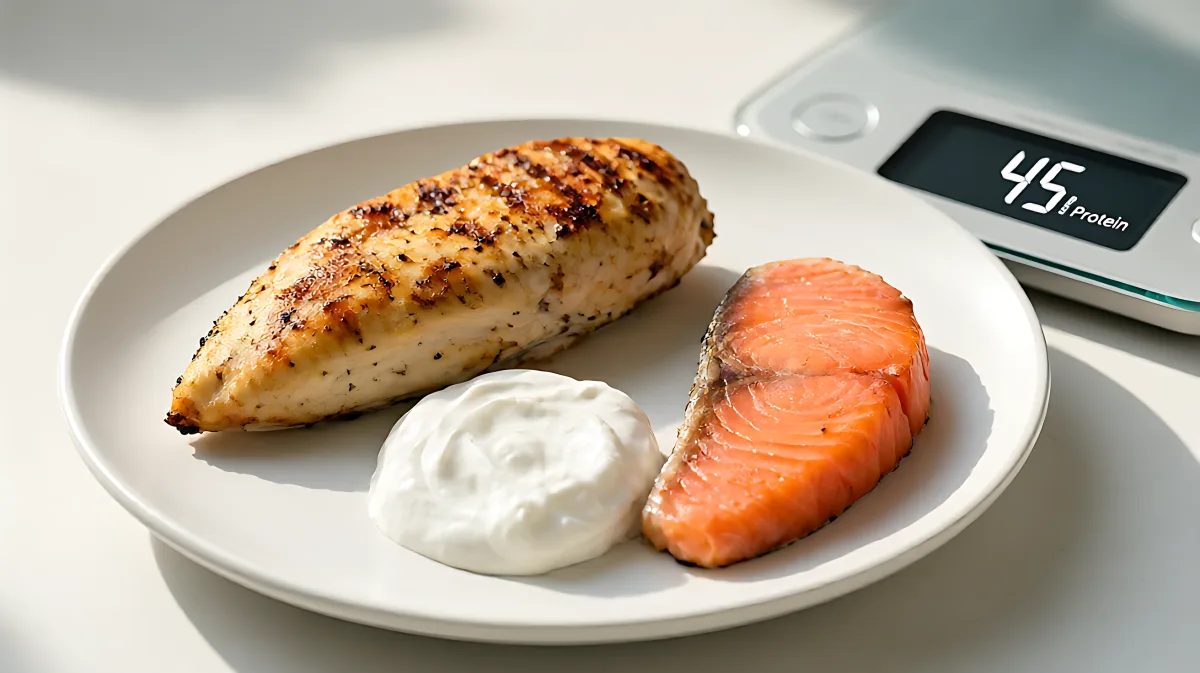
Standard hospital meals often fall short of the protein needs for hip replacement patients. Here is how to calculate your daily targets to protect muscle mass during the critical first 48 hours.
After hip replacement surgery, your body enters a hypermetabolic state that burns muscle tissue rapidly. To prevent this loss, most experts recommend a protein intake of 1.2 to 2.0 grams per kilogram of body weight daily, which is significantly higher than the standard diet for healthy adults.
Why protein needs spike immediately after hip surgery
The surgical trauma triggers a cascade of inflammatory cytokines and cortisol elevation. This response drives protein turnover up, sometimes increasing muscle breakdown by 50 percent above baseline in the first three days, according to research published in Clinical Nutrition. Without adequate amino acids, the body cannibalizes skeletal muscle to supply energy and building blocks for wound healing and immune function.
Many patients assume that eating regular hospital trays is enough. In fact, standard institutional meals often provide far less protein than the 1.5 to 2.0 g/kg/day required for optimal recovery, leaving a significant gap in nutritional support during the critical healing phase.
What are the specific protein targets for the first two days?
The acute post-operative phase (days 1–7) demands the highest protein density. For a patient weighing 80 kg (176 lbs), this translates to 120–160 grams of protein per day. To make this achievable, distribute intake across 4–6 feedings of 25–40 grams each. This distribution ensures that muscle protein synthesis remains stimulated throughout the day.
- Breakfast: 30 g (e.g., 4 eggs or 1 cup Greek yogurt plus a scoop of whey)
- Mid-morning: 15–20 g (e.g., cheese cubes or a protein shake)
- Lunch: 35 g (e.g., 6 oz chicken breast or 12 oz salmon)
- Afternoon: 15–20 g (e.g., cottage cheese or nuts)
- Dinner: 40 g (e.g., 8 oz lean beef or tofu)
- Before bed: 30 g (e.g., casein or high-protein pudding)
Which protein sources are best for post-surgical digestion?
Choosing sources that are easy to digest is vital when gastrointestinal motility is impaired. Animal proteins like whey, eggs, and lean meats are highly bioavailable and rich in leucine, which triggers muscle repair. However, plant-based options like lentils and tofu also support recovery when combined to form complete amino acid profiles.
| Source | Protein per Serving | Key Benefit |
|---|---|---|
| Whey Protein Isolate | 25–30 g | Fast absorption, high leucine content |
| Eggs (2 whole + 2 whites) | ~22 g | Easy to digest, complete amino acids |
| Salmon (150 g fillet) | ~34 g | Anti-inflammatory omega-3s, vitamin D |
| Chicken Breast (150 g) | ~46 g | High protein density, zinc for healing |
| Lentils (1 cup cooked) | ~18 g | Fiber for gut motility, iron, folate |
According to Healthline, opting for lean sources helps you get necessary protein without added saturated fats that can slow recovery. If you struggle to eat solid food, essential amino acid supplements or collagen peptides may bridge the gap, though they should not replace complete protein sources for muscle synthesis.
How to calculate your daily protein requirement accurately
You can determine your target by converting your weight to kilograms and multiplying by 1.5 for the acute phase. For example, if you weigh 150 pounds, divide by 2.2 to get 68 kg. Multiply 68 by 1.5 to reach a target of 102 grams per day. If your surgery was extensive, your surgeon may recommend the upper end of the range, closer to 2.0 g/kg.
A common misconception is that you should wait until you are fully mobile to eat high-protein foods. In reality, front-loading protein in the first 48 hours is critical because muscle atrophy begins immediately after anesthesia wears off. Use high-protein snacks to bridge meals if appetite is low, and prioritize hydration with at least 64 ounces of water daily to aid digestion and wound healing.
This article is for general information only and is not a substitute for professional medical advice, diagnosis, or treatment. Always consult a qualified clinician about your situation.
Frequently asked questions about post-surgical protein
How much protein do I need if I weigh 200 pounds?
For a 200-pound (90 kg) patient in the acute phase, target 135–180 grams of protein daily (1.5–2.0 g/kg). This can be achieved through five meals of roughly 30–36 grams each.
Can protein powders replace real food after surgery?
Protein powders are useful supplements to help meet targets when appetite is low, but they should not entirely replace whole food meals. Whole foods provide essential vitamins, minerals, and fiber that support immune function and digestion more effectively than isolated proteins alone.
Is plant-based protein as effective for muscle repair?
Plant proteins can support recovery but may require higher total intake to achieve the same muscle-building effect due to lower digestibility. Combining sources like beans and rice, or using fortified plant proteins, helps ensure you get a complete amino acid profile.
When should I increase my protein intake after the first week?
Protein needs remain elevated during the sub-acute recovery phase (weeks 2–6), where targets are 1.2–1.6 g/kg/day. Maintain high intake throughout rehabilitation to support early mobilization and muscle preservation.