What Is the Monofilament Test? Diabetic Foot Exam Details
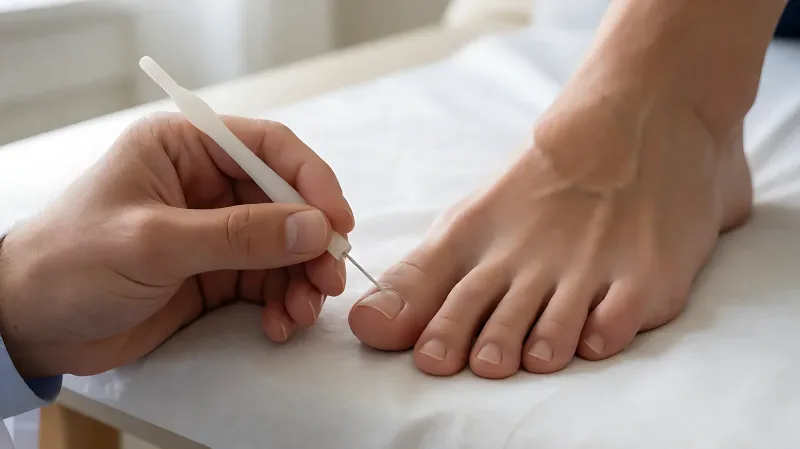
The 10-gram monofilament test is a standard screening tool for detecting nerve damage in diabetic feet. This article explains how the test works, why annual screening matters, and how to prepare for your appointment.
The 10-gram monofilament test is a quick, painless screening method used to detect peripheral neuropathy in diabetic patients. It checks for loss of protective sensation by pressing a standardized nylon filament against specific points on the foot. If a patient cannot feel the pressure, it indicates nerve damage that increases the risk of ulcers and infections. The American Diabetes Association recommends this screening at least annually for all adults with diabetes.
For more information, see NIA health information for older adults from the National Institute on Aging.
What is a monofilament test?
A monofilament test assesses sensory function in the feet, which is often the first area affected by diabetic neuropathy. Peripheral neuropathy involves damage to the peripheral nerves, usually resulting in symptoms like numbness, tingling, or pain, but in advanced stages, it leads to a complete loss of sensation. According to the National Institute of Diabetes and Digestive and Kidney Diseases, up to 50% of people with diabetes will develop some form of peripheral neuropathy over their lifetime.
The most common tool used in clinical settings is the Semmes-Weinstein monofilament. It consists of a nylon filament housed in a plastic handle. When the filament is bent into a C-shape, it exerts a specific force of 10 grams when pressed against the skin. This 10-gram threshold is significant because it represents the minimum pressure required to detect injury-causing forces. If a patient cannot feel this pressure, their feet are effectively "insensate," meaning they cannot protect themselves from minor traumas, heat, or tight footwear.
How does the monofilament test work?
The procedure is non-invasive and typically takes less than five minutes. Your healthcare provider will follow a standardized protocol to ensure accuracy.
- Preparation: You will be asked to remove your shoes and socks. The skin on your feet should be clean and dry. Calluses, scars, or ulcers are avoided during testing because the tissue density in these areas can distort results.
- Blindfolding: You will be asked to close your eyes or look away. This removes visual cues and forces you to rely solely on your sense of touch.
- Application: The provider holds the filament handle so that the tip touches the skin of your foot pads, typically the big toe, second toe, and the balls of the feet near the metatarsal heads.
- Force Application: The provider bends the filament against your skin until it touches itself, creating a C-shape. This ensures exactly 10 grams of force is applied for approximately one second.
- Response: You are asked to say "yes" or raise your hand when you feel the touch. The provider notes if you feel it or not.
- Repetition: The test may be repeated on both feet to check for consistency. A negative result (not feeling the filament) at even one site is considered a positive test for sensory loss.
Who needs a monofilament test?
The American Diabetes Association guidelines state that all patients with type 1 and type 2 diabetes should undergo a comprehensive foot exam at every visit. This includes a sensory exam using the monofilament tool. For patients with no prior complications, annual screening is the minimum standard. However, if any signs of neuropathy are detected, or if the patient has a history of foot ulcers, the provider may recommend quarterly checks. This frequent monitoring allows for early intervention, such as podiatry referrals or changes in footwear, before serious complications develop.
What do the results mean?
Results are typically documented as "normal" or "impaired." If you feel the filament at all test sites, your protective sensation is likely intact. However, diabetes can fluctuate, and nerve damage is progressive. If you fail to feel the 10-gram pressure at one or more sites, you are diagnosed with an insensate foot.
Having an insensate foot is a critical risk factor. The Centers for Disease Control and Prevention reports that approximately 1 in 4 adults with diabetes will develop a foot ulcer in their lifetime. Without the ability to feel pain from a blister or a tight shoe, small injuries can escalate into deep ulcers or gangrene. Therefore, a positive test result triggers a care plan that includes daily foot inspections, professional podiatry care, and customized therapeutic footwear to offload pressure points.
How should I prepare for the exam?
While the test itself is simple, preparation ensures the most accurate results. Keep your feet clean and dry before your appointment. Avoid using lotions or powders that might make the skin slippery. Wear comfortable shoes that are easy to remove. It is also helpful to maintain a list of your current medications and any recent changes in your blood sugar control, as uncontrolled glucose levels accelerate nerve damage. Inform your provider if you have experienced recent numbness or tingling, as this subjective data complements the objective monofilament test.
Frequently Asked Questions
Is the monofilament test painful?
No, the test is completely painless. The 10-gram force is roughly equivalent to the weight of two coins, which is a gentle tap against the skin. Most patients describe the sensation as a light brush or touch.
How often should I get a foot exam?
The American Diabetes Association recommends a professional foot exam at least once a year for patients with no signs of neuropathy. If you have a history of ulcers or significant sensory loss, your doctor may require quarterly visits. You should also perform a daily self-check of your feet at home for cuts, blisters, or redness.
Can I do the monofilament test at home?
While you can check for visible wounds at home, the monofilament test requires a calibrated medical device and specific technique to ensure accurate force application. It is not recommended for home use without training. Rely on annual professional screenings and daily visual inspections to monitor foot health.
What happens if I fail the test?
Failing the test does not mean you have lost the use of your feet. It means your protective sensation is impaired. Your provider will likely refer you to a podiatrist for further evaluation and create a prevention plan. This may include custom orthotics, offloading shoes, and strict glucose management to halt the progression of nerve damage.