Osteoporosis Screening in Men: Risk Factors & DEXA
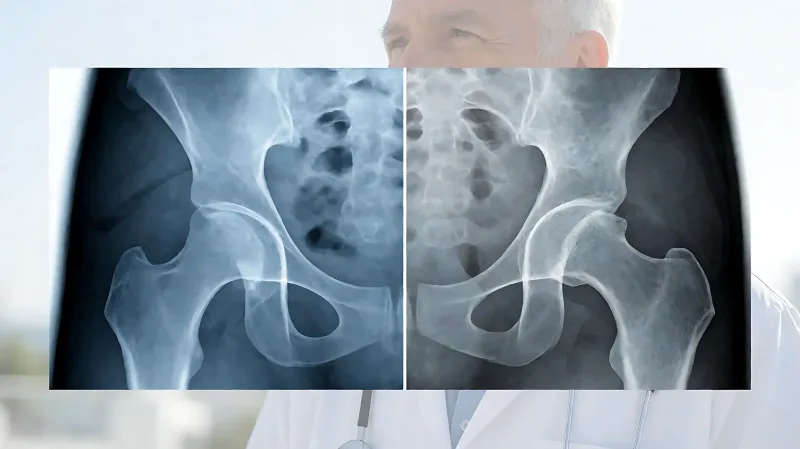
Osteoporosis is often seen as a women's disease, but it affects one in five men over 50. Here is what you need to know about risk factors, screening recommendations, and protecting your bones as you age.
Osteoporosis is frequently mistaken for a condition that only affects women, but it poses a serious threat to older men. The American College of Physicians recommends periodic risk assessments for men over 65, especially those with risk factors like steroid use or prior fractures. A dual-energy x-ray absorptiometry scan is the standard test for diagnosis.
For more information, see NIA health information for older adults from the National Institute on Aging.
Why Is Bone Density Testing Critical for Men?
While women are more likely to develop osteoporosis, men face distinct challenges when they do. According to the National Institute of Aging, men generally have larger and denser bones than women and peak bone mass is higher. However, men lose bone mass slowly and steadily with age, whereas women experience a sharp drop after menopause. Despite this slower decline, the consequences for men can be just as severe, if not more so.
Dr. Cathleen Colon-Emeric, a geriatrician at Durham VA Health Care System, notes that men have worse outcomes following osteoporotic fractures. Studies indicate that men suffer higher rates of death, disability, and institutionalization after a hip fracture compared to women. In fact, a 50-year-old man is more likely to die from the complications of a major osteoporotic fracture than from prostate cancer. This stark reality underscores the need for early detection and treatment, yet screening rates remain shockingly low. In a recent study of 3,000 veterans, only 2 percent of men in the control group had ever undergone bone-density screening.
Who Should Get a DEXA Scan?
The American College of Physicians (ACP) issues a strong recommendation that physicians perform an individualized assessment of risk factors for osteoporosis in older men. While there is no single age at which screening should begin for everyone, the ACP suggests that risk factor assessment is reasonable by age 65. This is because at least 6 percent of men have been diagnosed with osteoporosis via DEXA scans by that age.
Physicians should order a DEXA scan for men at increased risk who are candidates for drug therapy. The DEXA scan measures bone mineral density (BMD) and is the reference standard for diagnosis. A T-score of -2.5 or lower indicates osteoporosis. If you have multiple risk factors or a history of fractures, your doctor may recommend testing even if you are under 65.
What Are the Primary Risk Factors for Male Osteoporosis?
Understanding your risk profile is the first step toward prevention. The ACP identifies several key factors that significantly increase the likelihood of developing fragile bones. A meta-analysis of studies focusing on men over 50 in the United States and Europe highlighted the following primary predictors:
- Age over 70: The risk rises sharply as men enter their seventh and eighth decades.
- Low Body Weight: A body mass index (BMI) below 20 to 25 increases risk due to less mechanical stress on bones.
- Weight Loss: Losing more than 10 percent of your body weight can accelerate bone loss.
- Physical Inactivity: Lack of weight-bearing exercise contributes to lower bone density.
- Medication Use: Long-term use of oral corticosteroids is a major cause of secondary osteoporosis in men.
- Previous Fractures: A history of fragility fractures is a strong predictor of future fractures.
Additionally, androgen deprivation therapy, often used to treat prostate cancer, is a strong predictor of low BMD and fractures. Moderate predictors include cigarette smoking, low dietary calcium intake, and spinal cord injury. While alcohol use increases fracture probability, it has not been consistently associated with decreased BMD in studies.
How Effective Are Alternative Screening Methods?
Because DEXA scans can be expensive and may not be available in all areas, healthcare providers sometimes consider alternative tools. However, the evidence does not support using them as stand-alone replacements for DEXA when diagnosing osteoporosis.
Can Calcaneal Ultrasonography Diagnose Osteoporosis?
Calcaneal ultrasonography involves placing an ultrasound probe on the heel to measure bone quality. While it can predict the likelihood of fragility fractures moderately, it lacks the sensitivity and specificity required for a definitive diagnosis. At a T-score threshold of -1.0, the test has a sensitivity of 75 percent and a specificity of 66 percent. These figures are insufficient to screen the general population effectively.
Is the Osteoporosis Self-Assessment Tool Useful?
The Osteoporosis Self-Assessment Tool uses a formula based on age and weight to calculate a risk score. However, there is no universally accepted threshold for a positive result. Studies on U.S. veterans showed that a threshold of 3 yields a sensitivity of 93 percent but a specificity of only 66 percent. When the threshold is lowered to 1, sensitivity drops to 75 percent. Therefore, while this tool may help identify candidates for further testing, it cannot replace clinical evaluation and DEXA imaging.
Frequently Asked Questions
At what age should men start getting screened for bone density?
The American College of Physicians recommends that risk assessments begin by age 65 for older men. Screening may be appropriate earlier for men with significant risk factors, such as long-term corticosteroid use, a history of fragility fractures, or androgen deprivation therapy. Your doctor will determine the appropriate timing based on your individual health profile.
Is osteoporosis treatment effective for men?
Yes. Once diagnosed, men can respond well to treatments that preserve or rebuild bone mass. In a study of veterans with risk factors, those who received structured screening and treatment showed modest increases in bone density after 18 months. Many patients also reported improved quality of life and better adherence to medication regimens compared to unscreened populations.
Do men need different calcium or vitamin D than women?
There are no specific gender-based guidelines that differ dramatically for baseline calcium and vitamin D needs. Most adults require adequate intake of these nutrients. However, men with diagnosed osteoporosis or high risk factors may be prescribed specific supplements or medications. It is crucial to maintain a diet rich in calcium and vitamin D, along with regular weight-bearing exercise, regardless of gender.
Can smoking really cause bone loss?
Yes. Cigarette smoking is identified as a moderate predictor of low bone mass and increased fracture risk. The chemicals in tobacco interfere with bone metabolism and reduce the body's ability to absorb calcium. Quitting smoking is one of the most effective lifestyle changes you can make to protect your skeletal health as you age.