Cortisol Spikes At Bedtime: Impact On Senior Muscle Mass
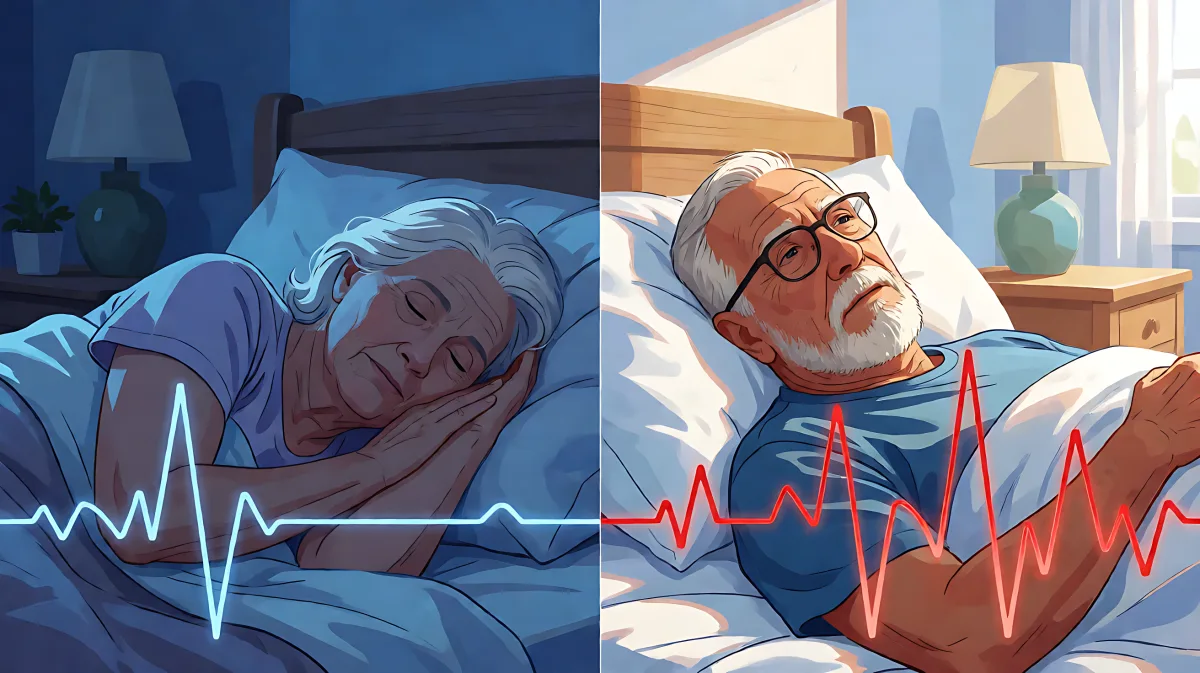
For adults over 60, the body’s natural dip in cortisol at bedtime can fail, leading to elevated stress hormones that actively break down muscle tissue. This guide explains the mechanism behind nocturnal catabolism and provides a practical routine to stabilize your circadian rhythm.
As we age, the natural dip in cortisol that should occur at bedtime often fails, leaving seniors with elevated stress hormones that actively break down muscle tissue. Research indicates that persistent nighttime cortisol elevation is linked to accelerated sarcopenia, the age-related loss of muscle mass and strength. Stabilizing this rhythm through targeted light exposure and meal timing can help protect muscle integrity.
How does cortisol affect muscle retention in older adults?
Cortisol is a catabolic hormone, meaning it breaks down tissues to release energy. While useful in short bursts, chronic elevation prevents the body from shifting into an anabolic state, which is necessary for muscle repair and growth. For seniors, this imbalance is particularly damaging because muscle mass is already declining naturally. A study published in the journal Ageing Research Reviews highlights that circadian disruptions, such as inverted cortisol rhythms, are strongly associated with cardiometabolic risks and reduced lean body mass. The body requires cortisol to hit its lowest point, typically around midnight, to allow muscle proteins to synthesize and repair. When this floor rises, the "cortisol awakening response" in the morning becomes blunted, leaving seniors feeling fatigued and unable to maintain physical strength.
Why do nighttime cortisol levels spike after age 65?
Many families assume that poor sleep in older adults is simply due to needing less rest. In fact, the issue is often a fundamental shift in circadian biology known as the advanced sleep phase, where the body’s clock shifts earlier. This shift causes cortisol to begin its natural rise too early in the night, rather than in the early morning hours. Additionally, the adrenal glands in seniors often become more sensitive to stress signals. Factors like chronic pain, medication changes, or even the stress of not sleeping well create a feedback loop. The result is a flattened diurnal curve where cortisol does not drop as low as it should, keeping the sympathetic nervous system in a state of heightened alertness that inhibits deep, restorative sleep.
What role does meal timing play in late-night muscle breakdown?
The timing of food intake, known as chrono-nutrition, directly impacts circadian hormones. Eating late at night, particularly high-sugar or high-fat meals, forces the adrenal glands to remain active during hours when they should be resting. Research from the Nutrients journal suggests that consistent meal timing helps reset cortisol patterns. When seniors skip breakfast or eat too late, the body’s cortisol peak can shift later in the day, remaining elevated during sleep hours. This disrupts the melatonin-cortisol interface, making it harder to enter the deep sleep stages where human growth hormone is released to preserve muscle.
What steps can seniors take to stabilize their cortisol rhythm?
You can actively influence your hormonal balance by manipulating light exposure and nutrient timing. The following checklist provides evidence-based strategies to lower nighttime cortisol and protect muscle mass.
- Get Morning Sunlight: View natural light within 30 minutes of waking. Studies show that 2 to 10 minutes of morning sun improves focus and prevents the late-shift in cortisol that causes nighttime spikes.
- Time Your Protein Intake: Consume 15g of protein within 30 minutes of waking up. This helps stabilize blood sugar and supports muscle protein synthesis during the day.
- Avoid Late-Night Snacks: Finish your last significant meal at least 3 to 4 hours before bed to allow cortisol to reach its natural nadir (lowest point) at midnight.
- Dim the Lights Early: Use low-intensity, warm lighting from 8:00 PM onward. Bright blue light suppresses melatonin and can inadvertently stimulate the sympathetic nervous system.
Consistency is key. The circadian system relies on regularity. By anchoring your day with morning light and consistent meal times, you signal to your HPA axis that it is safe to lower cortisol levels in the evening.
Does stress management reduce catabolic hormone spikes?
Absolutely. Psychological stress is a primary driver of cortisol release. For seniors, daily relaxation techniques are not just for mood; they are physiological tools for muscle preservation. Practices like box breathing or progressive muscle relaxation activate the parasympathetic nervous system, which counteracts the fight-or-flight response. According to Healthline, reducing chronic stress lowers the baseline levels of the hormone, allowing for deeper sleep cycles. When sleep depth increases, the body better utilizes the anabolic window to repair muscle fibers damaged during daily activity.
What is the connection between sleep duration and muscle loss?
Short sleep duration is directly linked to higher cortisol levels. Research indicates that adults who sleep less than 7 hours per night have significantly higher inflammatory markers and cortisol variability. This variability makes the body less tolerant to insulin, leading to increased storage of fat in the abdominal area and the simultaneous wasting of muscle tissue. Protecting your sleep duration is therefore a primary defense against sarcopenia.
How does caffeine intake affect the evening cortisol drop?
Caffeine has a half-life of 5 to 7 hours in the body. If a senior consumes coffee or tea in the afternoon, a significant portion of the caffeine remains active at bedtime. This stimulation blocks adenosine, a chemical that promotes sleep, and can keep cortisol levels artificially high. To ensure a proper cortisol dip, it is recommended to avoid caffeine after 12:00 PM or 2:00 PM.
Frequently Asked Questions
Is it normal for cortisol to be high at 3 AM?
In a healthy circadian rhythm, cortisol is at its absolute lowest around midnight and only begins to rise gently in the 2:00 AM to 3:00 AM window to prepare for waking. If you are wide awake at 3:00 AM with a racing heart, your cortisol likely spiked earlier than it should have. This early rise is often a sign of a shifted circadian clock or underlying stress dysregulation.
Can I test my cortisol levels at home?
Yes, salivary cortisol tests are available. These usually require four samples: upon waking, 30 minutes after waking, early afternoon, and before bedtime. However, interpreting these results can be complex. It is often better to rely on sleep quality and energy levels first, and consult a geriatrician if persistent fatigue or muscle weakness continues despite lifestyle changes.
What is the difference between cortisol and melatonin?
Cortisol is the "wake up" hormone, while melatonin is the "sleep" hormone. They operate on opposite sides of the circadian spectrum. As melatonin rises in the evening to induce sleep, cortisol must fall. If one is disrupted, the other is usually affected. For example, high evening light exposure lowers melatonin, which can keep cortisol elevated, preventing the necessary wind-down for sleep.
Do supplements like ashwagandha help lower cortisol?
Some studies suggest adaptogenic herbs like ashwagandha may modestly reduce cortisol levels in stressed individuals. However, seniors should always consult a healthcare provider before starting supplements, as they can interact with blood pressure medications or other drugs. Lifestyle changes, such as morning light and meal timing, remain the most robust and non-invasive method for regulation.