Best Smart Rings for Sleep Tracking
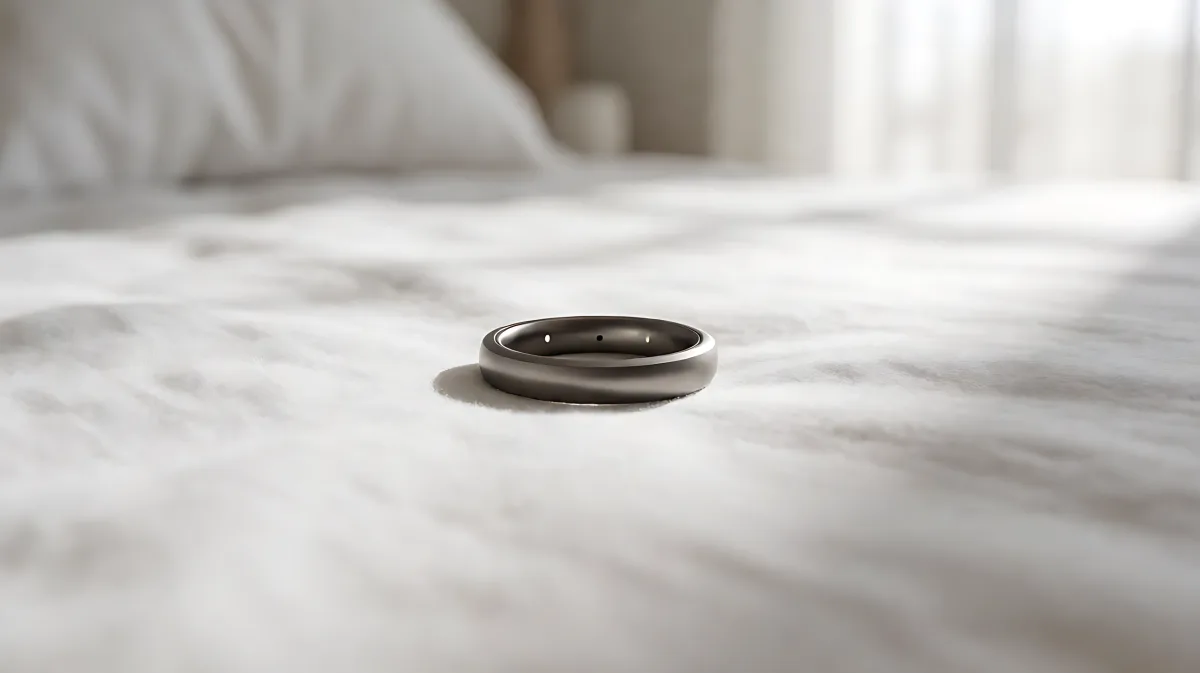
Smart rings offer a lighter alternative to smartwatches for monitoring sleep. This guide breaks down top models like the Oura Ring 5 and RingConn Gen 2, analyzing their accuracy, battery life, and true cost of ownership for 2026 buyers.
Smart rings have become the most effective tool for monitoring sleep without the bulk of a smartwatch. Leading models now match clinical polysomnography tests with up to 79 percent accuracy, helping users track heart rate, temperature, and sleep stages comfortably. If you want reliable rest data without a monthly subscription headache or a heavy device on your wrist, a high-quality smart ring is the superior choice for 2026.
Why switch from a smartwatch to a smart ring?
Many users assume that a smartwatch is superior because it displays more data, but in fact, the larger surface area often causes discomfort during sleep. The bulk of a watch can interfere with side-sleeping positions, whereas a ring weighs between two and five grams, effectively disappearing on the finger. This weight difference is crucial for passive tracking. When a device is unobtrusive, it does not become a focal point that induces anxiety or sleep disturbances. Furthermore, rings typically offer longer battery life, lasting up to 15 days compared to the daily charging required by many wrist-based devices.
How accurate are smart rings for sleep staging?
Accuracy is the primary concern for potential buyers, and recent validation studies provide clear metrics. Research from Brigham and Women’s Hospital indicates that leading smart rings achieve approximately 79 percent agreement with polysomnography, the gold standard for sleep measurement. This level of agreement is significant for detecting deep sleep and REM stages. For those concerned with specific conditions, newer models now include features to estimate the Apnea-Hypopnea Index, providing a data point that can be discussed with a healthcare provider, though these devices are not diagnostic tools.
Which ring offers the best balance of features and price?
The market for smart rings in 2026 is split into two distinct categories: premium research-grade devices and subscription-free value options. The choice depends on whether you prioritize clinical-grade accuracy or want to avoid recurring monthly fees.
What makes the Oura Ring 5 the leader in accuracy?
The Oura Ring 5 is widely regarded as the benchmark for sleep staging. It tracks over 50 health metrics, including heart rate variability and skin temperature. A key advantage is its all-titanium construction, which is 40 percent smaller than its predecessor, making it less noticeable during sleep. However, access to the full suite of data requires a subscription. This adds a recurring cost of $5.99 per month. For users who view sleep data as a clinical necessity, this fee is often justified by the depth of the insights provided by the AI Advisor.
Is the RingConn Gen 2 a viable alternative without a subscription?
For buyers who dislike paying for data they already own, the RingConn Gen 2 is the top contender. Priced under $200 for the Air model and roughly $300 for the standard model, it offers lifetime access to its features without a monthly fee. The ring includes sleep apnea monitoring and a 10-to-12-day battery life. While its app interface is more data-focused and less coaching-oriented than Oura, it provides the essential metrics for tracking rest patterns without the financial commitment.
What factors should you check before buying?
Before investing in a smart ring, it is vital to evaluate how the device fits your specific routine. A mismatch in expectations can lead to the device being unused within a month. Below is a checklist to ensure you select the right model.
- Verify Sizing Kits: Most brands provide a sizer that must be worn for 24 hours. Do not guess your size, as a ring that is too tight can affect circulation and sleep data accuracy.
- Calculate Total Cost of Ownership: Consider the upfront hardware cost plus any subscription fees. For example, a $399 ring with a $5.99/month plan costs over $540 in the first year.
- Check Phone Compatibility: Some rings, like the Samsung Galaxy Ring, have ecosystem limitations. Ensure the app supports your operating system and syncs with your preferred health platforms.
- Assess Battery Needs: Determine if you prefer a 10-day battery (RingConn) or a 7-day battery (Oura). Frequent travelers may prioritize the longer runtime to avoid charging while away from home.
Common mistake: Ignoring the psychological impact of sleep scores
Many individuals assume that higher sleep scores always correlate with feeling well-rested, but in fact, the relationship is not always linear. A common phenomenon is 'score anxiety,' where users wake up feeling fine but feel tired because the app reported a poor sleep quality overnight. This psychological effect can actually degrade sleep over time. It is important to use the ring as a trend observer rather than a daily mood dictum. If you find yourself stressfully checking the app upon waking, you may be relying on the device too heavily rather than trusting your own body.
What features actually matter for sleep health?
Not all sensors are created equal. While heart rate is standard, the inclusion of skin temperature sensors and SpO2 monitors adds significant value. Skin temperature helps identify circadian rhythm shifts, while SpO2 monitoring can flag potential breathing irregularities. For the best results, look for a ring that provides a recovery score alongside sleep data. This holistic view accounts for daytime stress and activity, giving a more complete picture of your physiological state.
Is it worth paying for a premium tier?
Premium tiers, such as those offered by Oura, unlock historical data trends and personalized nudges. For casual users, the free or basic data from value-oriented rings like RingConn or Ultrahuman is sufficient for tracking general habits. However, if you are working with a doctor on insomnia or sleep apnea, the advanced filtering and validation studies behind premium models may provide the reliability needed for medical conversations.
FAQ
Do smart rings detect sleep apnea?
Most modern rings can estimate the Apnea-Hypopnea Index (AHI) by monitoring blood oxygen levels and heart rate variability. While they can flag potential events that warrant a doctor's visit, they are not diagnostic medical devices. You should use the data as a conversation starter with a specialist rather than a confirmation of a diagnosis.
How often do I need to charge a smart ring?
Charging frequency varies by model. The RingConn Gen 2 typically lasts 10 to 12 days, while the Oura Ring 5 lasts about 6 to 9 days. Some models, like the Ultrahuman Ring PRO, claim up to 15 days of battery life. Most rings use a magnetic charging case that can extend total runtime to several months if kept in the case when not in use.
Can I use a smart ring if I have a large finger?
Yes, most manufacturers offer a range of sizes, often from size six to 15. It is crucial to use the sizing kit provided by the vendor to ensure a precise fit. A ring that is too loose may slip off during sleep, while one that is too tight can be uncomfortable and inaccurate. Titanium rings are generally lighter and more comfortable for larger sizes due to the material's strength-to-weight ratio.
Does a smart ring work without a smartphone?
No, smart rings require a paired smartphone to sync data and view insights. The ring itself stores data temporarily, but the analysis and visualization happen in the companion app. Without a phone, you cannot access the sleep scores or trends, making the device ineffective as a standalone tool.