Asthma vs. COPD: Key Differences for Older Adults
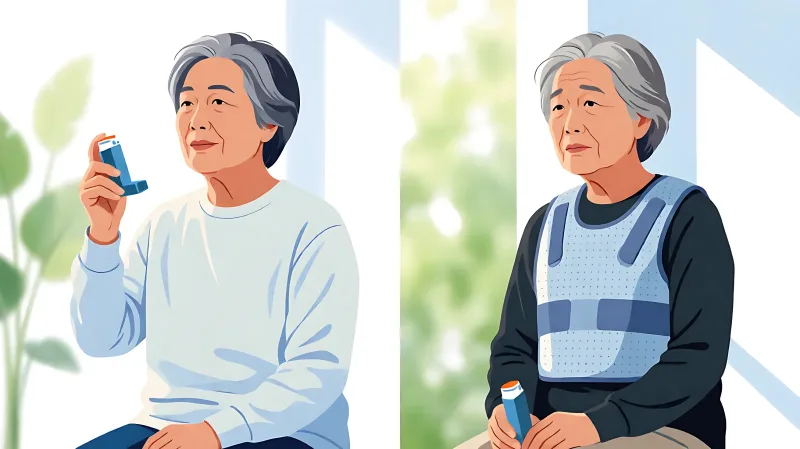
Confused about why you are wheezing? Understanding the distinction between late-onset asthma and COPD is vital for seniors. We break down the key symptoms, triggers, and diagnostic tests to help you discuss next steps with your doctor.
Late-onset asthma and COPD are distinct lung conditions that often share similar symptoms like wheezing and shortness of breath. The primary difference is that late-onset asthma typically presents as reversible airway narrowing triggered by allergens or activity, while COPD involves permanent airflow limitation usually linked to smoking or long-term irritant exposure. Proper diagnosis relies on spirometry testing to check for reversibility, a critical step recommended by the National Heart, Lung, and Blood Institute.
For more information, see MedlinePlus medical encyclopedia from the National Library of Medicine.
Why do older adults experience new respiratory diagnoses?
Many seniors believe that breathing difficulties are simply a normal part of aging. However, the American Lung Association notes that new respiratory symptoms in adults over 40 should always be evaluated to rule out chronic conditions. Late-onset asthma, which occurs in adults without a childhood history of the disease, is becoming more common. It is often linked to environmental factors such as occupational exposure to dust or fumes, or significant weight changes. Conversely, COPD is a progressive disease where the air sacs in the lungs are damaged over time. Because both conditions can manifest in the same age group, distinguishing between them is essential for choosing the right treatment plan.
What are the key symptom differences between asthma and COPD?
While both conditions cause shortness of breath, cough, and wheezing, the pattern of these symptoms differs significantly.
- Reversibility: Asthma symptoms often fluctuate. You might feel fine in the morning and experience tightness in the airways in the evening or after exercise. COPD symptoms are generally constant and tend to worsen over time, even when at rest.
- Triggers: Asthma is frequently triggered by specific allergens like pet dander, pollen, or cold air. COPD is not typically triggered by these factors but is exacerbated by respiratory infections and air pollution.
- Phlegm: Chronic coughing that produces thick mucus, known as phlegm, is a hallmark of COPD. Asthma coughs are usually dry and may be accompanied by wheezing but without significant mucus production.
How does the cause of late-onset asthma differ from COPD?
COPD is primarily caused by smoking or long-term exposure to toxic particles or fumes. Approximately 80 to 90 percent of COPD cases are attributable to smoking. Late-onset asthma, however, is not caused by smoking, though smokers who have asthma face a higher risk of severe symptoms. The causes of late-onset asthma are multifactorial. Research suggests that hormonal changes during menopause may contribute to the development of asthma in older women. Additionally, certain medications and acid reflux disease can worsen airway inflammation, mimicking or triggering asthma-like symptoms in older adults.
What tests distinguish asthma from COPD?
The gold standard for diagnosis is pulmonary function testing, specifically spirometry. This test measures how much air you can inhale and how quickly you can exhale. The critical step is the bronchodilator response test.
| Test Element | Asthma Result | COPD Result |
|---|---|---|
| Baseline Spirometry | Variable airflow obstruction | Fixed airflow obstruction |
| Post-Bronchodilator | Significant improvement (12% or more) | Little to no improvement |
| Imaging | Usually normal chest X-ray | May show overinflated lungs or enlarged heart |
If your lung function improves significantly after using an albuterol inhaler, it suggests asthma or a component of asthma. If the airflow limitation remains fixed, it points toward COPD. In cases where symptoms of both are present, doctors may diagnose Asthma-COPD Overlap, or ACO, which requires a tailored treatment approach.
How does treatment differ for these two conditions?
Treatment strategies are distinct because the underlying mechanics of the airways vary. For asthma, the goal is to control inflammation and prevent triggers. This usually involves inhaled corticosteroids for maintenance and quick-relief inhalers for acute attacks. For COPD, the goal is to manage symptoms and prevent disease progression. Bronchodilators are the first line of defense, often combined with inhaled steroids or oral steroids for severe flare-ups. It is crucial to identify the correct diagnosis to avoid under-treating COPD or over-medication for asthma. The Centers for Disease Control and Public Health Service emphasizes that accurate diagnosis leads to better long-term quality of life for seniors.
FAQ
Can you have both asthma and COPD?
Yes, this is known as Asthma-COPD Overlap. It occurs when a person has characteristics of both diseases. This condition can be more severe than either disease alone and often requires a combination of anti-inflammatory and bronchodilator therapies.
Is late-onset asthma more common in women?
While childhood asthma is more common in boys, late-onset asthma in adulthood is more prevalent in women. Hormonal fluctuations, particularly during menopause, are believed to increase susceptibility to airway inflammation in this demographic.
Can COPD be reversed with exercise?
While you cannot reverse the physical damage to lung tissue in COPD, you can improve lung function and quality of life. Pulmonary rehabilitation, which includes supervised breathing exercises and conditioning, is a highly effective treatment recommended by the NIH to reduce hospitalizations.
Do I need to see a specialist?
If your primary care physician is unsure about the diagnosis, or if your symptoms are not improving with standard inhalers, seeing a pulmonologist is advisable. They can perform advanced testing to differentiate between fixed and variable airway obstruction.