Social Infrastructure and Longevity: Designing Purpose
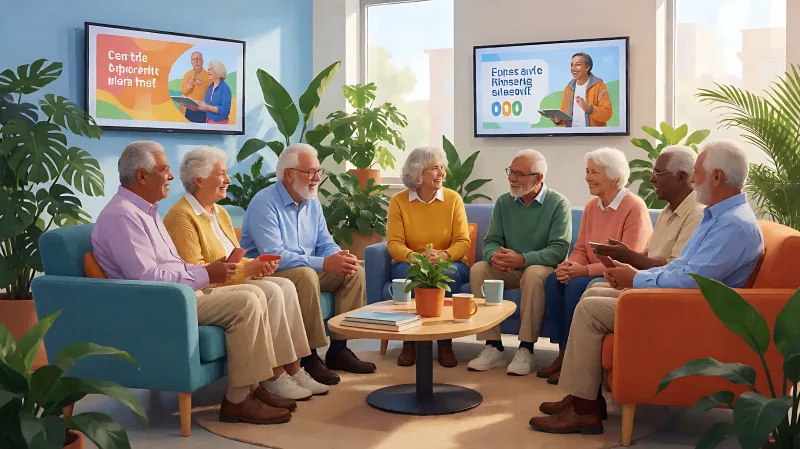
Loneliness is a health crisis. Explore how new social infrastructure and purpose-driven community design are proving critical for extending healthy lifespan in aging societies.
Loneliness is no longer just a social inconvenience; it is a physiological threat. Research from the Robert N. Butler Columbia Aging Center indicates that social isolation carries health risks comparable to smoking 15 cigarettes a day. To combat this, designers and public health officials are building social infrastructure: physical and digital environments that reduce loneliness by fostering daily connection. For older adults in the US and UK, this shift toward purpose-driven community design is becoming the key to unlocking the 'Third Demographic Dividend,' a period where longer lives are spent in good health and active contribution.
For more information, see NIA social engagement research from the National Institute on Aging.
What Is Social Infrastructure for Aging?
Social infrastructure refers to the places, networks, and systems where people build relationships. For the elderly, these are not just parks or libraries; they are designed engagement ecosystems. The Aging Society Network, led by researchers at Columbia University, defines the core elements of a thriving aging society as cohesion, wellbeing, productivity, engagement, and security. These elements require intentional investment in health systems and opportunities that allow older people to remain engaged in society through paid work or volunteer service. It is about designing out loneliness so that older adults retain dignity and value.
How Does Community Design Impact Longevity?
The physical environment where seniors live directly influences their cognitive and physical health. Linda P. Fried, a geriatrician and epidemiologist at Columbia, notes that engagement and activity are vehicles for maintaining health across physical, cognitive, and socioemotional dimensions. Dr. Fried’s work on the Experience Corps model shows that when older adults contribute to their communities, their health outcomes improve. This is not accidental; it is structural. When neighborhoods lack third places for social interaction, seniors often withdraw. Conversely, when environments support intergenerational contact, such as community gardens or local food banks, social capital increases, reducing the risk of frailty and disability.
Why Is Purpose Critical in Later Life?
Modern longevity often outpaces traditional life scripts. The average American life expectancy exceeds 76 years, meaning many individuals have decades of post-retirement life to navigate. Without a defined role, this period can lead to what researchers term 'empty time.' The Columbia Aging Center emphasizes that thriving societies are built on providing new opportunities for older people to contribute in ways they value. Purpose is not a luxury; it is a health outcome. Studies suggest that those who find meaning in their contributions report higher life satisfaction and lower levels of depressive symptoms. This purpose must be embedded in the fabric of the community, making it easy for older adults to step in and act.
What Role Do Digital Tools Play in Social Connection?
Digital platforms are increasingly becoming part of social infrastructure. However, effective tools for seniors must be simple, accessible, and integrated with physical community actions. While specific commercial platforms exist, the public health focus is on 'digital literacy' and 'digital inclusion.' The goal is to bridge the gap between isolated individuals and their communities. For instance, simple apps that coordinate volunteer shifts or family check-ins can keep social rhythms alive. The key is not the technology itself, but how it facilitates face-to-face interaction. A digital network that organizes a physical community meal is far more impactful for longevity than one that only hosts online chats.
How Do Health Systems Support Social Health?
Medicine has traditionally focused on individual biological factors. The new paradigm integrates social determinants of health directly into clinical care. Primary care providers are now screening for social isolation, treating it as a clinical condition rather than a personal failing. This shift requires health systems to be redesigned to meet the needs of older age. It is not enough to treat a heart attack; the system must also address the loneliness that may have contributed to the stress. By linking health metrics to social engagement, providers can create comprehensive care plans that include community resources, not just prescriptions.
What Is the Third Demographic Dividend?
The Third Demographic Dividend is a concept proposed by gerontologists to describe the societal benefits of long-lived, healthy populations. Unlike the first dividend (growth in the workforce) or the second (increased savings), the third is realized when societies transform to support wellbeing at all ages. This transformation creates a positive feedback loop where older adults contribute their experience and resources, and younger generations flourish in a supportive environment. It is a previously unimagined outcome of successful aging strategies. As Dr. Fried notes, investing in health creates a dividend that pays out in societal resilience and intergenerational harmony.
What Are the Best Practices for Community Design?
Effective community design for older adults involves three key principles:
- Accessibility: Physical spaces must be navigable for people with mobility challenges. This includes adequate seating, clear pathways, and low-threshold entries.
- Intergenerational Interaction: Design spaces that encourage mixing ages. Co-housing models, where different generations share living areas, have shown strong results in reducing isolation among seniors.
- Volunteer Hubs: Create visible, centralized locations where older adults can see opportunities for contribution. Transparency in available roles helps lower the barrier to entry.
In the UK, local councils are beginning to adopt these principles, integrating community centers with health services. In the US, urban planning agencies are prioritizing 'aging in place' by making neighborhoods more walkable and socially dense. The evidence is clear: when the environment supports connection, the individual stays healthier for longer.
How Can Individuals Build Their Own Social Network?
While structural change takes time, individuals can take immediate steps to strengthen their social infrastructure. Proactive connection is a skill. Joining a local group, even a small one, increases social cohesion. Volunteering in an area of expertise maintains a sense of purpose. Additionally, maintaining regular contact with older friends and family members prevents the erosion of existing bonds. The goal is to move from passive isolation to active engagement, turning a house into a hub for connection.
Frequently Asked Questions
Does loneliness physically damage the body?
Yes. The CDC and various health organizations have noted that chronic loneliness triggers inflammatory responses similar to those caused by physical illness. It increases cortisol levels, which can lead to cardiovascular disease and cognitive decline. Treating social isolation as a medical priority is essential for longevity.
What is the most effective type of social activity for seniors?
Activities that combine physical movement with social interaction are most effective. Examples include walking groups, dance classes, or community gardening. These activities provide the dual benefit of maintaining mobility and building community ties simultaneously.
How can communities reduce the stigma of aging?
Communities must reframe aging from a deficit to an asset. Highlighting the contributions of older adults in local media and public events changes the cultural narrative. When society values the experience and wisdom of older people, they are more likely to stay engaged, which directly impacts their health.
Are digital communities enough to prevent isolation?
Digital connections are a supplement, not a replacement. While online groups provide a safety net, face-to-face interaction remains critical for deep emotional bonding. The best approach is a hybrid model where digital tools are used to coordinate and sustain offline relationships.