Smart Thermostat Schedules for Arthritis Pain Relief
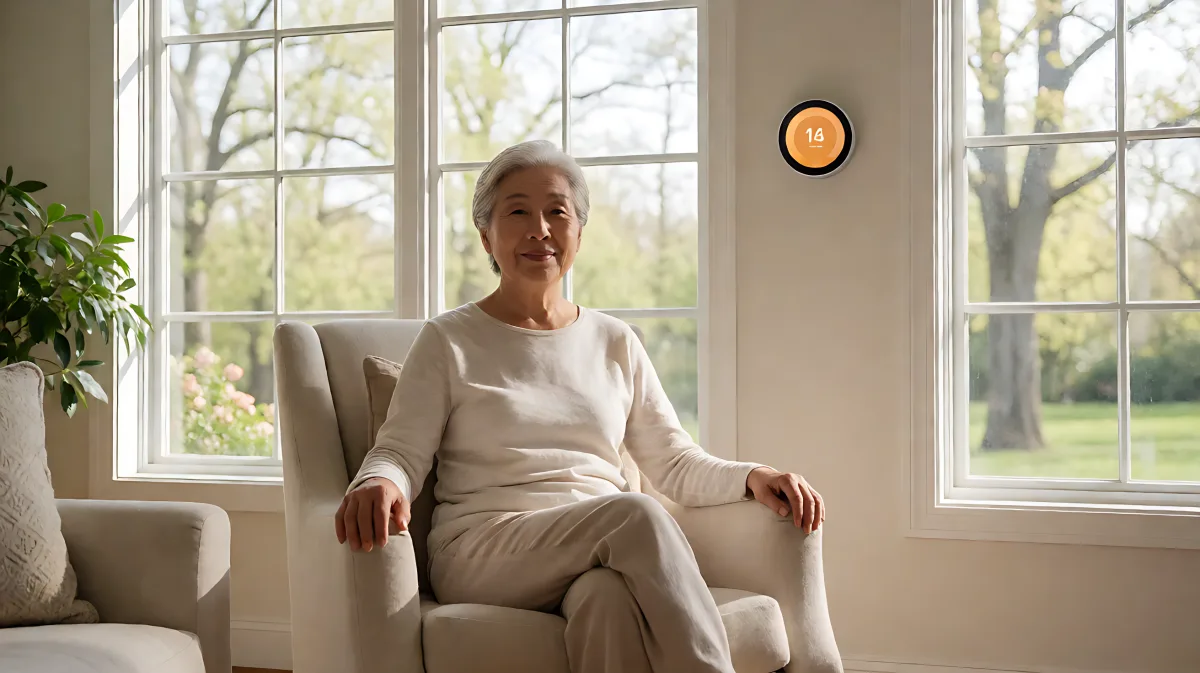
Cold drafts and temperature spikes often aggravate arthritic joints. Discover the specific thermal comfort zones and scheduling strategies that keep your home stable, comfortable, and energy efficient.
For people with arthritis, maintaining a stable indoor temperature is essential to minimizing joint stiffness and pain. Smart thermostats allow you to program precise thermal comfort zones that gently adjust heating and cooling without drastic fluctuations. By setting narrow temperature bands of roughly 1 to 3 degrees Fahrenheit, you can prevent the sharp shifts that often trigger discomfort while still optimizing energy efficiency in your home.
Why Temperature Stability Matters for Joint Health
Cold and sudden temperature changes can significantly increase the risk of joint aches for those living with arthritis. According to the World Health Organization, a minimum indoor temperature of 68°F (20°C) is recommended for homes with elderly or vulnerable occupants to support health and comfort. When the air in your home is too cold, muscles and joints contract, leading to increased stiffness and pain. Conversely, too much heat can cause dehydration and fatigue, which can also worsen symptoms.
Thermals, which are rising columns of warm air created by the uneven heating of the sun, show how natural convection works. In a home, your HVAC system works against these natural forces. A smart thermostat manages this by maintaining a steady state. Rather than allowing the house to cool down and heat up rapidly, it keeps the environment within a specific thermal comfort zone. This steady state helps the body maintain its natural homeostasis, reducing the physical stress on your joints throughout the day.
What Are the Ideal Temperature Ranges for Arthritis?
There is no single temperature that works for everyone, but experts generally suggest keeping your home between 68°F and 72°F (20°C to 22.2°C). The US Centers for Disease Control and Prevention (CDC) notes that adults over 65 are more susceptible to heat-related health problems and are less able to adjust to sudden temperature changes. Therefore, your schedule should prioritize stability over aggressive energy savings.
In the winter, set your daytime temperature to 68°F. When you are sleeping, a drop to 66°F or 67°F is safe and comfortable for most, but avoid dropping below 64°F to prevent nighttime stiffness. In the summer, keep the house at 78°F (25.5°C) while awake, and no higher than 82°F (27.8°C) at night. The goal is to avoid the 'sawtooth' pattern of rapid heating and cooling that plagues standard programmable thermostats.
How Do I Set a 'Gentle' Schedule on My Smart Thermostat?
Unlike older models that use sharp setpoints, modern smart thermostats for senior living often feature 'adaptive recovery.' This means the system learns how long your HVAC unit takes to reach the target temperature and starts adjusting early. To set this up, create a schedule with narrow margins. For example, instead of setting the house to 70°F during the day and 60°F at night, try 70°F and 68°F. This gentle transition prevents your joints from experiencing a thermal shock when the sun rises or sets.
How Can You Use Features to Reduce Stiffness?
Most advanced smart thermostats include features that can be specifically configured to help those with mobility or joint issues. These tools allow you to tailor the environment to your biological needs without needing to manually adjust the device throughout the day.
- Occupancy Sensors: These sensors detect when you leave a room and when you return. In an arthritis-friendly setup, you program the thermostat to use 'gentle setbacks.' The temperature drifts only slightly when you are away and recovers quickly when you return. This prevents the shock of walking into a room that is significantly too cold or hot.
- Fan Circulation: Running the HVAC fan on a 'circulate' setting for 20 minutes an hour helps distribute warm or cool air evenly. This prevents 'hot spots' and 'cold drafts' that can target specific joints, such as the knees or elbows.
- Humidity Control: Dry air in the winter can irritate inflamed joints, while high humidity in the summer can make aches feel heavier. A smart thermostat with humidity controls can maintain a comfortable range of 30 to 50 percent, which supports better breathing and joint mobility.
Some commercial-grade systems used in senior living, such as those from Verdant, emphasize that residents need large, high-contrast displays and simple controls. This ensures that adjusting the temperature is a frictionless process, allowing you to make quick changes if you feel a shift in the weather.
How Much Can Scheduling Save on Energy Bills?
While you may not want to aggressively turn your system off to save money, a well-tuned smart thermostat still provides significant savings. The US Department of Energy suggests that lowering your thermostat by 8°F for eight hours a day can save up to 10 percent a year on heating and cooling. By using gentle setbacks—such as raising the setpoint by just 2 to 3 degrees at night—you can reduce your energy consumption without compromising your comfort or joint health. For instance, using the 'away' mode only when you leave the house for more than two hours can result in a 15 to 20 percent savings on annual HVAC costs.
What Common Mistakes Should You Avoid?
One of the biggest errors is ignoring the 'freeze protection' feature. If you live in an area where temperatures drop below freezing, a smart thermostat will automatically override your schedule to keep the house above 55°F. This is essential to prevent burst pipes, but you should check that this baseline does not conflict with your comfort zone.
Another mistake is not accounting for weather patterns. If a cold snap is forecast, your smart thermostat’s adaptive learning should help, but you can also manually schedule a higher daytime temperature for 24 to 48 hours before the drop. This pre-heating ensures the house is warm and comfortable when the coldest part of the week arrives, reducing the strain on your body to stay warm.
How Do I Maintain a Stable Environment Year-Round?
Your home's thermal comfort zone shifts with the seasons. In spring and fall, the temperature swing is usually mild, making it the easiest time to maintain strict energy savings. However, you should not change your base comfort temperature. Instead, adjust the 'setback' times. For example, in May, you might not need heat until 8:00 AM. A smart thermostat allows you to program these seasonal shifts automatically, so you never have to think about it. The system will hold the indoor air steady, ensuring that your joints are not stressed by the changing outdoor conditions.
Finally, keep in mind that poor indoor air quality can also worsen respiratory and joint symptoms. The World Health Organization estimates that household air pollution contributes to millions of premature deaths annually. Ensuring your HVAC system uses proper filters and that the smart thermostat manages humidity helps keep the air you breathe clean. This creates a comprehensive environment where thermal stability and air quality work together to support your overall health and daily comfort.
Frequently Asked Questions
Is it better to keep the thermostat at a constant temperature or use a schedule?
For those with arthritis, a schedule with gentle, narrow setbacks is better than a constant temperature. Keeping the house at 70°F 24 hours a day can be expensive and is not necessary. A schedule that keeps the house between 68°F and 70°F throughout the day and 66°F at night provides stability while allowing for some energy savings.
Do smart thermostats help with humidity?
Yes, many modern smart thermostats integrate with your HVAC system to monitor and control indoor humidity levels. Maintaining a humidity level between 30 and 50 percent is crucial for joint comfort, as it reduces the risk of dry skin, respiratory irritation, and a heavy, achy feeling in the extremities.
What is the minimum temperature I should allow my home to drop to at night?
The World Health Organization recommends a minimum indoor temperature of 68°F (20°C) for homes with elderly or vulnerable residents. While you can set it slightly lower for sleep comfort, avoid going below 64°F (18°C) to prevent the increased stiffness and pain that can occur in arthritic joints during cold nights.
How does a smart thermostat protect me if I forget to adjust it?
Smart thermostats with adaptive learning and occupancy sensors can detect when you are home and automatically adjust the temperature to your preferred comfort zone. They also have built-in safety features, such as freeze protection, that will override your schedule to keep the house from dropping below a safe minimum temperature, even if you have a manual setback in place.