Pound Threshold Ramps: Safety Guide for Seniors
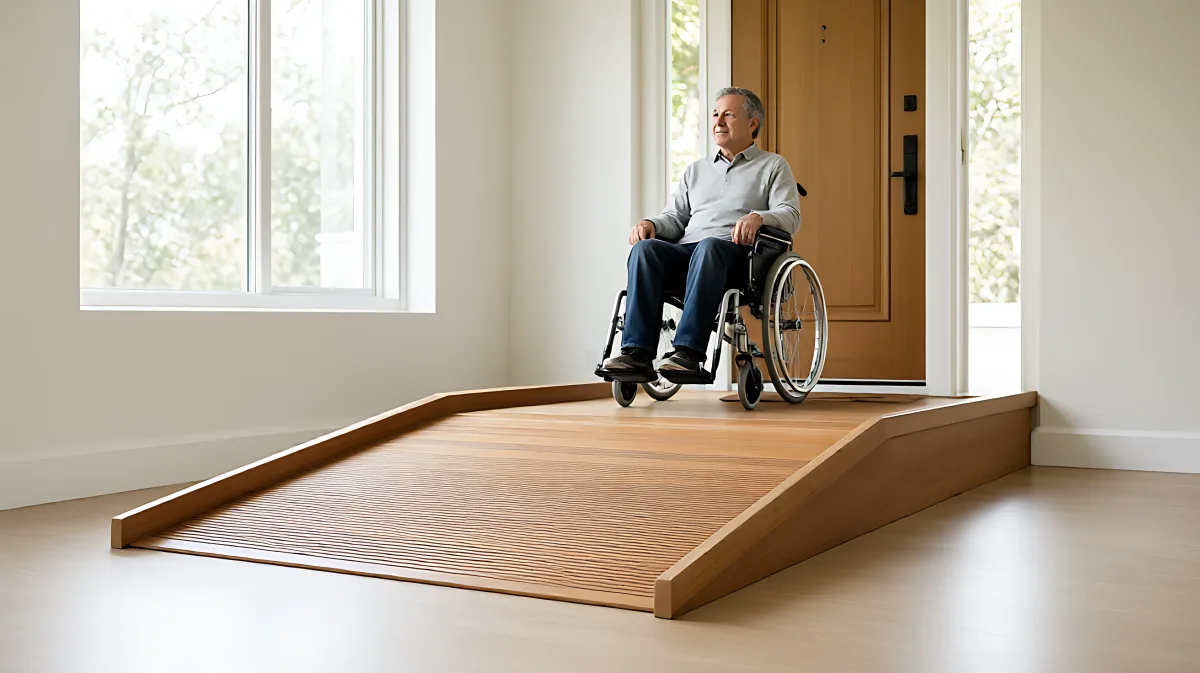
A pound threshold is often too tall for safe home access for many seniors. This guide explains when a simple ramp is needed, how to meet accessibility standards, and how to keep entries safe.
A "pound" threshold, typically around one inch high, exceeds the maximum 1/2 inch limit set by the ADA Accessibility Standards for doorway transitions. For seniors using wheelchairs or walkers, this height prevents safe crossing and necessitates a ramped solution rather than a simple beveled strip. Ensuring the path is smooth is the first critical step in maintaining independent mobility at home.
Why a One-Inch Threshold Is a Barrier
Many families assume that if a person can hop over a small lip, it is safe for everyone. In fact, a vertical or steep change in level of one inch is too high for standard wheeled mobility devices. The U.S. Access Board, which publishes the ADA Accessibility Standards, states that any change in level greater than 1/2 inch must be ramped. A one-inch threshold falls well outside the range where a simple bevel (which is limited to 1/4 to 1/2 inch) can legally or safely apply.
What Does the Standard Say?
The ADA Standards are specific about height limits. For changes up to 1/4 inch, a vertical edge is permitted. For changes between 1/4 inch and 1/2 inch, the surface must be beveled with a slope no steeper than 1:2. However, once the height exceeds 1/2 inch, the requirement shifts to a ramp. This means a one-inch threshold cannot be fixed with a standard threshold ramp; it requires a dedicated ramp structure that complies with running slope limits.
How to Choose the Right Ramp Type
Not all ramps are created equal. The right choice depends on the space available and the specific mobility needs of the user. A modular system might be better for temporary needs, while a permanent ramp is ideal for daily use. When selecting a solution, consider the total rise, the available landings, and the type of mobility device being used, such as a manual wheelchair, an electric scooter, or a rollator.
- Permanent Ramps: Best for daily, high-frequency use. They must include landings, handrails, and slip-resistant surfaces.
- Modular Ramps: Offer flexibility and can be reconfigured. They require stable support and secure connections to the existing structure.
- Platform Lifts: A vertical alternative when horizontal space is too limited for a ramp. These require professional installation and ongoing maintenance.
Calculating the Correct Slope
It is a common misconception that any incline is sufficient. The ADA Standards specify a running slope of 1:12 for ramp runs. This means for every one unit of vertical rise, there must be twelve units of horizontal distance. For a one-inch threshold, a one-to-one slope is not acceptable; the run must be long enough to ensure the slope does not exceed this limit. A professional can measure the rise and available space to determine if a standard ramp fits or if a switchback layout is needed.
Creating a Safe No-Step Entry
A successful entrance is more than just the ramp itself. It involves the entire route from the driveway to the interior door. Families should evaluate the full path, including lighting, drainage, and door operation. A ramp that leads to a door that swings out and traps a wheelchair user is not a safe solution. The landing at the top of the ramp must provide enough space to stop, turn, and operate the door comfortably.
When discussing changes with an older adult, focus on their goals rather than listing hazards. Instead of saying, "This step is dangerous," ask, "What would make entering the home easier and more comfortable for you?" This approach preserves dignity and encourages participation in the decision-making process. An occupational therapist can assess how the person navigates their real routines and identify if the issue is truly the threshold or perhaps a heavy storm door or poor lighting nearby.
Checklist for Assessing Your Entryway
Before calling a contractor, run through this list to identify the core issues with your current setup:
- Measure the Height: Use a tape measure to check the vertical distance from the ground to the top of the threshold. Confirm if it exceeds 1/2 inch.
- Check the Landing: Ensure there is flat, stable space at the top of the entry to maneuver a wheelchair or walker.
- Inspect Traction: Look for slick surfaces, standing water, or uneven concrete that could cause a fall.
- Test the Door: Open the door fully and ensure it does not obstruct the path or require the user to step backward onto a slope.
- Review Lighting: Ensure the path is well-lit so that edges and changes in surface are visible after dark.
- Consider Drainage: Verify that water flows away from the ramp and threshold to prevent ice or slipping hazards in wet weather.
Common Mistakes to Avoid
One major error is using a temporary or portable ramp for a permanent fix without ensuring it is securely fastened. A ramp that shifts or flexes is a significant fall risk. Another misconception is that the ADA Standards apply to private homes in the same way they apply to public facilities. While it is wise to follow these best practices for safety, private residences are not legally required to meet ADA codes unless they receive federal funding or are used as commercial spaces. However, using these standards as a safety benchmark is the best way to ensure long-term accessibility.
FAQ
Can I use a thin rubber ramp for a one-inch threshold?
No. A standard threshold ramp is designed for changes up to 1/2 inch. A one-inch threshold is too high for a simple beveled strip and requires a full ramp structure with a slope of 1:12 to be safe and compliant with accessibility guidelines.
What is the maximum height for a beveled threshold?
According to the ADA Accessibility Standards, a beveled edge is only suitable for changes in level up to 1/2 inch. Any rise greater than this height must be addressed with a ramp that meets running slope requirements.
Do I need to replace the door to improve accessibility?
Not necessarily, but you may need to adjust how the door operates. If a heavy door or an outward swing makes it difficult to manage from a wheelchair, consider installing a lightweight door, adding automatic openers, or using a door that slides or pulls easily.
How often should I inspect my home ramp?
Inspect the ramp at least monthly and after any major weather events. Look for loose fasteners, worn surfaces, or debris that could compromise traction. Regular maintenance ensures the route remains safe for daily use.