Rug Pile Height Guide: Accessibility & Comfort
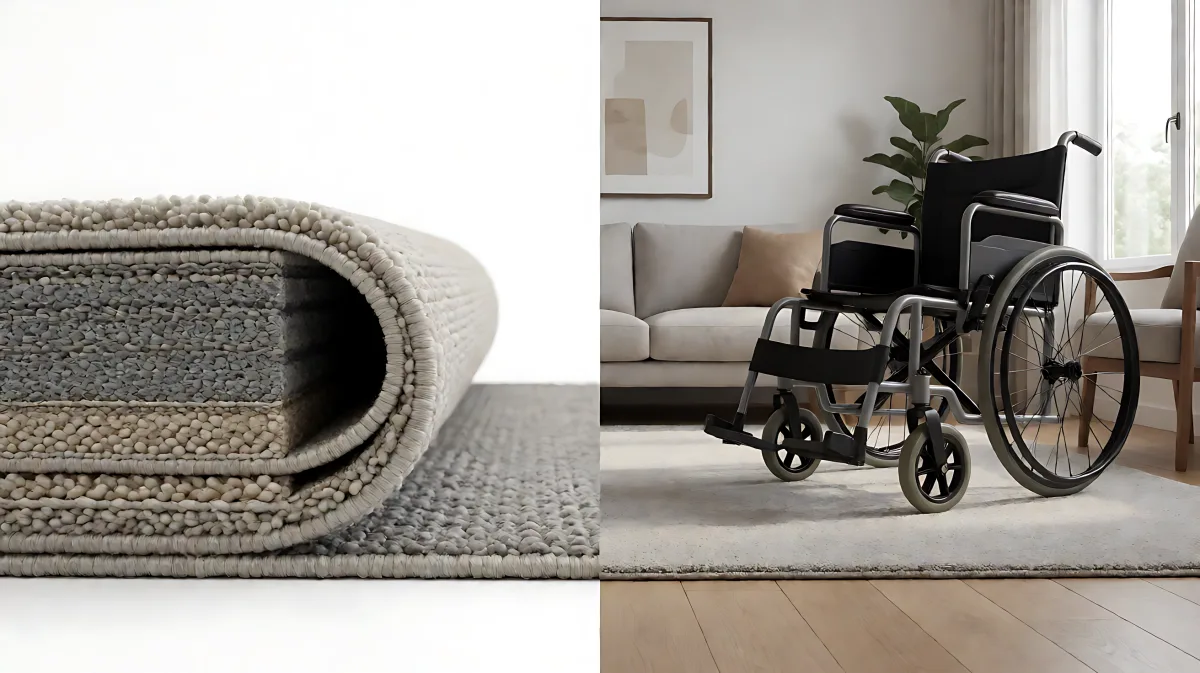
Not sure which rug thickness suits your space? This guide breaks down pile height standards, from flatweaves to plush shags, and explains how to meet safety codes like ADA for seamless transitions.
Choosing the right rug pile height ensures your floor is comfortable to walk on and safe for everyone in the space. For accessible environments, the Americans with Disabilities Act caps carpet pile at 13 mm to prevent trip hazards and allow smooth wheelchair passage. In residential areas, low pile is best for high traffic, while high pile suits quiet bedrooms. Always check the total stack-up including the pad to avoid door clearance issues and trip risks at edges.
How Pile Height Impacts Your Space
Pile height refers to the length of the fibers standing above the rug's backing. It dictates three critical aspects of your floor: comfort, maintenance, and safety. A rug with a 0.5-inch pile offers a plush cushion that traps heat and sound, making it ideal for reading corners. Conversely, a flatweave with 0.1-inch pile provides a hard, durable surface that resists dirt and allows chairs to slide easily. Many homeowners assume that thicker rugs are always better because they look more luxurious, but in fact, thick piles in high-traffic zones cause matting, make cleaning significantly harder, and can create trip hazards for elderly residents or young children.
What Are the Standard Pile Height Categories?
Industry standards generally categorize rugs into four distinct bands. Understanding these helps you match the rug to the room's function.
- Low Pile (0 to 6 mm): Flatweaves and tight loops. Best for entryways, kitchens, and home offices with rolling chairs.
- Medium Pile (6 to 13 mm): The all-purpose sweet spot. Suitable for living rooms and family areas where you want comfort without deep maintenance.
- High Pile (13 to 19 mm): Plush textures that feel soft underfoot. Reserved for low-traffic bedrooms or nooks.
- Extra-High/Shag (19 mm+): Statement pieces that require specialized vacuuming and careful placement away from walkways.
ADA Compliance and Safety Standards
If you are specifying rugs for assisted living facilities, healthcare settings, or commercial spaces, you must adhere to strict guidelines. The ADA Standards for Accessible Design require floor surfaces to be stable, firm, and free of abrupt changes in level. The maximum allowable carpet pile height is 13 mm (0.5 inches). To provide a safety margin for manufacturing tolerances, experts recommend specifying 12 mm pile to ensure the rug does not exceed the limit at any point.
How Do You Calculate Total Assembly Height?
A common mistake is measuring only the fiber height. ADA compliance looks at the total change in level where the rug meets the bare floor. This includes the pile, the rug backing, and the rug pad. For example, a rug with 10 mm pile, 3 mm backing, and a 5 mm pad creates an 18 mm (roughly 0.7 inches) lip. This exceeds the 13 mm threshold and requires a beveled transition or recessed installation to prevent tripping.
- Step 1: Measure the Pile. Use a ruler to measure from the top of the backing to the tip of the fiber.
- Step 2: Add Backing and Pad. Include the thickness of the non-slip pad you plan to use.
- Step 3: Check Transitions. If the total stack-up exceeds 13 mm, use a beveled edge or recess the rug into the subfloor.
- Step 4: Verify Door Clearance. Ensure the rug plus pad does not exceed the gap under interior doors, which is typically 12 mm to 19 mm.
Matching Rugs to Traffic and Cleaning Needs
Your maintenance habits should drive your height choice. In a busy family home or a facility with heavy wheelchair traffic, dense, low-pile constructions are superior. They resist compression and shed dirt easily. A quality medium-pile wool rug can last 10 to 15 years with routine care, making it a strong value for living spaces. For high-pile rugs, you need a vacuum with adjustable settings or a suction-only mode to avoid snagging the fibers. If you have pets or small children, stick to medium pile or lower to handle debris more effectively.
Fire Safety and Fiber Choices
In commercial and healthcare settings, material matters as much as height. Wool fibers naturally resist flame, often meeting fire code requirements without chemical treatments that might irritate sensitive respiratory systems. For non-clinical spaces like lobbies or dining rooms in senior facilities, wool is a preferred specification. It should be paired with a cleaning protocol that includes weekly hot-water extraction for high-traffic areas to manage infection control risks.
Does Pile Height Affect Acoustics?
Yes. Thicker piles trap air and absorb sound more effectively than flatweaves. In noisy environments like senior living common areas, reducing ambient noise load helps residents with hearing loss communicate better. However, flatweaves offer the advantage of being thinner and easier to maintain, which is why they are often specified for hallways where durability outweighs acoustic needs.
Frequently Asked Questions
What is the maximum rug pile height for wheelchair accessibility?
The ADA Standards limit carpet pile to 13 mm (0.5 inches). To ensure compliance, specifiers often target 12 mm to account for manufacturing variances. The total assembly height, including the pad, must not create a trip hazard at the edges.
Can I use a high-pile rug in a dining room?
It is not recommended. High-pile rugs can catch chair legs, making it difficult to slide seats in and out. For dining areas, a low-pile or medium-pile rug is best to ensure functionality and easy cleaning of spills.
How do I prevent a rug from sliding on hardwood floors?
Use a high-density rug pad with a non-slip surface on both sides. For commercial or accessibility-critical spaces, you may need to bond the rug's perimeter with carpet tape or adhesive to ensure it remains stable under rolling loads.
Does a rug pad count toward the ADA height limit?
Yes, the pad is part of the total floor profile. If the rug pile is 13 mm and the pad adds 5 mm, the total height is 18 mm, which may require a transition ramp or bevel to meet accessibility codes. Always calculate the combined stack-up.