Indoor Air Exchange and Radon Mitigation Guide
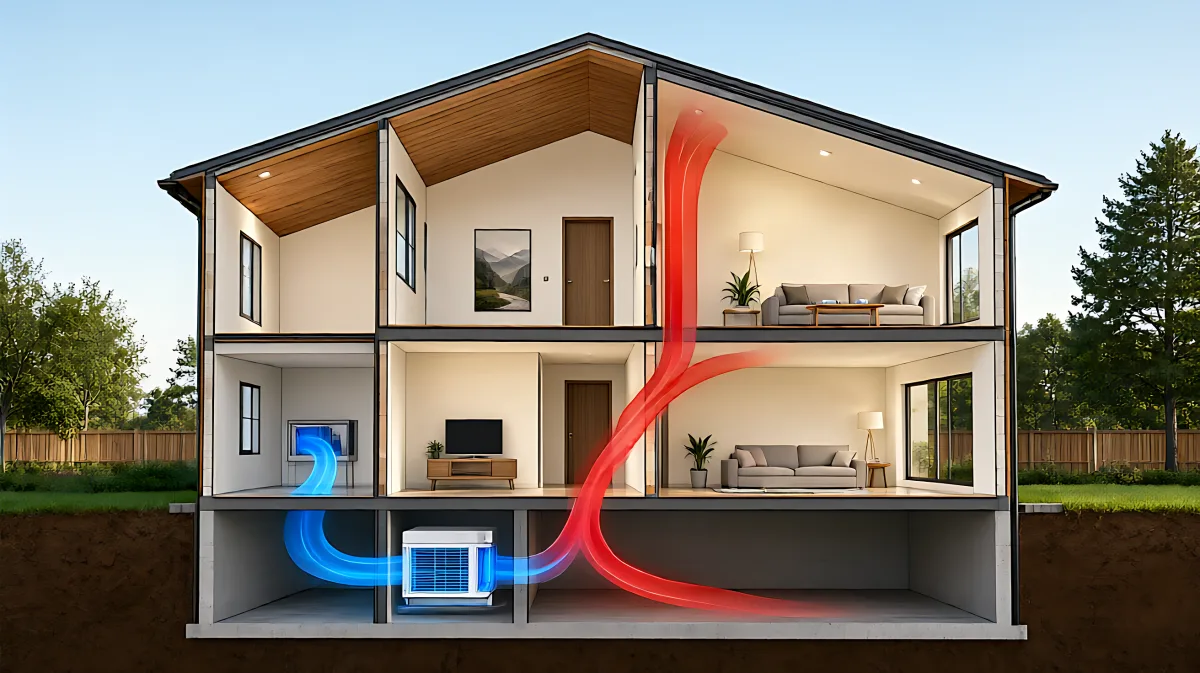
Indoor radon levels are directly influenced by your home's air exchange rate. Discover how mechanical ventilation and airtightness impact this critical health factor.
Adjusting your home's air exchange rate is one of the most effective ways to lower indoor radon concentrations. By increasing the flow of fresh outdoor air into your living space, you dilute the radioactive gas before it reaches dangerous levels. Research indicates that even a modest increase in ventilation can drop radon levels from hazardous concentrations to safer zones, making it a critical consideration for modern, tightly sealed homes.
Why does air exchange rate matter for radon safety?
Radon is a naturally occurring radioactive gas that seeps from the ground into basements and lower-level rooms. Because it is colorless and odorless, most homeowners are unaware of its presence until testing reveals high levels. The U.S. Environmental Protection Agency identifies radon as the second leading cause of lung cancer after smoking, accounting for a significant portion of lung cancer deaths in both the United States and Canada.
The concentration of radon indoors is heavily dependent on how quickly the air inside the building is replaced with fresh air from outside. This process is known as the air exchange rate. In older, leaky homes, natural infiltration through gaps in windows and walls provides a baseline level of ventilation. However, modern energy-efficient construction prioritizes airtightness to reduce heating and cooling costs. While this saves energy, it can trap radon and other pollutants inside the structure, causing them to accumulate to higher levels over time.
What are the health risks of elevated radon?
Long-term exposure to radon decay products is a serious health risk. These decay products are not gases; they settle as dust on the linings of the lungs. As they continue to decay, they emit alpha particle radiation that can damage cellular DNA, potentially leading to lung cancer. According to the World Health Organization, radon is a key factor in lung cancer cases, particularly among non-smokers, for whom it is the leading cause of the disease. Given that Americans spend approximately 90 percent of their time indoors, controlling indoor air quality is essential for long-term health protection.
How do ventilation systems influence indoor radon levels?
Mechanical ventilation systems, such as Energy Recovery Ventilators (ERVs) and Heat Recovery Ventilators (HRVs), offer a controlled way to manage air exchange. These systems filter and exchange indoor air with outdoor air while conserving energy by transferring heat between the two streams. When properly configured, an ERV can reduce negative pressure in the lower levels of a home. Negative pressure is a primary driver of radon entry, as it creates a vacuum that pulls soil gas through cracks in the foundation.
A study conducted by the National Research Council Canada examined two homes in Ontario to determine the impact of ventilation on radon. In the first case study, a home with an airtight design showed an air exchange rate of 0.05 per hour when the ventilation system was off, resulting in a maximum radon concentration of 222 Bq/m³. When two HRVs were turned on, the air exchange rate increased to 0.40 per hour. Within just four hours, the radon concentration dropped to 33 Bq/m³, well below the Canadian guideline of 200 Bq/m³. This data highlights the rapid effectiveness of increased air exchange in diluting radon in tightly sealed environments.
Does ventilation always reduce radon?
Not necessarily. The second case study from the same research involved a home that was leakier but had initially higher radon levels. When the Energy Recovery Ventilator was turned off, the average basement radon concentration was 872 Bq/m³. Operating the ERV continuously raised the air exchange rate to 0.28 per hour, but the average radon level only fell to 242 Bq/m³, which remained above the safety guideline. This discrepancy suggests that ventilation alone may not be sufficient in all scenarios. The effectiveness of ventilation depends on the building's baseline airtightness, the initial radon concentration, and the specific design of the mitigation system.
What is the best strategy to mitigate radon with ventilation?
While active soil depressurization systems are often the first recommendation for high radon levels, ventilation can serve as a primary strategy in homes where traditional mitigation is difficult or in newer builds designed to be highly airtight. The goal is to maintain a neutral or slightly positive air pressure in the basement to prevent soil gas from being drawn inward. However, homeowners must be cautious. Over-ventilating without proper heat recovery can lead to significantly higher energy bills, while under-ventilating risks radon accumulation.
Many families assume that sealing up all air leaks to save energy will automatically keep radon out, but in fact, sealing a home tight without adjusting the ventilation rate can drastically increase indoor radon levels. The airtight envelope that keeps out cold drafts also keeps out the natural airflow that would otherwise dilute radon. Therefore, any retrofit that improves insulation and sealing must be paired with an evaluation of the mechanical ventilation system to ensure adequate air exchange.
What steps should homeowners take to manage radon and ventilation?
- Test your home for radon: Use a continuous monitor or periodic test kits to establish a baseline level before making changes.
- Audit your air exchange rate: Determine your home's current ventilation rate. A standard target for residential buildings is often around 0.5 air changes per hour, but this can vary based on local climate and building code.
- Install or upgrade mechanical ventilation: Consider an Energy Recovery Ventilator (ERV) or Heat Recovery Ventilator (HRV) if your home is very airtight. These units help manage air quality while maintaining energy efficiency.
- Seal known entry points: While ventilation dilutes radon, sealing large cracks in the foundation and sumps reduces the total load on the ventilation system.
- Re-test after modifications: Verify that your new ventilation setup is effectively lowering radon levels. If levels remain above the action level, consult a professional for active soil depressurization.
How do local regulations affect radon mitigation efforts?
Different countries and regions have specific guidelines for indoor radon. The U.S. Environmental Protection Agency recommends testing all homes below the third floor, as radon can be found in any location. The action level for radon in the U.S. is 4 picocuries per liter (pCi/L), which is equivalent to 148 Bq/m³. In Canada, the national guideline is set at 200 Bq/m³. The European Union mandates that member states enforce regulations to keep indoor concentrations below 300 Bq/m³. These numbers provide the targets for your ventilation strategies. If your home exceeds these thresholds, simply opening windows is rarely enough to bring levels down permanently, especially during the winter months when homes are sealed against the cold.
What role do schools and workplaces play in radon exposure?
Public buildings and schools are also subject to radon guidelines, and the ventilation systems in these facilities can be even more complex. In many cases, building management systems reduce ventilation rates during off-hours to save energy, which can lead to radon buildup overnight. Using continuous radon monitors in these settings allows for the calculation of a corrected annual average, ensuring that occupants are protected even when the building is not in active use. For residential homeowners, this highlights the importance of not just looking at peak levels, but understanding the average exposure over time through consistent ventilation.
Frequently Asked Questions
Can an Energy Recovery Ventilator replace a traditional radon mitigation system?
An ERV can reduce radon levels by dilution and pressure management, but it is not a substitute for a soil depressurization system in homes with very high radon levels. In cases where radon concentrations are extremely high, such as those exceeding 800 Bq/m³, ventilation alone may fail to meet safety guidelines, as shown in recent research from Canadian case studies. A combination of systems is often required for optimal protection.
What is the ideal air exchange rate for a home with radon concerns?
There is no single ideal rate for every home, as it depends on the size of the dwelling and the severity of the radon issue. However, increasing the rate from a typical passive 0.05 to 0.5 air changes per hour has been shown to significantly lower radon concentrations. Homeowners should aim for a rate that keeps radon below the local action level, usually around 0.5 to 1.0 air changes per hour, while balancing energy costs.
Does sealing a tight home make radon worse?
Yes, sealing a home tight without increasing mechanical ventilation can make radon worse. Airtight construction reduces the natural infiltration of outdoor air, which is the primary way radon is diluted in older buildings. If you seal your home for energy efficiency, you must simultaneously upgrade your mechanical ventilation system to maintain safe indoor air quality and radon levels.