Smart Glass for Homes: Benefits, Costs & Buying Guide
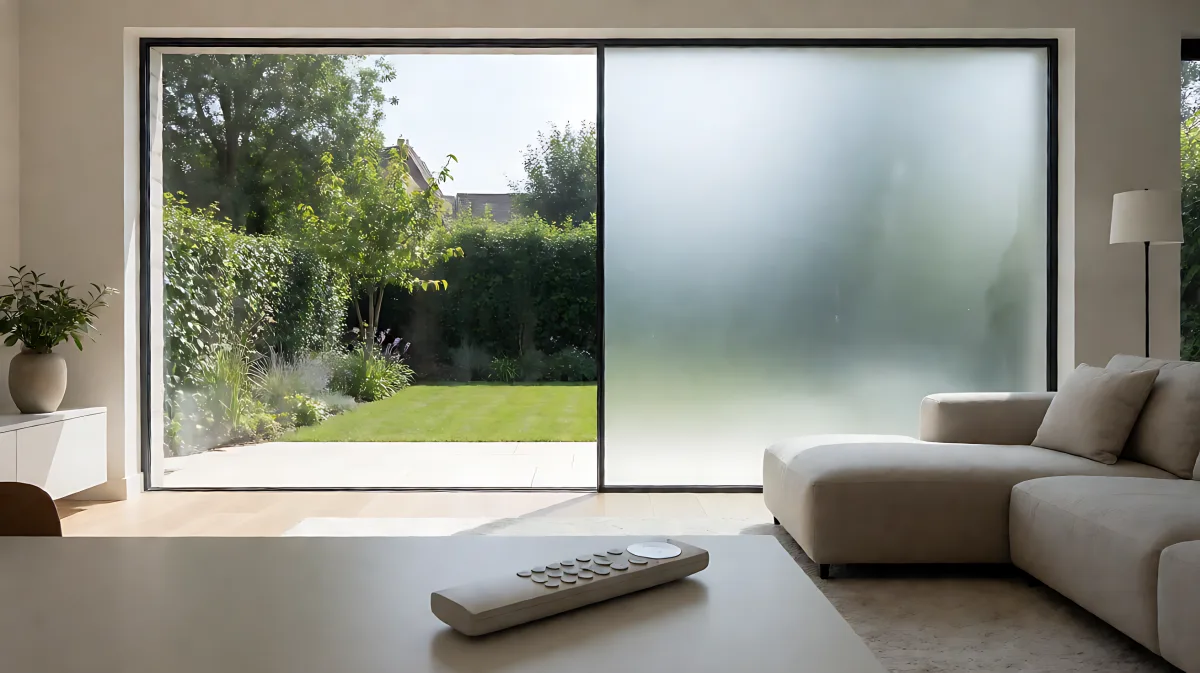
Smart glass allows homeowners to toggle between clear and frosted views with a switch. This guide covers the technology, retrofit options like film, and premium door solutions for modern living spaces.
Smart glass lets you switch between transparent and opaque modes in seconds without using curtains or blinds. This technology uses electricity to alter the state of the glass, providing instant privacy while maintaining natural light. Homeowners can install it as a retrofit film on existing windows or as part of new entry doors and interior partitions. It is an ideal solution for modern open-concept homes where visual separation is needed on demand.
How Does Smart Glass Work in Residential Settings?
The core technology behind most residential smart glass is Polymer Dispersed Liquid Crystal, or PDLC. This material is sandwiched between two panes of glass or applied as a film to existing glazing. When power is applied, the liquid crystals align, allowing light to pass through and making the glass clear. When the power is cut, the crystals scatter, turning the glass into a frosted, opaque state that blocks visibility from the outside.
This mechanism allows for a quick transition from an open, connected living space to a private sanctuary. For instance, a home office located in a central hallway can remain transparent when the room is empty, keeping the area bright and airy. However, when a resident is on a video call or working on confidential documents, they can flip a switch to make the glass opaque, ensuring total privacy without the need for bulky blinds or heavy curtains.
What Are the Different Types of Smart Glass Products?
There are two primary ways to bring this technology into a home: retrofit film and integrated glass. Each option has distinct advantages depending on your construction stage and budget.
Can You Retrofit Existing Windows with Smart Film?
Yes. Professional installers can apply self-adhesive smart film to existing windows, glass doors, and partitions. This is a popular choice for renovation projects where replacing the entire window unit is impractical or too expensive. Smart Glass Country, a provider in this space, notes that their film products transform ordinary glass into switchable privacy glass, allowing homeowners to add functionality without major structural changes. The film is typically laminated to the interior side of the glass, and users control it via a wall switch, remote, or mobile app.
What Are Integrated Smart Glass Doors?
For new builds or significant remodels, fully integrated smart glass doors offer a seamless aesthetic. A notable example is the Feather River Doors Smart Glass, manufactured for The Home Depot. This product is a fiberglass entry door featuring laminated PDLC glass. Reviewers at PCMag UK noted that it was the first residential front door to adopt this technology effectively. It allows homeowners to control visibility from their smartphone or via voice commands, integrating smart privacy into the security of the front entrance.
| Feature | Retrofit Smart Film | Integrated Smart Glass Door |
|---|---|---|
| Installation | Applied to existing glass | Replaces standard door unit |
| Cost | Lower upfront investment | Higher cost (approx $800+ per door) |
| Use Case | Windows, bathroom glazing, partitions | Entry doors, operable windows |
| Control | Wall switch or app | App, voice, or button |
How Does Smart Glass Improve Home Office Functionality?
The shift toward hybrid work models has increased the demand for private spaces within the home. According to industry experts at Gauzy, smart glass is crucial for creating home office sanctuaries without sacrificing natural light. In an open-plan home, a glass-walled office can serve two purposes: it acts as a physical barrier when the glass is opaque, signaling that the occupant is in a 'do not disturb' mode, and it allows light and views when clear, maintaining a connection to the outdoors.
Additionally, laminated smart glass provides acoustic benefits. When paired with appropriate sealing, it can dampen noise levels significantly. This makes it an excellent choice for bedrooms, media rooms, or home studios where silence is required. The ability to let light in while blocking sound and visibility is a key feature that traditional frosted glass or blinds cannot easily achieve without darkening the room.
What Is the Cost of Installing Smart Glass at Home?
Costs vary widely depending on the size of the glass, the complexity of the installation, and whether you are using film or full glass units. For entry doors, prices typically start around $800 for a smaller pane and can reach nearly $1,000 for full-glass configurations, as seen in the Feather River Doors product line. For window film, the price is usually calculated per square meter or square foot and includes installation fees.
Homeowners should also consider the long-term energy implications. While the glass itself consumes a small amount of power when in the clear state, the ability to control solar heat gain can reduce cooling costs. In summer, keeping the glass opaque can block excessive sun, lowering the load on air conditioning systems. Conversely, in winter, clear glass allows solar radiation to enter, helping to warm the space naturally.
Is Smart Glass Durable and Safe for Daily Use?
Modern smart glass products are engineered for durability. The PDLC layers are typically laminated between two sheets of safety glass, making them tough and resistant to impact. Suppliers like Smart Glass Technologies emphasize that their products are certified for safety glazing, meaning they meet strict standards for home use. The film versions are also tested for safety, often holding broken glass in place if the exterior pane is shattered.
However, professional installation is recommended to ensure that the electrical connections are safe and that the glass is properly sealed. For integrated doors, the internal wiring must be concealed and protected. Most reputable manufacturers offer warranties on their products, standing behind the longevity of the switchable technology. The life expectancy of the glass is similar to traditional windows, provided it is not subjected to extreme physical damage.
What Smart Home Systems Does Smart Glass Integrate With?
As technology advances, smart glass is becoming more connected. Newer systems allow for integration with major smart home platforms. This means you can program the glass to switch automatically based on time of day, occupancy, or even external light conditions. For example, the glass in a bathroom could automatically frost when motion is detected inside, or office partitions could become opaque during busy hours to maximize privacy.
This automation reduces the need for manual switching and adds a layer of convenience to daily living. It also allows for zoning, where different rooms can be controlled independently or grouped together. This flexibility is a major draw for architects and homeowners looking for a high-tech, modern aesthetic that is also practical.
FAQ
Does smart glass need electricity to be opaque?
No. Most PDLC smart glass is 'power-off private.' This means that when the power is cut or the switch is off, the glass is frosted and opaque. Electricity is only required to make the glass clear. This is a safety feature because in the event of a power outage, the glass remains private.
Can I install smart film myself?
While DIY kits exist, professional installation is strongly recommended. The film must be applied without bubbles or dirt, and the electrical connections must be made safely. A professional ensures the product is warranted and installed correctly for long-term performance.
How much does smart glass cost per square foot?
Pricing varies by supplier, but retrofit film typically costs between $50 and $100 per square foot installed, depending on the quality and complexity. Full glass units are more expensive and may range from $100 to $150 per square foot before installation.