Sleep Quality vs Duration: The Longevity Link
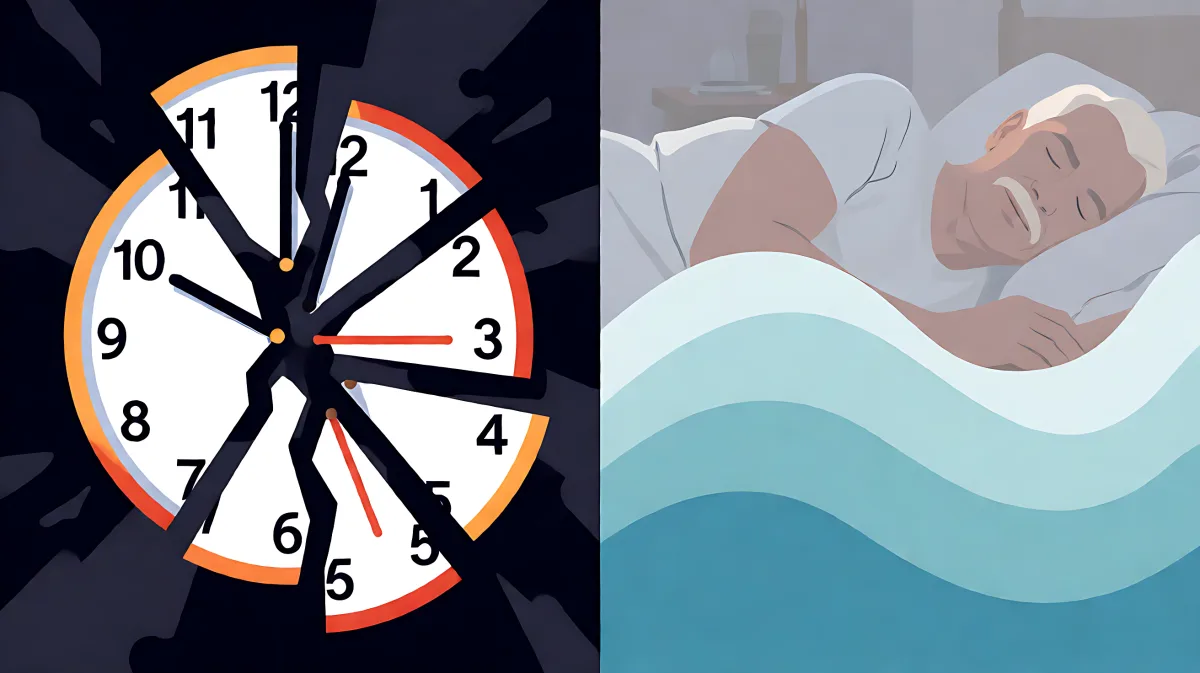
A recent two-year longitudinal study suggests that how consistently you sleep matters far more than total duration for protecting executive function in older adults. Here is what the data says about brain health and sleep quality.
Recent longitudinal research published in GeroScience reveals that sleep efficiency, rather than total hours in bed, is the strongest predictor of preserved cognitive function in adults over 55. Tracking community-dwelling participants over two years, scientists found that the proportion of time actually spent asleep while in bed directly correlated with executive function. Total sleep duration and self-reported perceived restfulness showed no significant link to memory or processing speed. This shift in focus suggests that protecting the brain against age-related decline depends on keeping sleep uninterrupted and consolidated, not just hitting a duration target.
Why duration no longer equals brain health
For decades, sleep guidelines have emphasized the seven-to-eight-hour benchmark. However, new data from an international team including researchers from KU Leuven and the University of Utah challenges this paradigm. The study simultaneously measured device-tracked sleep and rigorous cognitive tests, including short-term memory, long-term memory, and processing speed. The results indicated that merely lying in bed for eight hours does not yield the same cognitive benefits if that time is fragmented by frequent awakenings. The specific metric that emerged as a reliable predictor of cognitive protection was sleep efficiency. This is calculated as the percentage of time in bed that is actually spent sleeping. For instance, if a person spends two hours awake in an eight-hour period, their efficiency is low, even if they eventually accumulated seven hours of total sleep. The researchers noted that this relationship remained stable across repeated observations over the two-year period, indicating a persistent baseline effect rather than a temporary fluctuation.
What the new data reveals about aging sleep
The study highlights a critical distinction between subjective feelings and objective biological outcomes. Participants who felt well-rested but experienced fragmented sleep did not show better executive function than those with lower subjective ratings but higher efficiency. Executive function encompasses higher-order mental skills such as planning, focusing attention, and multitasking, which are vital for independence in later life. When the researchers tested alternative markers of disruption, such as wakefulness after sleep onset, the results mirrored the efficiency findings. Frequent awakenings actively penalize executive function. This aligns with the understanding that sleep architecture, or the structural progression through different sleep stages, matters more for neural maintenance than gross duration. Consolidated sleep allows the brain to complete biological housekeeping tasks, including the clearance of metabolic waste and the repair of cellular damage.
How much sleep does an older adult actually need?
While the new study focuses on efficiency, foundational sleep science from experts like Sonia Ancoli-Israel, a professor emeritus of psychiatry and past president of the Sleep Research Society, reminds us that the need for sleep does not diminish with age. Data consistently shows that older adults require the same seven to eight hours as younger adults. What changes is the ability to obtain that sleep. The need is constant, but the capacity to deliver uninterrupted rest declines due to medical conditions, medication effects, and circadian shifts. Therefore, the goal is not to reduce total sleep, but to improve the quality and continuity of that sleep.
The hidden drivers of poor sleep efficiency in older adults
Understanding why sleep becomes fragmented is key to improving cognitive longevity. Several factors contribute to the decline in sleep efficiency as we age. One primary cause is the prevalence of primary sleep disorders. Conditions such as obstructive sleep apnea, restless legs syndrome, and REM sleep behavior disorder are significantly more common in older populations. Obstructive sleep apnea alone affects ten to twenty percent of middle-aged and older adults, characterized by repeated breathing pauses that disrupt sleep cycles and lead to daytime sleepiness. Managing these underlying conditions is essential for restoring sleep efficiency.
Medication management also plays a critical role. Older adults are often prescribed multiple medications, many of which have sedating or alerting properties. Taking alerting medications in the evening or sedating ones in the morning can disrupt the natural sleep-wake cycle. Aligning medication timing with circadian rhythms can help preserve sleep continuity. Additionally, circadian rhythms naturally shift with age. The body becomes sleepier earlier in the evening, often around 7:00 to 8:00 PM, and wakes up earlier in the morning, sometimes as early as 3:00 to 4:00 AM. This advanced sleep phase can lead to fragmented sleep if individuals try to stay up late against their biological clock, only to wake up prematurely. Listening to the body and aligning sleep windows with these natural shifts is crucial for maintaining efficiency.
Does light exposure impact sleep quality in aging?
Yes, and the impact is significant. As the eyes age, the lens becomes yellowish, and conditions like cataracts or glaucoma can develop. These physical changes filter out blue-light wavelengths, which are essential for synchronizing the circadian system. Consequently, older adults require more light exposure to stay awake during the day and promote alertness. A practical strategy to shift the advanced sleep phase later is to go for a walk outdoors in the late afternoon or early evening when the sun is still out. This exposure to natural light helps keep the brain awake longer, allowing for a more consolidated sleep period later in the night. Wearing sunglasses during this time blocks the necessary light input, so it is best to avoid them to maximize circadian benefits.
Practical steps to boost sleep efficiency
Since sleep efficiency is the key metric for cognitive protection, practical interventions should focus on maximizing the time actually spent asleep. If you struggle with waking up during the night, artificially extending your time in bed is counterproductive. It lowers your efficiency score and can worsen sleep fragmentation. Instead, compress the sleep window to match your actual sleep time. If you typically sleep for six hours, aim to spend six hours in bed, not eight. This strict sleep hygiene approach helps reinforce the association between the bed and sleep, improving efficiency over time.
Environmental factors also play a major role in maintaining uninterrupted sleep. Optimizing room temperature, reducing late-night fluid intake to minimize nocturia, and minimizing ambient light exposure are direct steps to maximize sleep efficiency. Nocturia, or the need to urinate two or more times a night, is a common disruptor in older adults and can be a sign of underlying medical issues that need treatment. Addressing pain from arthritis or other conditions is also vital, as physical discomfort leads to frequent awakenings. By treating the underlying medical or psychiatric illnesses causing discomfort, you can remove a major barrier to consolidated sleep.
What is the connection between sleep efficiency and dementia risk?
Poor sleep, particularly fragmented sleep, is associated with higher risks of depressive symptoms, heart disease, falls, and dementia. Symptoms of poor sleep, such as worse memory, poor concentration, and slower response time, can mimic early signs of dementia. However, these are often symptoms of insufficient or fragmented sleep rather than neurodegenerative disease. Improving sleep efficiency can help distinguish between sleep-related cognitive deficits and true dementia, allowing for earlier and more accurate diagnosis and treatment.
Frequently Asked Questions
How is sleep efficiency different from total sleep duration?
Sleep efficiency is the percentage of time in bed that you actually spend sleeping. Total sleep duration is just the number of hours you are unconscious. A person can have seven hours of total sleep duration but low efficiency if they were in bed for ten hours and woke up several times. High efficiency means you are in bed for a period that closely matches the time you actually sleep, with minimal interruptions.
Can I improve sleep efficiency without medication?
Yes, many factors influencing sleep efficiency are behavioral and environmental. Aligning sleep windows with natural circadian shifts, exposing yourself to bright light in the late afternoon, optimizing room temperature, and reducing late-night fluid intake can all improve efficiency. For those with primary sleep disorders like apnea or restless legs, medical treatment is often necessary to restore efficiency, but lifestyle changes support overall sleep health.
Do older adults really need the same amount of sleep as younger adults?
According to sleep research experts and data from the Centers for Disease Control and Prevention, the physiological need for seven to eight hours of sleep remains constant throughout adulthood. What changes with age is the ability to maintain continuous, high-quality sleep. The need does not decrease, but the challenges to meeting that need increase, making efficiency a critical focus.
How does fragmented sleep affect executive function?
Fragmented sleep disrupts the natural progression through sleep stages, which are required for neural maintenance and waste clearance. Frequent awakenings prevent the brain from completing these biological housekeeping tasks. The GeroScience study found that higher sleep efficiency correlates with better executive function, including planning, attention, and multitasking, while fragmented sleep actively penalizes these higher-order mental skills.
Is there a specific threshold for sleep efficiency that guarantees brain health?
The research indicates a dose-response relationship where higher efficiency correlates with better executive function. While the exact threshold can vary by individual, the study found that a ten percent improvement in sleep efficiency translates to a measurable, albeit small, improvement in executive function z-scores. This incremental gain can compound over decades, making consistent efforts to improve efficiency valuable for long-term cognitive health.